Order XVIII Rule 17 CPC Cannot Be Used by Parties to Fill Lacunae; Power to Recall Witness Lies Exclusively with Court: Delhi High Court
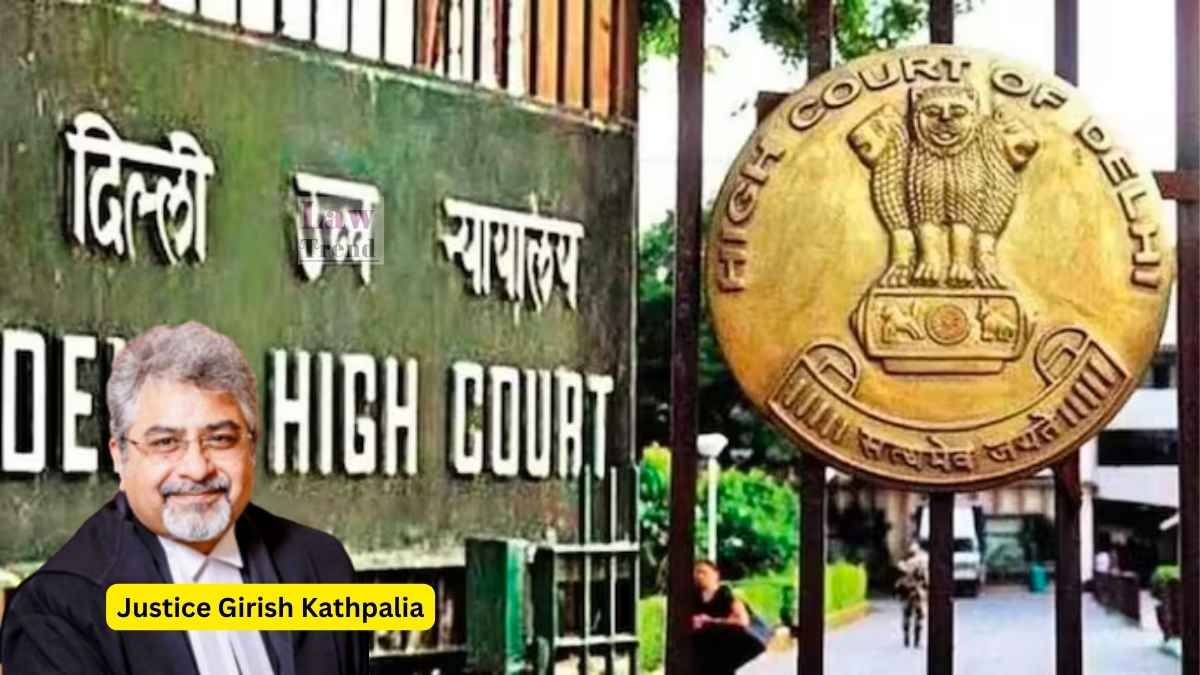

The Delhi High Court has dismissed a petition challenging a trial court’s refusal to summon an additional witness after the conclusion of evidence, reiterating that Order XVIII Rule 17 of the Code of Civil Procedure (CPC) is not a tool for parties to fill gaps in their case but a provision empowering the court to seek clarifications.

Justice Girish Kathpalia upheld the order of the learned trial court which had dismissed the petitioners’ application under Order XVIII Rule 17 CPC. The petitioners sought to summon an attesting witness to prove a Will after final arguments had already commenced. The High Court held that the provision is intended to enable the court to resolve ambiguities in evidence and cannot be used by a party as an “adversarial tool” to “plug the loopholes” in their case.

Background of the Case

The petitioners (plaintiffs) had filed a civil suit seeking a decree of declaration that a registered sale deed executed by Defendant No. 1 (Respondent No. 1) in favour of Defendant No. 2 (Respondent No. 2) was null and void. They also sought mesne profits, damages, and an injunction.

During the trial, issues were framed, including Issue No. 4, which examined “whether the ownership documents of the petitioners/plaintiffs were forged and fabricated.” The onus to prove this issue was placed on Defendant No. 2.

Both parties led their evidence. The petitioners examined eleven witnesses, while Respondent No. 2 examined four witnesses. Respondent No. 1 proceeded ex-parte.

READ ALSO  केजरीवाल बंगले के नवीनीकरण विवाद: हाई कोर्ट ने PWD अधिकारियों को CAT के समक्ष शिकायत उठाने की अनुमति दी

The dispute arose when, after the conclusion of evidence and while final arguments were partly advanced, the petitioners filed an application under Order XVIII Rule 17 CPC. They sought permission to summon one Mr. Umesh Sharma to prove a Will, a document crucial to their claim of title over the subject property. The trial court dismissed this application on October 15, 2025, observing that the application failed to explain why the witness was not summoned earlier despite the plaintiffs being aware of the defence.

Arguments of the Parties

Counsel for the petitioners argued that the examination of Mr. Umesh Sharma was “vital for effective adjudication of the suit.” It was submitted that as an attesting witness, Sharma could prove the Will on which the petitioners based their title.

The petitioners relied on the judgment of the Supreme Court in K. K. Velusamy vs N. Palanisamy (2011) 11 SCC 275 to support their prayer for recalling/summoning the witness.

Court’s Analysis

Justice Girish Kathpalia analyzed the scope of Order XVIII Rule 17 CPC, clarifying that the provision was retained in the statute book after the 2002 amendment specifically to enable the trial court to clarify doubts, not to empower parties to reopen evidence.

The Court observed:

READ ALSO  Delay in Cross-Examination Leads to “Mockery of Justice”: Allahabad High Court Denies Bail to Rape Accused

“The provision under Order XVIII Rule 17 CPC cannot be invoked to empower either of the parties to further examine or further cross-examine the already examined witness. The provision lays down that it is only the court which would put questions to the witness.”

The Court emphasized that the core issue is the satisfaction of the trial court that a witness needs to be recalled. “The provision cannot be used by either of the parties as adversarial tool,” the Justice noted.

Reliance on Precedents

The High Court referred to the Supreme Court decision in Shubhkaran Singh vs Abhayraj Singh & Ors. (2025 INSC 628), which held:

“The power is to be used for removing ambiguities, for clarifying the statement and not for the purposes of filling up the lacuna in a party’s case… the power to recall and re-examine a witness is exclusively that of the court trying the suit.”

Regarding the petitioner’s reliance on K. K. Velusamy, the High Court distinguished the facts, noting that in Velusamy, witnesses were recalled to be confronted with audio recordings that emerged subsequent to their testimony. Even in that case, the Supreme Court had held that the power is for “clarification in order to enable the trial court to remove any issue or doubt.”

Findings on the Facts

The High Court found no infirmity in the trial court’s decision, noting the following key points:

  1. No Ambiguity: The trial court explicitly stated there was no ambiguity in the evidence on record requiring clarification from Mr. Umesh Sharma.
  2. Burden of Proof: The Court noted that the onus to prove the Will was forged lay on Respondent No. 2, not the petitioners.
  3. Timing: The application was filed after final arguments for the defendant had concluded and the plaintiffs’ arguments were on the verge of conclusion.
  4. Status of Witness: Mr. Umesh Sharma was not named in the list of witnesses of either side.
READ ALSO  Resignation of a High Court Judge Qualifies as Retirement for Pension Benefits: Bombay High Court

Justice Kathpalia observed that the move was an attempt “to plug the loopholes,” which is impermissible.

Decision

The High Court held that since the trial court found no ambiguity in the evidence requiring the examination of the additional witness, the dismissal of the application was correct.

“I am unable to find any infirmity in the impugned order, so the same is upheld,” Justice Kathpalia ruled, dismissing the petition and accompanying applications.

Case Information

  • Case Title: Nikita Jain alias Nikki Jain & Anr. v. Ram Phal alias Ram Pal and Anr.
  • Case Number: CM(M) 2292/2025
  • Coram: Justice Girish Kathpalia
  • Citation: 2025:DHC:10527

Law Trend
Law Trendhttps://lawtrend.in/
Legal News Website Providing Latest Judgments of Supreme Court and High Court

Related Articles

Latest Articles