

Order Appointing Arbitrator under Pre-2015 Regime Operates as Res Judicata on Existence of Arbitration Agreement; Cannot be Challenged Before Arbitrator: Supreme Court

The Supreme Court of India has held that an order appointing an arbitrator under Section 11 of the Arbitration and Conciliation Act, 1996, passed prior to the 2015 Amendment, operates as res judicata regarding the existence and validity of the arbitration agreement. Consequently, if such an order attains finality, the validity of the arbitration clause cannot be re-agitated before the Arbitral Tribunal or in subsequent proceedings.

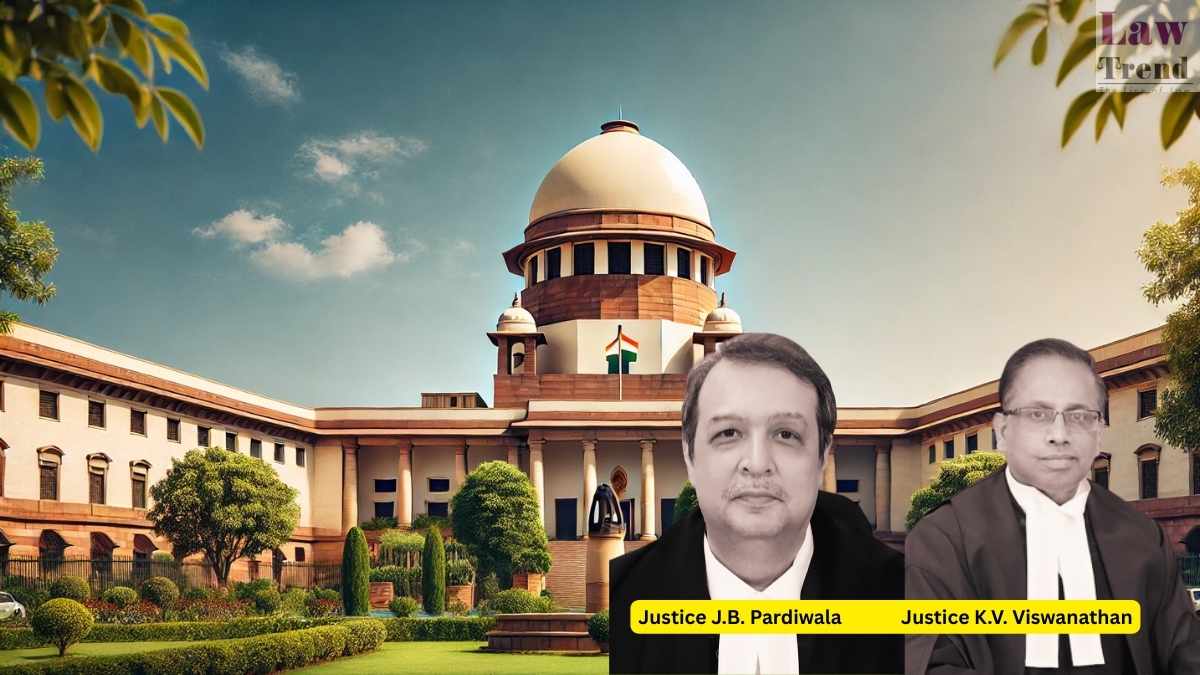
The Bench, comprising Justice J.B. Pardiwala and Justice K.V. Viswanathan, set aside the judgment of the Rajasthan High Court which had upheld the setting aside of an arbitral award on the ground that Clause 23 of the contract was not an arbitration clause.

Background of the Case

The appeals arose from a dispute between M/s Eminent Colonizers Private Limited (Appellant) and the Rajasthan Housing Board (Respondents).

  • Civil Appeal No. 753 of 2026: The appellant was awarded construction work for HIG houses in Jaipur via an agreement dated July 8, 2009. A dispute arose regarding the non-payment of Rs. 18,95,123 towards escalation costs.
  • Civil Appeal No. 754 of 2026: The appellant was awarded construction work for LIG flats via an agreement dated October 11, 2007. Disputes arose regarding escalation bills and penalty refunds.

In both instances, the appellant invoked Clause 23 of the agreement, which provided for a “Standing Committee for settlement of disputes.” When the disputes remained unresolved, the appellant filed applications under Section 11 of the Arbitration and Conciliation Act, 1996, before the High Court.

On May 23, 2014 (prior to the 2015 Amendment), a Single Judge of the High Court allowed the applications and appointed retired judges as sole arbitrators. The High Court noted that while the Housing Board had constituted a committee, it was not in terms of Clause 23. This order appointing the arbitrators was accepted by the respondents and attained finality.

READ ALSO  Supreme Court Removes Unjust Remarks by Uttarakhand HC Judge Against Advocate

Subsequently, awards were passed in favor of the appellant. The respondents challenged these awards under Section 34. The Commercial Court set aside the awards, holding that Clause 23 was not an arbitration clause, relying on previous Rajasthan High Court judgments (Mohammed Arif Contractor and M/s Marudhar Construction). The High Court affirmed the Commercial Court’s decision, prompting the present appeals.

Submissions of the Parties

The appellant contended that the arbitrator was appointed during the regime governed by the Supreme Court’s decision in SBP & Co. vs. Patel Engineering Limited (2005), i.e., before the legislative amendments effective from October 23, 2015. It was argued that under this regime, the Section 11 Court was obliged to determine the “existence” and “validity” of the arbitration agreement. Since the respondents accepted the appointment order, they had waived their right to object.

The respondents argued that the order under Section 11 did not have precedential value and did not specifically pronounce on the existence and validity of the arbitration agreement in Clause 23. Therefore, they contended, the question was open to be decided by the Arbitral Tribunal and the Courts below were justified in holding that Clause 23 was not an arbitration clause.

Court’s Analysis and Observations

Justice K.V. Viswanathan, writing for the Bench, clarified that the Arbitration and Conciliation (Amendment) Act, 2015, did not apply to the proceedings as the appointment of the arbitrator occurred prior to October 23, 2015.

The SBP & Co. Regime: The Court relied heavily on the Constitution Bench judgment in SBP & Co. vs. Patel Engineering Limited (2005), which governed the pre-2015 era. The Court observed:

“In view of the categoric holding by the Seven-Judge Bench in SBP (supra), we have no hesitation in holding that the Section 34 court erred in going into the existence and validity of Clause 23… The appointment of the Arbitrator happened prior to the amendments to the Arbitration Act which came into effect from 23.10.2015.”

The Court reiterated that under the SBP & Co. regime, the Chief Justice or the designated Judge exercised judicial power, not administrative power. They were bound to decide whether a valid arbitration agreement existed. Such a finding “would be binding on the parties when the matter goes to the Arbitral Tribunal and at subsequent stages of the proceeding.”

Implied Holding and Finality: The Court rejected the Commercial Court’s view that the Section 11 order lacked precedential value. The Bench noted:

READ ALSO  सुप्रीम कोर्ट ने जजों की नियुक्ति प्रक्रिया का चरणबद्ध विवरण सार्वजनिक किया

“The parties proceeded on the basis that Clause 23 was an arbitration clause and in this scenario, the only conclusion possible is that though not very categoric there is an implied holding in the order appointing the Arbitrator about the existence and validity of the arbitration agreement. For if it were not so, the appointment could not have been and would not have been made.”

The Court emphasized that since the respondents did not challenge the appointment order in the Supreme Court, it attained finality.

Res Judicata vs. Precedent: The Supreme Court clarified the distinction between precedent (operating in rem) and res judicata (operating in personam). The Court held that the Commercial Court erred by relying on other High Court judgments (Mohammed Arif Contractor and Marudhar Construction) to negate the specific Section 11 order between the parties in this case.

“The learned single judge, in the present case, when he entertained a Section 11 Application and interpreted a contractual document had jurisdiction to do so under Section 11. Right or wrong, that decision should bind… In the present case, the order appointing the Arbitrator read with the law laid down in SBP (supra), clearly operates as a res judicata, insofar as the existence of and validity of the arbitration agreement between the parties is concerned.”

Distinction from Post-2015 Regime: The Court distinguished the present case from the post-2015 regime (Section 11(6A)), citing In re Interplay Between Arbitration Agreements under Arbitration and Conciliation Act, 1996 & Stamp Act, 1899. Under the amended Act, the Court’s jurisdiction is confined to examining the existence of an arbitration agreement, leaving substantive validity to the Tribunal. However, this shift did not apply retrospectively to the present appeals.

Decision

The Supreme Court allowed the appeals and set aside the judgment of the High Court dated February 20, 2020. The Court held:

  1. The Commercial Court and High Court erred in ruling that Clause 23 was not an arbitration clause, as the issue was barred by res judicata.
  2. The proceedings before the Commercial Court were set aside.
  3. The matters were remitted to Commercial Court No. 3, Jaipur, to hear the Section 34 applications on grounds other than the existence/validity of the arbitration clause.
  4. Considering the awards date back to 2015 and 2016, the Commercial Court was directed to dispose of the cases within three months.
READ ALSO  Man Serving Life Sentence for Murdering his Wife Approaches Supreme Court Seeking Parity of Release of Rajiv Gandhi’s Killers

Case Details:

  • Case Title: M/s Eminent Colonizers Private Limited vs. Rajasthan Housing Board and Ors.
  • Case Numbers: Civil Appeal No. 753 of 2026 (arising out of SLP (C) No. 8299 of 2021) and Civil Appeal No. 754 of 2026.
  • Coram: Justice J.B. Pardiwala and Justice K.V. Viswanathan

Law Trend
Law Trendhttps://lawtrend.in/
Legal News Website Providing Latest Judgments of Supreme Court and High Court

Related Articles

Latest Articles

