

Oral Evidence Cannot Be Used To Indirectly Introduce Irrelevant Internal Documents Already Excluded By Court: Supreme Court Dismisses RIL’s Appeal With Rs 10 Lakh Costs
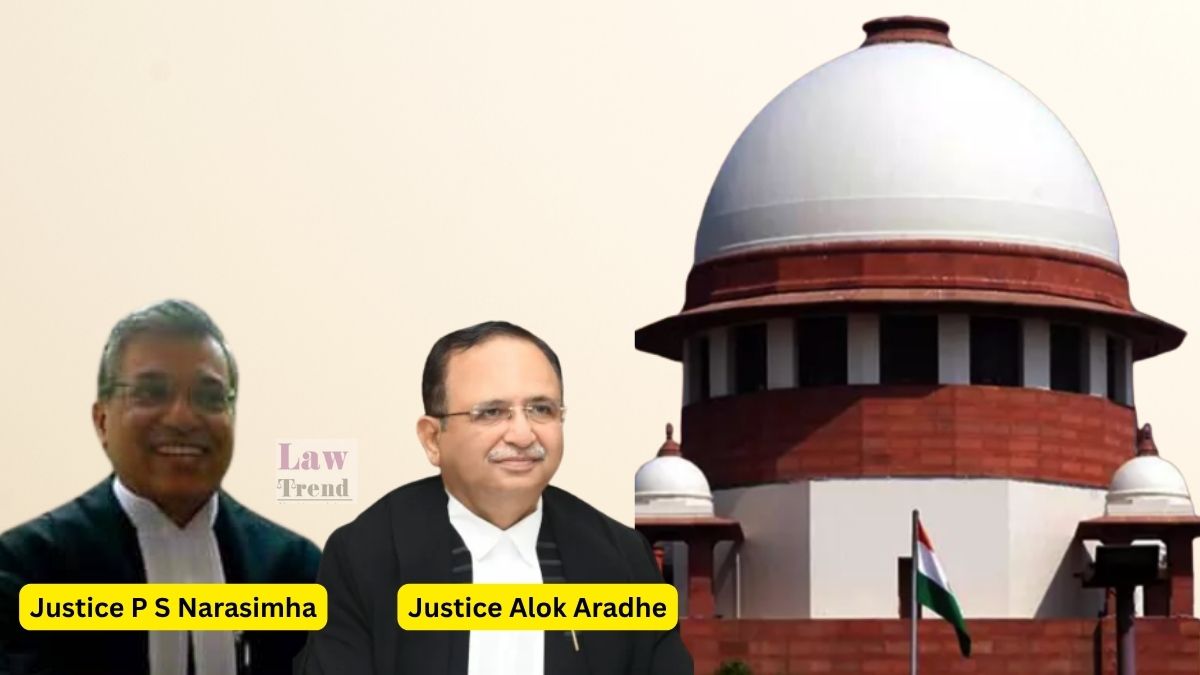

The Supreme Court of India has held that a party cannot be permitted to indirectly adduce oral evidence regarding internal documents and communications that have already been declared irrelevant and inadmissible by final orders of the court. A bench comprising Justice P. S. Narasimha and Justice Alok Aradhe affirmed an order of the Bombay High Court redacting inadmissible portions from the examination-in-chief affidavits of a witness presented by Reliance Industries Limited (RIL) in a 2005 commercial suit filed by NTPC Limited. Dismissing the appeal filed by RIL, the apex court imposed costs of Rs. 10 lakhs on the appellant for prolonging litigation and directed the High Court to dispose of the two-decade-old suit as expeditiously as possible.

Background of the Dispute

The litigation originates from a Request for Qualification (RFQ) published by NTPC Limited inviting prospective bidders to submit proposals for the supply of natural gas to its power plants. RIL submitted its financial proposal, following which NTPC issued a Letter of Intent (LOI) dated June 16, 2004. RIL accepted the LOI subject to the terms of a draft Gas Sale and Purchase Agreement (GSPA) to be negotiated and finalized.

Upon alleged non-compliance of obligations arising out of the LOI, NTPC filed a commercial suit in 2006 seeking a declaration that a binding contract exists between the parties for the supply of 132 trillion BTU of natural gas for a period of 17 years.

The progress of the suit was marked by multiple rounds of interlocutory applications:

  1. First Round (Discovery and Inspection): RIL filed Chamber Summons No. 201 of 2010 seeking discovery and inspection of internal documents and meeting minutes of NTPC. The High Court dismissed the application on February 20, 2014, observing: “A perusal of the schedule to the chamber summons, it clearly indicates that the discovery sought in respect of the documents described in the schedule is totally vague and is also by way of fishing enquiry. In my view none of these documents, would be relevant for the purpose of deciding the issue already framed as to why the Letter of Intent issued by the plaintiff and accepted by the defendant is a concluded contract or not.” A Division Bench of the High Court affirmed this decision on March 20, 2014, noting: “The question whether there was a concluded contract between the parties will be determined on the basis of the documents which parties have already produced in the suit. Learned Trial Judge has held that principal issue in the suit will accordingly be decided on the basis of the documents already produced by the parties and the internal noting or correspondence between officers of the plaintiff company are not relevant” and highlighting gross delay by RIL.
  2. Second Round (Production of RIL’s Internal Documents): After the plaintiff’s evidence concluded, RIL submitted the first examination-in-chief affidavit of its witness, Mr. B.K. Ganguly, on February 24, 2015. RIL then filed Chamber Summons No. 629 of 2015 to produce its own internal documents. The High Court rejected this attempt on January 29, 2016, holding: “An internal document of a party unilaterally prepared and not shared with the other, cannot possibly throw any light on what the parties together meant. It has, thus, no relevance for establishing or proving the existence or otherwise of a concluded contract…” A Special Leave Petition filed by RIL against this order was withdrawn on July 18, 2016.
  3. Third Round (Oral Evidence on Excluded Documents): On August 10, 2016, RIL filed a second evidence affidavit for Mr. B.K. Ganguly. NTPC moved for redaction of portions of both evidence affidavits. While the High Court initially permitted oral deposition regarding internal discussions, the Supreme Court set aside that order on February 28, 2019. The Supreme Court unequivocally held: “In our considered opinion, in view of the fact that previous orders have attained finality in appeal etc as such they are binding upon trial Court and during the course of trial they cannot be re-opened. It was not open for learned Single Judge to permit oral evidence with respect to the contents of the documents which have not to be taken into consideration as per aforesaid orders.”

Following the 2019 Supreme Court mandate, the High Court undertook a paragraph-by-paragraph examination of RIL’s evidence affidavits. By an order dated August 22, 2024, the High Court redacted paragraphs attempting to indirectly introduce the contents of internal emails, meeting summaries, and unapproved internal communications, while retaining portions reflecting the witness’s personal state of mind, perceptions of external letters exchanged between the parties, and direct inter-party correspondence. RIL subsequently challenged this redaction order before the Supreme Court.

READ ALSO  Jammu and Kashmir High Court Grants Bail to Ex-Cop After 18 Years in Prison

Arguments Before the Court

Before the apex court, RIL attempted to reopen the issue by relying on Section 60 of the Indian Evidence Act, 1872, governing oral testimony. RIL argued that its witness was present in internal meetings and was competent to depose as to what transpired, and contended that the High Court had exceeded its jurisdiction in redacting portions of the affidavits.

Court’s Analysis and Observations

The Supreme Court rejected RIL’s arguments, holding that the High Court had meticulously applied the apex court’s prior mandate and committed no error in redacting the affidavits. The bench noted that RIL could not be permitted to revisit or bypass binding orders that had attained finality.

READ ALSO  When Reason for Pre-Trial Detention Ceases, Law Itself Ceases: Punjab & Haryana HC Grants Bail as Trial Nears Completion

Reflecting on the history of the litigation, the Court sternly observed:

“The power of the RIL to litigate and obstruct progress of the suit seems unlimited. There is no dearth of financial resources, no obligation to aid and assist the court to cope with pending backlog of cases, perhaps it is lucrative for RIL to raise some objection or the other at every stage and when the trial court rejects it, the appellate and special leave jurisdictions open up. This litigation has multiple seasons laden with many episodes.”

The Court noted with deep concern that two decades had passed since the suit was filed in 2005, yet it remained stuck at the stage of evidence due to repeated interlocutory challenges. Recalling its earlier order from 2019, the Court highlighted:

“We are shocked that trial has been delayed for no good reason. It is pending since 2006, for more than 13 years. It is a commercial suit of 2006. We request the trial Judge to conclude the trial within the outer limit of nine months from today.”

Emphasizing that seven years had elapsed since that direction without finality, the Court stated that “permitting a party to a suit to prolong the litigation is also a sad reflection of the way courts conduct their proceedings.”

Decision

The Supreme Court dismissed the appeal and upheld the Bombay High Court’s order of August 22, 2024.

READ ALSO  Lying About the Educational Qualification for Marriage Doesn’t Amount to Cheating Under Sections 415 and 420 of IPC: MP HC

The apex court imposed costs of Rs. 10 lakhs on RIL, directing the amount to be paid to the Supreme Court Advocates on Record Association within five weeks. The High Court was requested to take up and dispose of the commercial suit as expeditiously as possible.

Case Details:

Case Title: Reliance Industries Limited v. NTPC Limited
Case No.: Civil Appeal No. of 2026 (Arising out of SLP (C) No. 23417 of 2024)
Bench: Justice Pamidighantam Sri Narasimha and Justice Alok Aradhe
Date: August 14, 2026

Law Trend
Law Trendhttps://lawtrend.in/
Legal News Website Providing Latest Judgments of Supreme Court and High Court

Related Articles

Latest Articles

