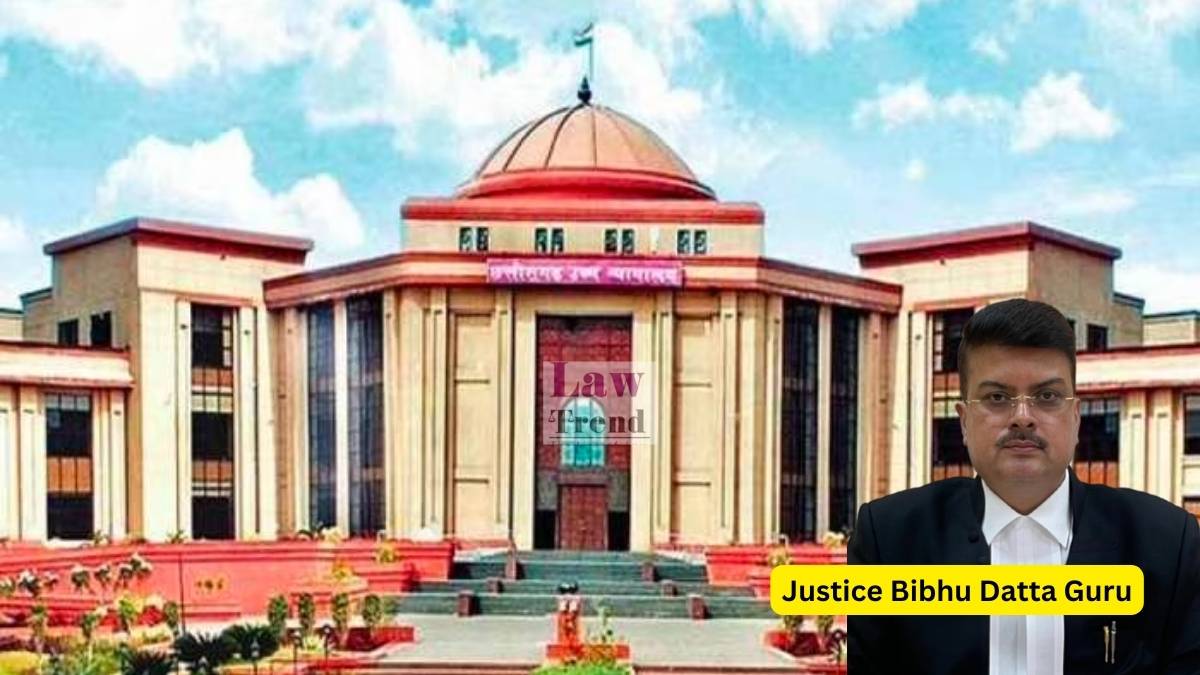
The High Court of Chhattisgarh has set aside the concurrent findings of lower courts, ruling that under Mahomedan Law, a testator cannot bequeath more than one-third of his estate without the consent of the legal heirs. The Court held that even if a Will is genuinely executed, a bequest in excess of the legal third cannot take effect unless the heirs consent thereto after the death of the testator.
The Single Bench of Hon’ble Shri Justice Bibhu Datta Guru allowed the Second Appeal filed by a widow challenging the validity of a Will executed by her late husband in favor of his nephew. The Court clarified that under Sections 117 and 118 of the Principles of Mahomedan Law, a bequest to an heir is invalid unless consented to by other heirs after the testator’s death, and a Muslim cannot dispose of more than one-third of his surplus estate by Will. The High Court found that the lower courts erred in dismissing the widow’s suit in toto despite her undisputed status as a Class-I legal heir.
Background of the Case
The appellant, Smt. Jaibun Nisha, is the widow of Late Abdul Sattar Lodhiya, who died on May 19, 2004. The dispute pertains to land bearing Khasra No. 1045/3 admeasuring 0.004 Acre (eight dismil) and a house in Korba, Chhattisgarh, which was originally recorded in the name of Abdul Sattar.
In November 2007, the appellant discovered that the name of Respondent No. 1, Mohd. Sikandar, had been entered jointly with hers in the revenue records. Mohd. Sikandar, who is the son of Abdul Sattar’s brother Ghulam Mustafa, claimed to be the adopted son of the deceased. The appellant challenged this entry, asserting that her husband never recognized him as an adopted son and that she was the exclusive owner of the property.
The respondent relied on a Will dated April 27, 2004, allegedly executed by Abdul Sattar. The Trial Court dismissed the appellant’s suit for declaration of title on February 7, 2015. The First Appellate Court affirmed this dismissal on January 28, 2016, holding that the Will was duly proved and sufficient to negate the plaintiff’s claim of absolute title.
Arguments of the Parties
The counsel for the Appellant (Plaintiff) argued that:
- Both parties are governed by Muslim Law, which does not recognize the concept of adoption.
- The Will is invalid under Mahomedan Law because a bequest to an heir is not valid unless other heirs consent after the testator’s death.
- A Mahomedan cannot bequeath more than one-third of his estate without the consent of heirs; the alleged Will purported to bequeath the entire property to the respondent without the appellant’s consent.
- The lower courts wrongly shifted the burden of proof onto the appellant to disprove the Will and establish a lack of consent.
The counsel for the Respondent (Defendant) contended that:
- The Will was executed voluntarily and proved by independent attesting witnesses.
- The appellant had consented to the execution and herself handed over the Will to the respondent for mutation purposes.
- The respondent was treated as a son by the deceased, supported by documents from the Bilaspur Young Memon Association.
- The appellant’s silence for several years implied consent.
Court’s Analysis
The High Court framed the core issue as “whether, in view of the settled principles of Mahomedan Law, the appellant/plaintiff could be non-suited in toto despite being an undisputed legal heir”.
1. Statutory Limits on Testamentary Power: The Court referred to Section 118 of the Principles of Mahomedan Law, which states: “A Mahomedan cannot by will dispose of more than a third of the surplus of his estate after payment of funeral expenses and debts. Bequests in excess of the legal third cannot take effect, unless the heirs consent thereto after the death of the testator.”
Additionally, Section 117 provides that a bequest to an heir is not valid unless the other heirs consent to the bequest after the death of the testator.
2. Burden of Proof and Consent: The Court observed that the lower courts committed a “serious error in law” by shifting the burden of proof to the appellant. The Court noted:
“Once the respondent relied upon a Will bequeathing the entire property, the onus squarely lay upon him to establish compliance with Sections 117 and 118 of Mahomedan Law.”
Regarding the respondent’s claim of consent, the Court held:
“Mere silence or delay in initiating proceedings cannot, by itself, be elevated to the status of consent, particularly when consent under Mahomedan Law must be free, conscious, and post-death consent of the heirs.”
3. Cited Precedents: The Court relied on several judgments to support its reasoning:
- Noorunissa Vs. Rahaman Bi & others (Madras High Court): Held that while Mahomedan Law permits making a Will to a limited extent, it does not allow undue preference to a particular heir without the consent of other heirs.
- Sri. Mohammed Ashraf Vs. Smt. Tabbasum (Karnataka High Court): Ruled that a trial court commits a serious error by not noticing the mandatory provisions of Section 117, limiting a bequest to 1/3rd share.
- Sulaxani vs. Sattar Ali (Chhattisgarh High Court): Held that if no consent is obtained from other residuaries, a Will is not valid as per Mahomedan Law procedures.
Decision
The High Court concluded that the First Appellate Court fell into “grave legal error” by dismissing the suit in toto after acknowledging that the respondent could at best claim one-third of the property.
The Court held:
“Merely because she claimed exclusive ownership, both the learned Courts could not deny her legitimate statutory share flowing from succession law… The approach adopted by both the learned Courts defeats the very object of Sections 117 and 118 of Mahomedan Law and results in unjust enrichment of the respondent to the detriment of a lawful heir.”
Consequently, the High Court allowed the appeal, setting aside the judgments and decrees of both the Trial Court and the First Appellate Court.
Case Details:
- Case Title: Smt. Jaibun Nisha Vs. Mohd. Sikandar & Anr
- Case No: SA No. 195 of 2016
- Coram: Justice Bibhu Datta Guru