

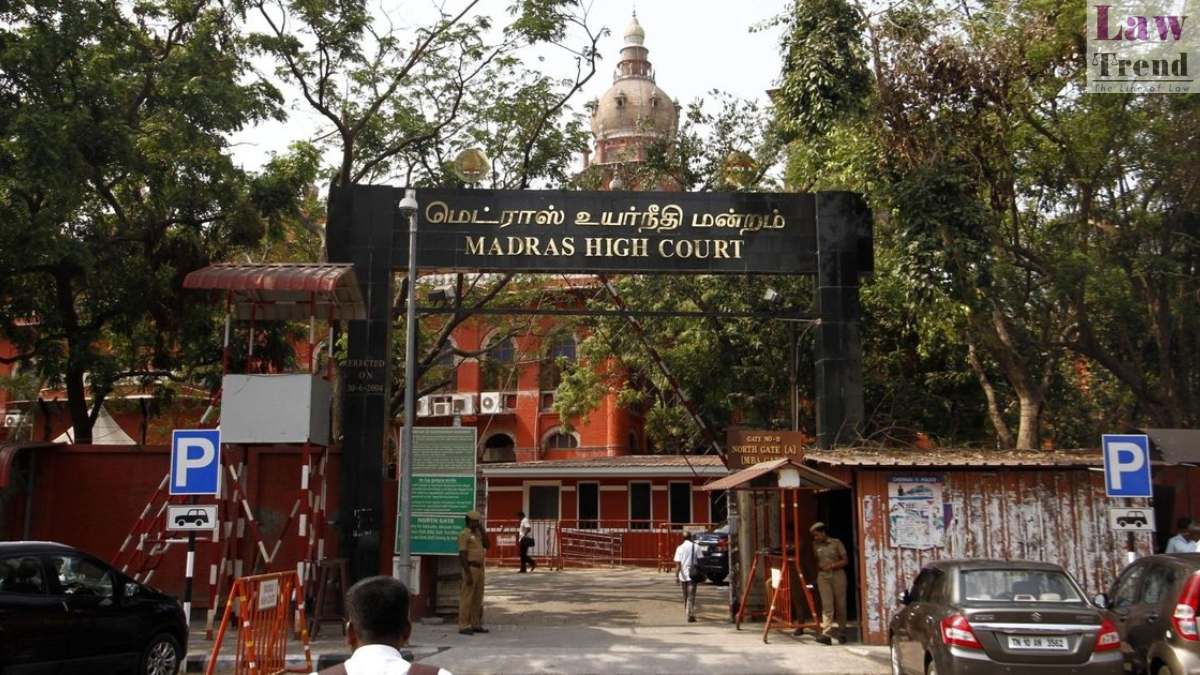
The Madras High Court has rejected a public interest litigation seeking a broad investigation into the regulatory approvals and affiliation of Sri Venkateswara College of Engineering and Technology, ruling that public interest lawsuits cannot be built on unverified electronic media reports and online gossip.
In an order issued on July 3, a division bench of Chief Justice Sushrut Arvind Dharmadhikari and Justice G Arul Murugan dismissed the petition filed by D Radhakrishnan. The court ruled that individuals who file public interest cases must act as diligent researchers rather than collectors of unverified online materials.
Contradictions In Petitioner Evidence
Represented by senior advocate R Shunmugasundaram, the petitioner had requested the court to establish an independent committee of regulatory officers. This committee was intended to examine how the college secured and maintained its autonomous status, approvals, and affiliation. To support the claim of widespread malpractice, the petition relied on newspaper clippings, YouTube videos, an active investigation by the Directorate of Vigilance and Anti-Corruption, and a 2025 First Information Report.
The bench pointed out a significant contradiction in how the petitioner approached the authorities and the court. According to the judges, Radhakrishnan had approached statutory authorities in April 2026 demanding the immediate withdrawal of the college’s accreditation, but subsequently approached the high court with a modified request for an investigative committee under a completely different pretext.
Ongoing Investigation And Court Decision
The high court further observed that because a criminal investigation by the Directorate of Vigilance and Anti-Corruption is already actively underway, the matter is currently sub judice. The judges stated that the petition appeared to be an attempt to sensationalize a legal process that was already in motion, rather than a genuine effort to serve the public interest.
Emphasizing that public interest litigations lacking verified, independent research fail to meet the required legal threshold and must be stopped at the outset, the court dismissed the petition. No litigation costs were imposed on the petitioner.




