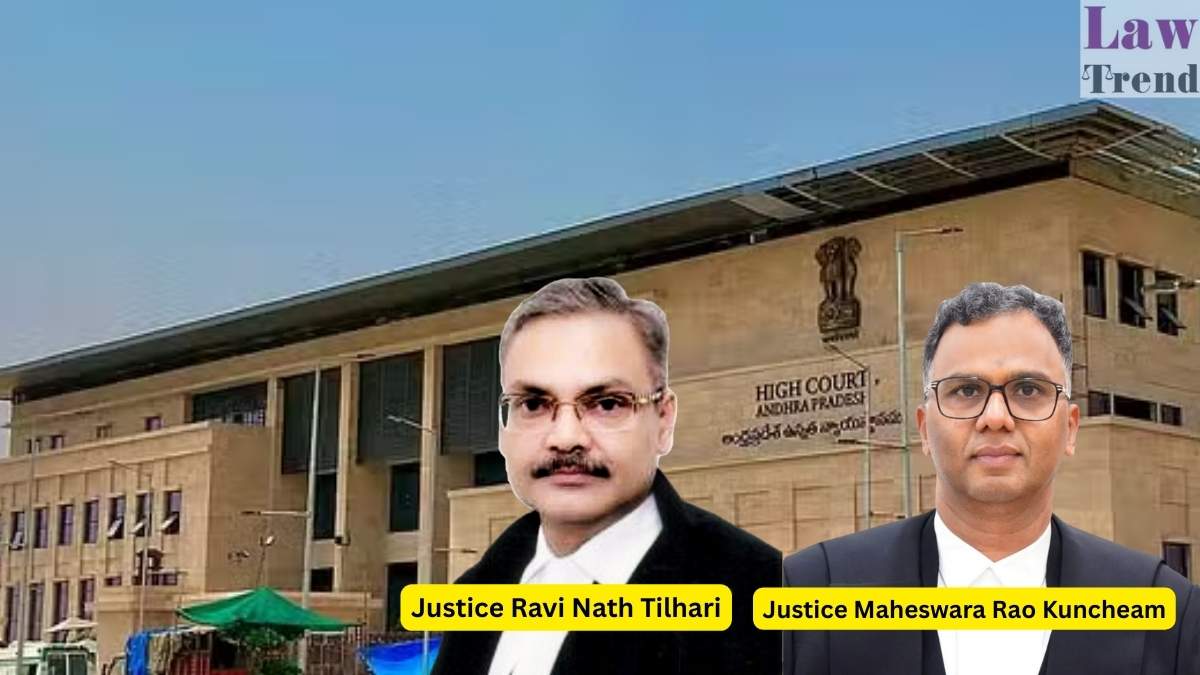
The High Court of Andhra Pradesh has dismissed a writ petition challenging an order of the National Green Tribunal (NGT), South Zone, which had kept the Environmental Clearance (EC) granted to a silica sand mining firm in abeyance. The Division Bench, comprising Justice Ravi Nath Tilhari and Justice Maheswara Rao Kuncheam, held that the NGT acted within its jurisdiction and that its role is “not simply adjudicatory” but also “preventive and remedial” to save the environment from degradation.
The High Court adjudicated a challenge against the NGT’s decision to suspend an EC granted to M/s. Sri Kumaraswamy Silica Mines. The Tribunal had ruled that the clearance was granted without proper ecological studies or district surveys. The High Court affirmed the NGT’s stance, ruling that a local resident challenging the EC constitutes an “aggrieved person” and that the Tribunal possesses suo motu powers to address environmental concerns beyond the specific grounds of an appeal.
Background of the Case
The petitioner, M/s. Sri Kumaraswamy Silica Mines, is a partnership firm engaged in silica sand mining in Momidi Village, Chillakur Mandal, SPSR Nellore District. The original mining lease was granted in 1975 and subsequently renewed.
The petitioner applied for an Environmental Clearance (EC) in 2013 under the EIA Notification 2006. However, the Ministry of Environment, Forest and Climate Change (MoEF&CC) initially directed the petitioner to stop mining due to alleged violations. Following litigation and representations, the petitioner applied under the “violation category” in 2018. The MoEF&CC granted the EC on April 16, 2020.
The 7th respondent, B. Madan Kumar Reddy, challenged this grant before the NGT, South Zone (Appeal No. 19 of 2020). On November 15, 2021, the NGT allowed the appeal in part, keeping the EC in abeyance and issuing directions for a detailed study on the impact of mining on the “unique Dunal wetland ecosystem” and the assessment of compensation for illegal mining. The petitioner approached the High Court challenging this NGT order.
Arguments of the Parties
The Petitioner’s Submissions: Senior Advocate Sri P. Veera Reddy argued that:
- Maintainability: The appeal filed by the 7th respondent before the NGT was not maintainable as he was not an “aggrieved person” under Section 16 of the NGT Act.
- Natural Justice: The NGT order violated principles of natural justice as it decided on grounds (such as the lack of District Survey Reports) that were not raised in the appeal, denying the petitioner an opportunity to be heard.
- Applicability of Guidelines: The Sustainable Sand Mining Management Guidelines, 2016 were applicable only to river sand mining and not to silica sand mining.
- Prior Grant: The EC was granted prior to the 2021 notification, and thus the NGT should not have applied retrospective standards.
The Respondents’ Submissions: Senior Advocate Sri Ganta Rama Rao, appearing for the 7th respondent, and counsel for the authorities contended:
- Locus Standi: The 7th respondent is a resident of the village where mining occurs and is directly affected by environmental degradation, making him an “aggrieved person.”
- Procedural Lapses: The Expert Appraisal Committee (EAC) recommended the EC without ascertaining if a District Survey was conducted or considering the impact of large-scale mining on the local ecology.
- Jurisdiction: The NGT has wide jurisdiction to protect the environment and can take note of violations even if not explicitly pleaded.
Court’s Analysis
1. Maintainability of Writ Petition
The Court first addressed the preliminary objection regarding the availability of a statutory appeal under Section 22 of the NGT Act. Citing the Supreme Court’s decision in Madhya Pradesh High Court Advocates Bar Association vs. Union of India (2022), the Bench held that the existence of an alternative remedy does not oust the High Court’s jurisdiction under Articles 226 and 227. Given that the petition had been pending since 2021, the Court decided to entertain it on merits.
2. Locus Standi of the Appellant before NGT
The Court rejected the petitioner’s argument that the 7th respondent was not an “aggrieved person.” Relying on Jasbhai Motibhai Desai vs. Roshan Kumar and Thammanna vs. K. Veera Reddy, the Court observed that a resident of the area where mining is conducted has a right to a pollution-free environment under Article 21.
“The 7th respondent being the resident of the village concerned, if for any mining activity, the EC was issued and violating norms such person will certainly be a person aggrieved within the meaning of Section 16 of the N.G.T Act.”
3. Powers of the National Green Tribunal
The Bench strongly reaffirmed the broad powers of the NGT, citing Municipal Corporation of Greater Mumbai vs. Ankita Sinha (2021). The Court held that the NGT’s role is sui generis and not limited to adjudication of a lis.
“The N.G.T has the legal obligation to provide for preventing and restorative measures… It has the suo moto power as well to take cognizance of various aspects and factors consequently in discharge of its functions under the N.G.T Act, it cannot be said that the N.G.T ought to have confined only to the objections raised in the appeal.”
4. Applicability of Mining Guidelines
The Court dismissed the contention that the Sustainable Sand Mining Management Guidelines, 2016 apply only to river sand. The Judges noted:
“A perusal of the Guidelines, 2016 clearly show that they apply to the sand mining from the river and also from other sand sources… with an objective to protect the environment and the right of the population to live in clean and safe surroundings.”
5. Merits of the NGT Order
The High Court found that the NGT had rightly noted several deficiencies in the EC process, including:
- Failure to assess the impact of cutting 1,607 cashew trees.
- Lack of a District Survey Report (DSR) and replenishment study.
- Failure to consider the cumulative impact of 40 years of mining on the eco-sensitive area.
The Court cited the recent Supreme Court judgment in Union Territory of J&K vs. Raja Muzaffar Bhat (2025), which held that a DSR without a proper replenishment study is fundamentally defective.
Decision
The High Court dismissed the writ petition, upholding the NGT’s order dated November 15, 2021. The Court directed the MoEF&CC and state authorities to:
- Consider the grant of EC in accordance with law, keeping in view the NGT’s directions.
- Take into account the latest Supreme Court pronouncement in Confederation of Real Estate Developers of India (CREDAI) vs. Vanashakti (2025) regarding ex-post facto clearances.
- Provide an opportunity of hearing to both the petitioner and the 7th respondent.
The Court concluded that no interference was called for as the NGT had assigned well-founded reasons for its decision to protect the environment.
Case Details
- Case Title: M/s. Sri Kumaraswamy Silica Mines vs. The Government of India and others
- Case Number: W.P. No. 31066 of 2021
- Coram: Justice Ravi Nath Tilhari and Justice Maheswara Rao Kuncheam
- Counsel for Petitioner: Sri P. Veera Reddy, Senior Advocate
- Counsel for Respondents: Sri G. Sai Narayana Rao; Ms. Anusha (AGP); Sri Ganta Rama Rao, Senior Advocate