

Jharkhand Victim Compensation Scheme 2016 Prescribes No Upper Limit; High Court Directs State to Pay Rs 15 Lakh to Male Acid Attack Survivor
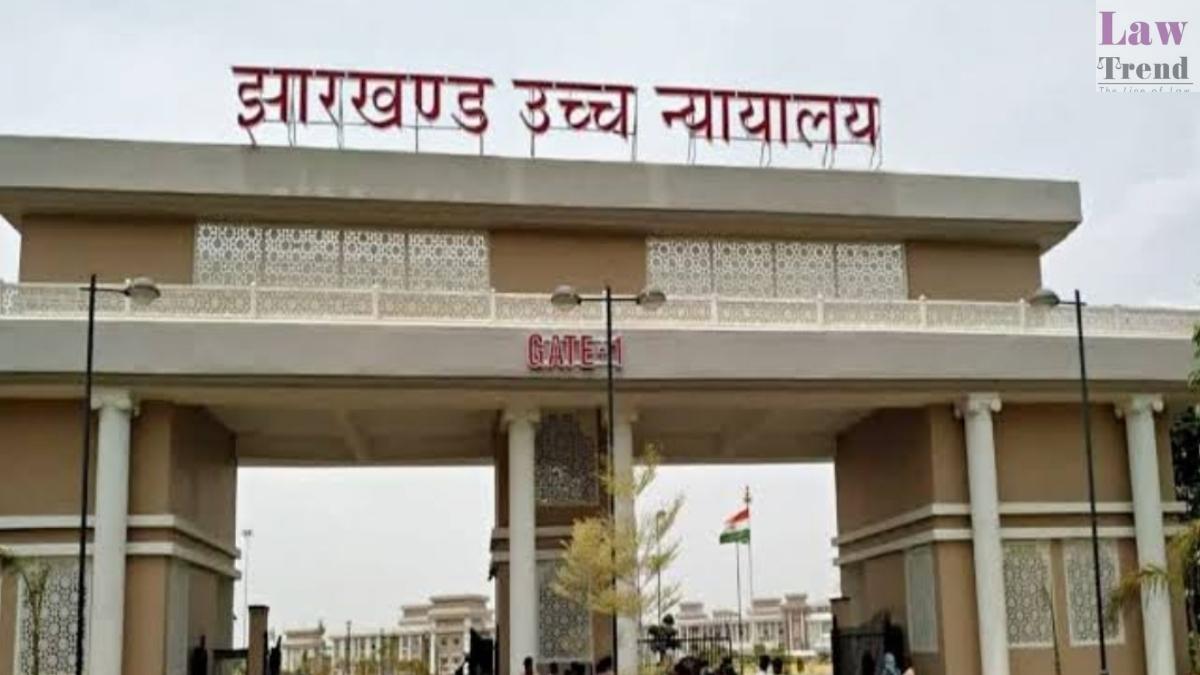

In a significant ruling addressing gender disparity and the lifelong trauma of acid attack survivors, the High Court of Jharkhand has condoned a 1,374-day delay and ordered the state government to enhance the compensation of a male survivor from Rs 3,00,000 to Rs 15,00,000. A division bench comprising Justice Rongon Mukhopadhyay and Justice Pradeep Kumar Srivastava held that the Jharkhand Victim Compensation (Amendment) Scheme, 2016, does not impose any upper limit on compensation, thereby granting courts the discretion to award higher amounts matching the severity of the victim’s injuries.

In its opening remarks, the bench severely criticized the state’s insensitive approach toward male victims, observing:

“A virulent regressive and a potent attack with acid on the appellant/writ-petitioner had not only caused disfigurement of his face but more notably disfigurement of his soul which has further been compounded by the utter lack of sensitivity on the part of the State doling out a compensation which for a male victim in particular, does not even compensate a miniscule percentage of the trauma the appellant writ-petitioner had undergone and which is not likely to subside in the near future.”

Background of the Case

The case dates back to an incident on May 31, 2012, at around 4:00 PM. The appellant, Rahul Kumar, who was studying in his room, heard a quarrel outside between his ten-year-old cousin and another neighborhood boy. When the neighbor boy’s mother arrived and began using filthy language against his cousin, Kumar intervened and asked her to stop. Enraged, the woman rushed back to her house, returned with a bottle of acid, and threw the liquid directly onto Kumar’s face.

A police statement was recorded the following day, leading to the registration of Chano P.S. Case No. 55/2012 under Sections 307, 326, 304, and 506/34 of the Indian Penal Code (IPC).

The acid attack caused catastrophic injuries. Kumar’s face was severely disfigured, his eyelids vanished, both ears were burnt with the loss of ear cartilage, and he suffered severe burns across his neck, chest, and left upper limb. Over the years, Kumar has undergone 14 plastic surgeries, lost a major portion of his eyesight, and incurred medical expenses exceeding Rs 25,00,000. He was subsequently diagnosed with Degenerative Lumbar Spondylitis due to heavy medication and collateral damage.

Kumar originally received Rs 3,00,000 under the Jharkhand Victim Compensation Scheme, 2016, through the District Legal Services Authority (DLSA) Ranchi. Seeking an enhancement of compensation to Rs 25,00,000 to cover continuous surgeries and rehabilitation, Kumar approached the High Court via a writ petition, W.P.(C) No. 2683 of 2018. However, a Single Judge dismissed his prayer on November 27, 2019, on the grounds that he had already received the Rs 3,00,000 prescribed under the scheme. This led to the filing of the present Letters Patent Appeal (L.P.A.).

READ ALSO  Concealment of Income Disentitles Wife to Monetary Maintenance, But Right to Residence Under DV Act Remains Intact: Delhi High Court

Arguments of the Parties

Appearing for the appellant, Advocate Mrs. Snehlika Bhagat raised fundamental constitutional questions regarding gender discrimination in victim compensation. She argued that the state’s compensation notifications for male and female victims are highly discriminatory, unreasonable, and violate the “Right to Life” under Article 21 of the Constitution of India. Mrs. Bhagat submitted that acid does not discriminate between genders when causing physical damage, mental trauma, social desertion, and permanent disability.

Addressing the 1,374-day delay in filing the appeal, Mrs. Bhagat stated that Kumar had “chosen life over litigation,” prioritizing urgent corrective surgeries to prevent his body parts from rotting. She added that Kumar’s family faced severe financial distress, his parents were old and ailing, and the appeal had to be filed through the High Court Legal Services Committee. Furthermore, the limitation period had expired on January 4, 2020, during the peak of the Covid-19 pandemic.

The state, represented by Mr. M. Dubey, Associate Counsel to the Advocate General, strongly opposed the condonation of delay, calling it an inordinate delay without “sufficient cause.” On the merits, the state argued that the appellant had already received the compensation of Rs 3,00,000 as designated under Schedule-I of the 2016 Scheme, and therefore, the Single Judge’s order required no interference.

The Court’s Analysis and Condonation of Delay

The High Court first addressed the delay in filing the appeal. Empathizing with the appellant’s medical plight, the court condoned the 1,374-day delay, concluding that the appellant’s medical condition constituted “sufficient cause” under Section 5 of the Limitation Act. The bench remarked:

READ ALSO  Mere Capacity to Earn Not a Ground to Deny Maintenance: Delhi High Court Awards Interim Support to Wife; Slams Notion of 'Idle Wife'

“In cases of this nature delay in filing of the appeal/application should be considered with utmost sympathy and the Courts cannot be oblivious to the psychological distress and physical injury faced by a victim of acid attack.”

The bench then thoroughly analyzed the state’s compensation frameworks. It noted that under the Jharkhand Victim Compensation (Amendment) Scheme, 2016, the minimum compensation payable for an acid attack is Rs 3,00,000. Crucially, the court observed:

“A bare perusal of the provisions contained in the Scheme of 2016 and its Schedule clearly demonstrates that there is no upper limit for compensation to be so awarded.”

The court contrasted this with the Jharkhand Victim Compensation (Amendment) Scheme, 2019 (notified via Memo No. 4052 dated July 30, 2019), which was enacted based on the National Legal Services Authority (NALSA) guidelines following the Supreme Court’s ruling in Nipun Saxena & Anr. vs. Union of India & Ors.

The 2019 Scheme is strictly confined to female victims and provides a minimum compensation of Rs 7,00,000 and an upper limit of Rs 8,00,000 for face disfigurement. The bench pointed out the stark gender discrimination, noting that the minimum compensation under the 2016 Scheme (applicable to male survivors) is at wide variance with the 2019 Scheme. The court emphasized that it is time to amend the 2016 Scheme to match the 2019 Scheme for male victims to “obliterate the discrimination it accentuates.”

Citing the Supreme Court judgment in Parivartan Kendra Vs. Union of India (2016), the bench reiterated that a mere Rs 3,00,000 is grossly insufficient for the permanent skin treatments and rehabilitation required by acid attack survivors. It recalled that the Supreme Court in Laxmi v. Union of India did not place a bar on state governments awarding compensation exceeding Rs 3,00,000, and that states possess the complete discretion to offer higher amounts.

READ ALSO  Injury Caused By Throwing A Piece Of Brick Not An Injury Likely To Cause Death': Allahabad HC Alters Murder Conviction To 'Grievous Hurt

The Decision

Recognizing that Kumar’s aspirations of becoming a Chartered Accountant were permanently scuttled due to a moment of rage, the High Court ruled that physical and mental suffering must be factored into his rehabilitation. The bench observed:

“We are aware of the fact that the physical and mental pain and suffering cannot be compensated in terms of money but it is our belief that the same would go a long way in alleviating to a certain extent such trauma and may also assist the writ-petitioner in his rehabilitation.”

Accordingly, the High Court enhanced Kumar’s compensation to Rs 15,00,000. Deducting the Rs 3,00,000 already received, the court directed the state to release the remaining balance of Rs 12,00,000 within eight weeks.

Regarding the medical expense claims, the court noted that during a prior contempt proceeding (Contempt Case (Civil) No. 133 of 2022), the state had paid Rs 4,21,197 out of a total claim of Rs 18,21,588, citing discrepancies in some bills. The bench directed the state to immediately seek clarifications from Kumar regarding any disputed bills and release the rest of the actual incurred expenses within four weeks of receiving the necessary vouchers.

For Kumar’s future surgeries, the court directed the state to process the bills expeditiously. It ordered that the state must make payments directly to the treatment hospitals once the future bills are submitted, ensuring that the process remains hassle-free for the survivor.

With these observations and directions, the Letters Patent Appeal was disposed of, and all pending interlocutory applications were closed.

Case Details

Case Title: Rahul Kumar v. The State of Jharkhand & Ors.
Case No.: L.P.A. No. 252 of 2026
Bench: Justice Rongon Mukhopadhyay and Justice Pradeep Kumar Srivastava
Date of Judgment: June 19, 2026

Law Trend
Law Trendhttps://lawtrend.in/
Legal News Website Providing Latest Judgments of Supreme Court and High Court

Related Articles

Latest Articles

