

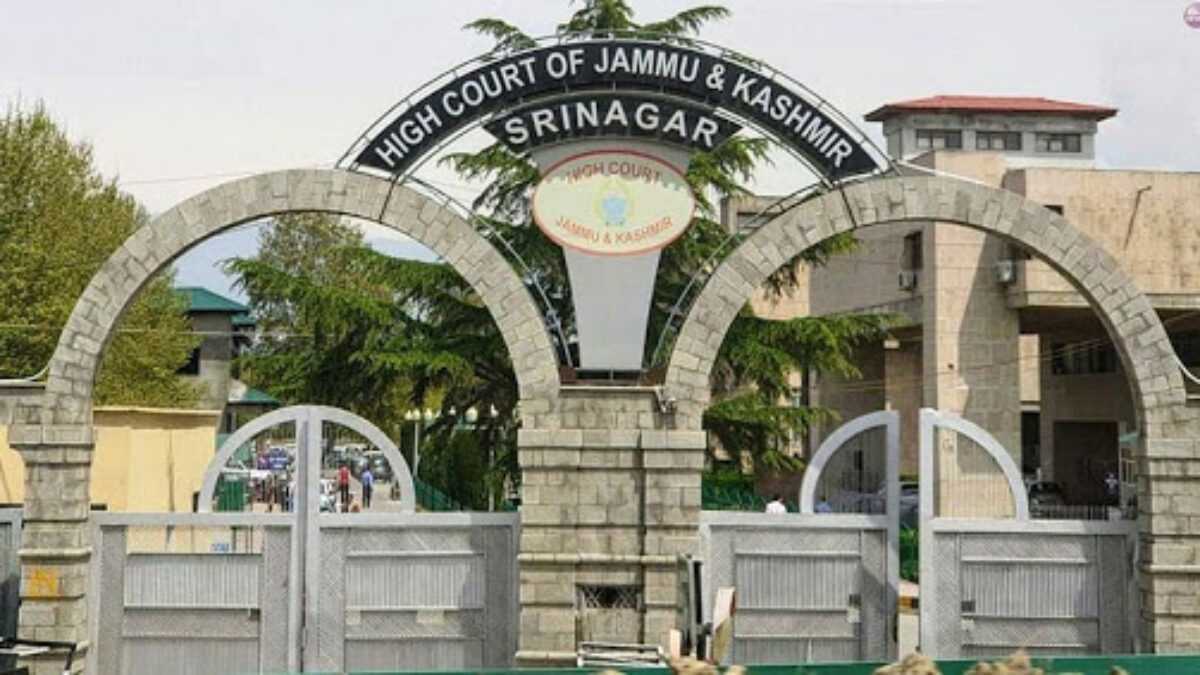
In a landmark ruling, the High Court of Jammu and Kashmir and Ladakh has underscored the right to property as a human right, directing the Army to pay 46 years of due rent to a landowner whose property has been occupied since 1978. Justice Wasim Sadiq Nargal delivered the verdict on November 20, emphasizing that the right to property transcends mere constitutional entitlements, extending into the sphere of fundamental human rights.
The case pertains to Abdul Majeed Lone, who filed a petition in 2014 claiming that his 1.6-acre land at Tangdhar near the Line of Control in Kupwara District has been under Army occupation without any form of compensation or rent. The court’s decision comes after a prolonged legal struggle highlighting the necessity of compensating landowners fairly when their property is requisitioned by the state.
Justice Nargal stated, “The right to property is now considered not only a constitutional or statutory right but it falls within the realm of human rights. Human rights have been considered in the realm of individual rights such as right to shelter, livelihood, health, employment etc and over the years, human rights have gained a multifaceted dimension.”
The court found that the Army had indeed been in possession of the land since 1978, contrary to the claims of the Centre’s counsel, a fact confirmed by the revenue department and a recent survey. It was established that Lone had not received any compensation or rent for the land over the nearly five decades of military occupation.
The judgment reiterated that the state’s power of eminent domain, while legitimate, requires that any acquisition of private property for public use must be accompanied by reasonable compensation. The verdict also highlighted that any dispossession of property by state agencies must adhere strictly to the procedures established by law.
“The facts mentioned above clearly reveal that the respondents have violated the basic rights of the petitioner and have deprived him of the valuable constitutional right without following the procedure as envisaged under law,” noted the court.




