

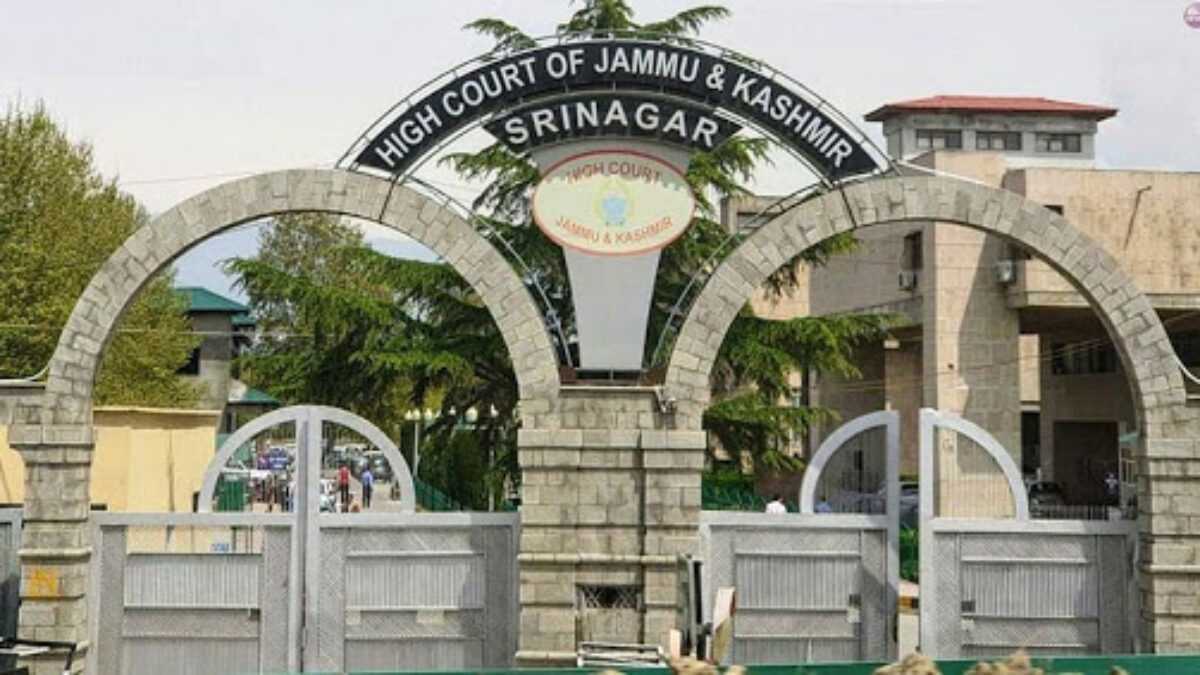
The High Court of Jammu and Kashmir and Ladakh has set aside the protracted suspension of a former Jammu and Kashmir Projects Construction Corporation employee, directing authorities to release all consequential service dues and expedite his retiral pension.
Ruling on a petition filed by the former head assistant, Justice M A Chowdhary held that retaining an employee under prolonged suspension without conducting a departmental inquiry ceases to be an administrative interim step and effectively turns into a punitive measure carrying severe social stigma.
The ruling came on an order issued September 22, in which the court directed the government to treat the petitioner as reinstated for administrative purposes, settle all consequential financial entitlements, and finalize his pension under applicable statutory service rules.
Prolonged Measure Amounts To Punishment
Addressing the legal limits of workplace disciplinary actions, the court observed that suspension by definition serves merely as a temporary bar against an official carrying out duties or exercising specific privileges while an investigation or trial proceeds. It cannot be converted into an open-ended or permanent condition.
The court noted that when an employer leaves an employee under suspension for an extended period without initiating or completing departmental disciplinary proceedings, the action takes on a punitive character. Given the reputational harm and social consequences that accompany such actions, the bench ruled that indefinite inaction by authorities invalidates the administrative basis of the suspension.
The petitioner had been placed under suspension on December 18, 2020, and subsequently reached the age of superannuation on May 31, 2021, retiring while the disciplinary cloud remained unresolved.
Origins Of The 2011 Vigilance Case
The matter originated from a 2011 investigation initiated by the Vigilance Organisation Kashmir against a fellow corporation worker. That case centered on allegations that the co-worker had used forged academic credentials to secure a job within the corporation, leading to charges under the Prevention of Corruption Act and the Ranbir Penal Code.
Investigating agencies implicated the petitioner on grounds that he had prepared the service record for the accused official without independently confirming the validity of the underlying educational documents.
In his defense before the High Court, the petitioner maintained that he held neither the authority nor the regulatory duty to re-examine or verify certificates. He pointed out that the relevant drawing and disbursing officer had already examined and approved the qualifications decades earlier, during 1991 and 1992.
Unexplained Administrative Delays
The High Court drew attention to significant procedural lapses by the corporation and investigating agencies, highlighting that it took nine years following the initial 2011 police complaint to submit a formal charge sheet before the anti-corruption court in Anantnag.
During that nine-year span, the bench observed, the corporation failed to carry out even a preliminary fact-finding assessment or initiate formal departmental inquiries into the alleged misconduct.
The court criticized the management for failing to present any reasonable explanation for the protracted delay in serving a formal departmental charge sheet and conducting an internal inquiry, concluding that the failure to act within a reasonable timeframe breached statutory obligations and necessitated the quashing of the suspension order.




