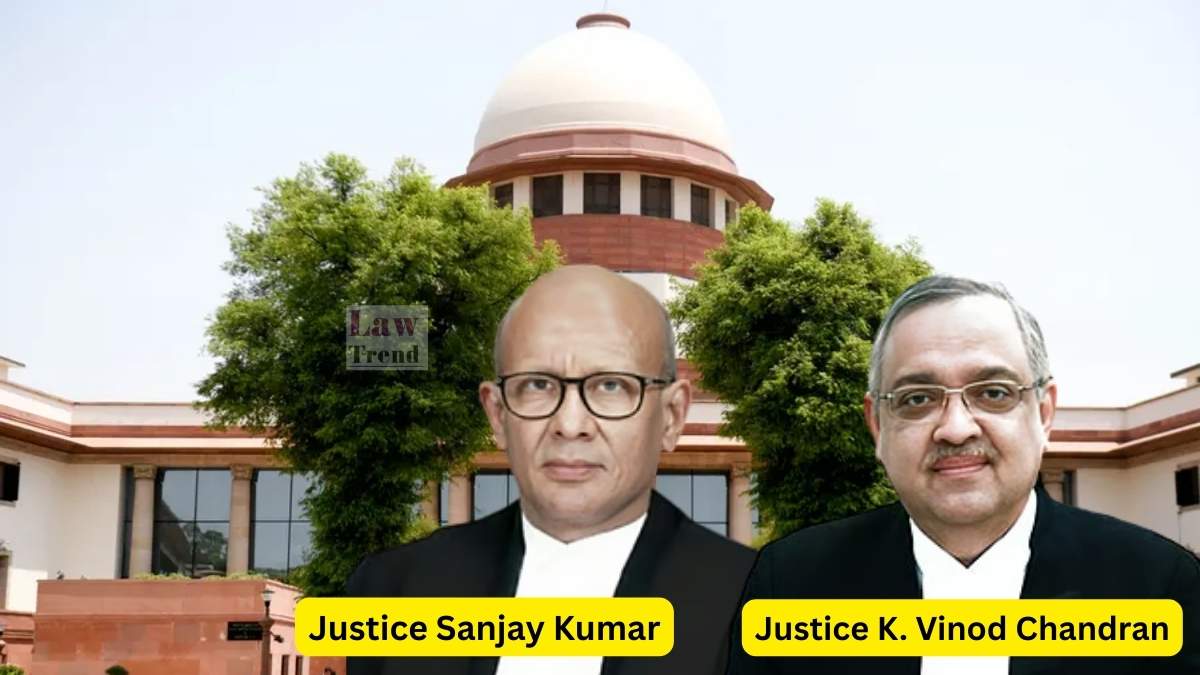
The Supreme Court has ruled that graduate Anganwadi Workers cannot be excluded from the 29% recruitment quota reserved for candidates with a Secondary School Leaving Certificate (SSLC) and 10 years of experience for the post of Supervisor in the Integrated Child Development Scheme (ICDS).
A Bench comprising Justice Sanjay Kumar and Justice K. Vinod Chandran set aside a High Court judgment that had restricted graduates to an 11% earmarked quota, thereby restoring the decision of the Administrative Tribunal. The Court held that possessing a higher qualification does not disqualify a candidate from applying under a category requiring a lower qualification.
Background of the Case
The dispute arose from the ‘Special Rules for the Kerala Social Welfare Subordinate Services, 2010′ and its subsequent amendments in 2014 regarding the appointment of ICDS Supervisors. Prior to the amendment, a ratio of 70:29:1 was maintained for direct recruitment (open category), Anganwadi Workers (SSLC with 10 years’ experience), and promotions, respectively.
The 2014 amendment increased the total ratio for Anganwadi Workers from 29% to 40%. Within this 40%, 11% was specifically carved out for graduates from the open recruitment source. The respondents, who held only SSLC qualifications, challenged the inclusion of graduate Anganwadi Workers in the remaining 29% quota, arguing that the 11% was an exclusive “quota” for graduates and they should not “impinge” upon the vacancies preserved for those with lesser qualifications.
Arguments of the Parties
For the Appellants (Graduate Workers): Senior Counsel Sri. Huzefa Ahmadi and Sri. Nikhil Goel argued that the 11% ratio was created to upgrade the quality of service by bringing in experienced graduates. They contended that excluding graduates from the 29% quota would “discount the efforts undertaken to obtain a higher qualification.” They further highlighted that many selected graduates had already resigned from their previous posts and faced a total loss of livelihood due to the High Court’s interpretation.
For the Respondents (SSLC Holders): Counsel argued that the 11% ratio was a benefit conferred exclusively on graduates. They maintained that SSLC holders are at a disadvantage when competing with graduates and that the statutory rule intended to keep the two categories “mutually exclusive” to preserve opportunities for those with lesser qualifications.
For the State and KPSC: The Kerala Public Service Commission (KPSC) and the State Government supported the graduates’ inclusion. They clarified that the selection was based on merit (OMR and written tests) and that out of 317 appointed persons, only 82 were degree holders, proving there was no unfair edge or “absence of a level playing field.”
Court’s Analysis
The Supreme Court analyzed the amended rules and the intention of the government. Justice K. Vinod Chandran, writing for the Bench, observed:
“The amendment increasing the ratio of direct recruit Anganwadi Workers, with the increased ratio being allocated specifically for graduates, was aimed at upgrading the cadre of Supervisors in the ICDS by providing for more graduates with experience as Anganwadi Workers.”
The Court rejected the “mutual exclusivity” theory, noting that the 29% ratio for SSLC holders remained untouched and was not reduced by the amendment. The Court emphasized that a higher qualification does not disable a person from applying for a post where a lower qualification is prescribed:
“The graduation or the absence of it, obviously did not confer a privilege or a disadvantage to the candidates who appeared for the selection… The High Court in the impugned judgment interfered with the common source of Anganwadi Workers… by providing a restriction in the 29% ratio to graduates, which as aptly termed is a judicial fiat interfering with the rule prescription.”
The Court also distinguished previous cases like P.M. Latha v. State of Kerala, noting that those cases dealt with different qualifications that were not considered “higher” in the relevant context, whereas here, graduation clearly encompasses the requirement of SSLC.
The Decision
The Supreme Court allowed the appeals, set aside the High Court’s judgment, and restored the Tribunal’s order.
The Court clarified that candidates on the merit list who could have been appointed before the list’s expiry on November 31, 2025, but were delayed due to the court’s status quo order of December 19, 2024, should now be appointed. However, the Court specified that such appointments would not carry any claim for retrospective service or notional benefits.
Case Details:
- Case Title: Shiny C.J. & Ors. v. Shalini Sreenivasan & Ors. Etc.
- Case No: Civil Appeal Nos. ___ of 2026 (@ SLP (C) Nos. 29192-29195 of 2024)
- Bench: Justice Sanjay Kumar and Justice K. Vinod Chandran
- Date of Judgment: March 16, 2026