

General Allegations of Harassment Not Enough: SC Acquits Mother-in-Law in Dowry Death Case
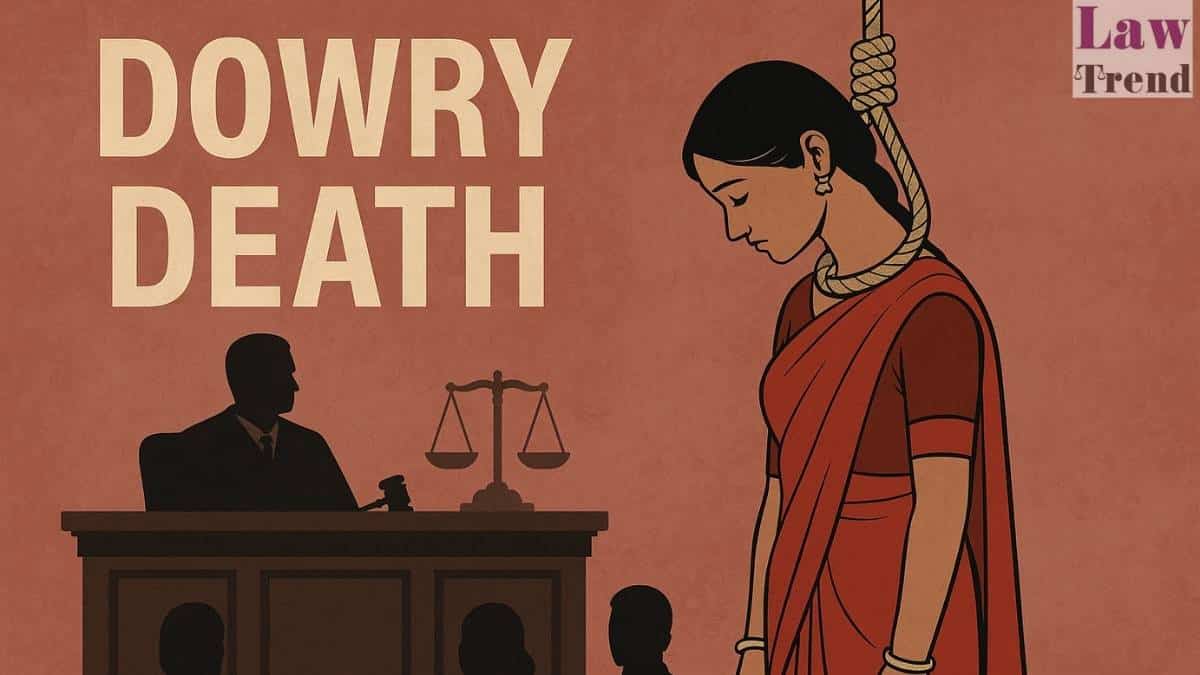
The Supreme Court of India has set aside the conviction of a mother-in-law in a dowry death case, ruling that mere general allegations of harassment, without specific instances of cruelty committed “soon before death,” are insufficient to sustain a conviction under Section 304-B of the Indian Penal Code (IPC).

A Division Bench comprising Justice J.K. Maheshwari and Justice Atul S. Chandurkar allowed the appeal filed by Munni Devi, acquitting her of charges under Section 304-B (Dowry Death) and Section 316 (Causing death of quick unborn child) of the IPC. The Court observed that the prosecution failed to prove beyond reasonable doubt that the deceased was subjected to cruelty or harassment by the appellant in connection with dowry demands shortly before her suicide.

Background of the Case

The case pertains to the death of Alka @ Pooja, who was married to the appellant’s son, Rahul, on December 2, 2010. On August 3, 2011, Alka passed away. Her brother, Anil Singh Tomar, lodged a First Information Report (FIR) alleging that his sister was being harassed by her husband, her mother-in-law (the appellant), and other in-laws for a dowry demand comprising Rs. 2,00,000 and a car.

The Trial Court, via a judgment dated August 10, 2018, convicted the husband, his brother, and the appellant under Sections 498-A, 304-B, and 316 of the IPC, alongside Sections 3 and 4 of the Dowry Prohibition Act, 1961. They were sentenced to rigorous imprisonment, including a term of ten years for the offence under Section 304-B IPC.

Upon appeal, the Allahabad High Court acquitted the brother-in-law of all charges. Regarding the husband and the appellant, the High Court set aside their convictions under Section 498-A IPC and the Dowry Prohibition Act but upheld the conviction under Sections 304-B and 316 of the IPC. The High Court reduced Munni Devi’s sentence to seven years. Aggrieved by this decision, Munni Devi approached the Supreme Court.

READ ALSO  क्या कटऑफ तिथि के बाद जाति प्रमाण पत्र प्रस्तुत करने वाले उम्मीदवार को राहत दी जा सकती है? सुप्रीम कोर्ट कि दो जजों कि पीठ ने दिया अलग- अलग फ़ैसला फैसला सुनाया

It is pertinent to note that the husband, Rahul, had also filed an appeal, but he passed away during the pendency of the proceedings, resulting in his appeal being abated.

Arguments Before the Court

Contentions of the Appellant Mr. Abhijit Banerjee, learned Counsel for the appellant, argued that there was “no evidence whatsoever on record to sustain the appellant’s conviction under Section 304-B of the Penal Code.” He submitted that although the death occurred within seven years of marriage, the prosecution failed to provide evidence that the deceased was subjected to cruelty or harassment by the appellant “soon before the death.”

The counsel emphasized that the allegations were general in nature. While the informant mentioned a registered letter dated April 7, 2011, regarding harassment, no such letter was mentioned in the FIR or produced during the trial. He further argued that since the High Court had already acquitted the appellant under Section 498-A IPC and the Dowry Prohibition Act, the conviction under Section 316 IPC was also unsustainable.

Contentions of the Respondent Ms. Ruchira Goel, appearing for the State of Uttar Pradesh, supported the High Court’s judgment. She contended that since the death occurred within a year of marriage due to suicide, the presumption under Section 113-B of the Indian Evidence Act, 1872, was attracted. She argued that the evidence led by the relatives established a constant demand for dowry, which compelled the deceased, who was carrying a fetus of thirty-four weeks, to commit suicide.

READ ALSO  मथुरा मस्जिद समिति ने सुप्रीम कोर्ट से अनुरोध किया कि वह पूजा स्थल अधिनियम मामले में केंद्र के जवाब देने के अधिकार को समाप्त करे

Court’s Analysis and Observations

The Supreme Court examined whether the prosecution had satisfied the necessary ingredients for a conviction under Section 304-B IPC, specifically regarding cruelty inflicted “soon before death.”

General Allegations Insufficient The Bench scrutinized the testimony of the informant, PW2 (Anil Singh Tomar). The Court observed that his deposition consisted of general statements about “mental and physical harassment” without citing any specific instance attributed to the appellant.

“Except for general statements about mental and physical harassment being inflicted on his sister by the members of her matrimonial family, there is not a single instance specifically attributed to the appellant… His deposition is in general terms without giving any specific details of any instance of cruelty or harassment meted out to his sister by the appellant.”

Distinction Between Demand and Cruelty The Court drew a distinction between making a demand and inflicting cruelty.

“It is one thing to make a demand for dowry and another thing to inflict cruelty or harassment in connection with such demand for dowry.”

Requirement of ‘Soon Before Death’ The Bench reiterated that to sustain a conviction under Section 304-B IPC, it is mandatory to prove that the victim was subjected to cruelty or harassment in connection with a dowry demand soon before her death. The Court noted:

“Such evidence, however, is missing in the present case.”

Acquittal Under Section 316 IPC Regarding the charge under Section 316 IPC (causing death of an unborn child), the Court held that since the primary charge under Section 304-B was not proved, the conviction under Section 316 could not stand.

READ ALSO  Manager of an Aided School Cannot Collect Any Charges or Fees From Students for Providing Toilet Facilities, Computer Labs With Internet Facilities and Transportation Facilities: Kerala HC

“However, when the charge against the appellant under Section 304-B of the Penal Code has not been proved by the prosecution, there would be no basis whatsoever to sustain the appellant’s conviction under Section 316 of the Penal Code.”

Alibi of the Appellant The Court also highlighted that the appellant was not present at the scene when the incident occurred.

“It is also to be noted that the appellant was not present at her son’s matrimonial home when the death took place on 03.08.2011. This fact stands admitted by PW2/Anil Singh Tomar.”

Decision

The Supreme Court allowed the appeal, quashing and setting aside the judgment of the Allahabad High Court dated March 2, 2021. The Court acquitted Munni Devi of the charges under Sections 304-B and 316 of the Penal Code.

The Court ordered:

“She be released forthwith, if not required in any other case. In case the appellant has been enlarged on bail during pendency of the appeal, her bail bonds would stand discharged.”

Case Details

  • Case Title: Munni Devi v. State of Uttar Pradesh
  • Case No: Criminal Appeal No. 532 of 2021
  • Coram: Justice J.K. Maheshwari and Justice Atul S. Chandurkar

Law Trend
Law Trendhttps://lawtrend.in/
Legal News Website Providing Latest Judgments of Supreme Court and High Court

Related Articles

Latest Articles


