

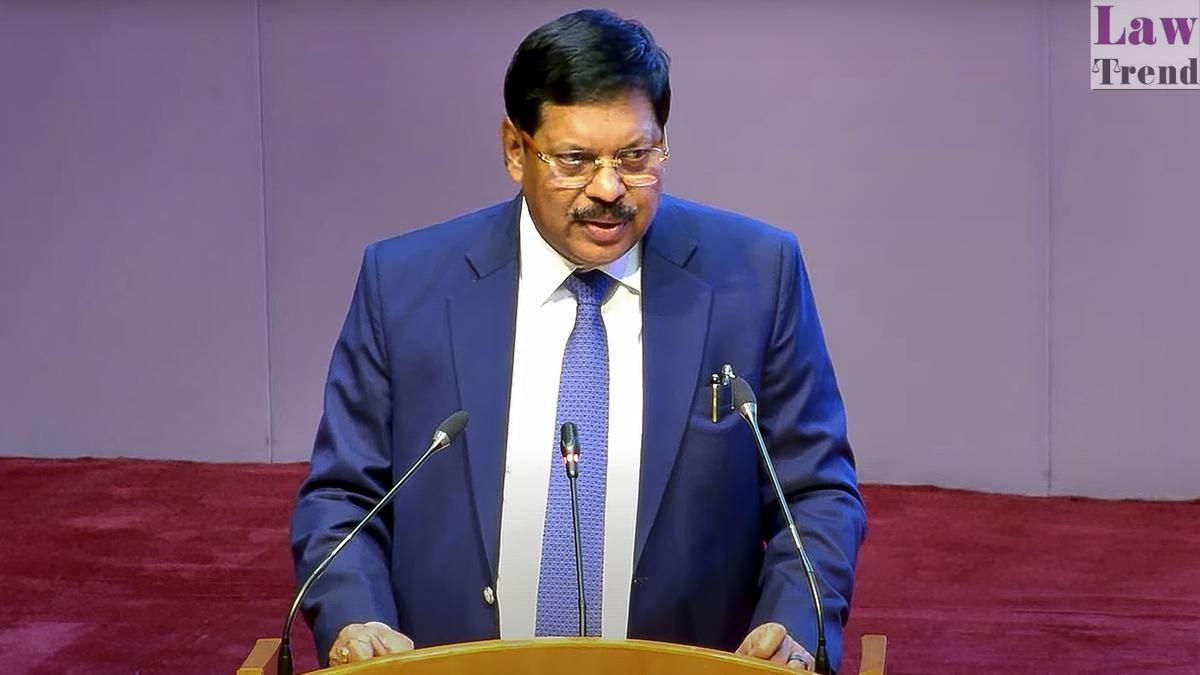
Former Chief Justice of India (CJI) Justice B R Gavai on Sunday threw his weight behind the existing collegium system for judicial appointments, describing it as the most appropriate mechanism for the country “at least for the time being.”
Speaking at the valedictory session of the Supreme Court Bar Association’s (SCBA) first National Conference 2026, titled “Reimagining Judicial Governance: Strengthening Institutions for Democratic Justice,” the former top judge addressed several “pain points” in the Indian legal landscape, ranging from the friction between the judiciary and executive to the urgent need for a National Litigation Policy.
Addressing the long-standing debate over how judges are selected, Justice Gavai admitted that while no system is perfect, the collegium remains the most viable option.
“I won’t say that the collegium system is a foolproof system. There can’t be a perfect system. Every system has its advantages and disadvantages,” Justice Gavai stated. “But after working for so many years, I find that the collegium system, at least for the time being, is the best suited for our country.”
He clarified that the process is far from arbitrary, involving a multi-layered check that includes recommendations from High Court leadership, intelligence inputs, and central government feedback before the Supreme Court Collegium takes a final call.
Justice Gavai expressed significant concern over the “huge gap” between sanctioned strengths and actual appointments in High Courts. He specifically pointed to the executive’s failure to clear names that have been recommended for a second time.
Under existing Supreme Court precedents, once the collegium reiterates a name for the second time, the executive is bound to make the appointment.
“But I’m sorry to say that there are various names which, even on the second recommendation, are not yet cleared by the executive,” Justice Gavai remarked, adding that he wished to “flag this issue” rather than engage in a “blame game.” He urged the government to consider whether they are bound by the law of the land regarding these appointments.
In a strong defense of judicial intervention, the former CJI addressed the role of the courts when fundamental rights are under threat. He specifically questioned the silence of the judiciary in the face of “mighty” executive actions.
“When the executive, with its mighty hand, bulldozes the houses of the citizens on a suspicion that he is a criminal, is the judiciary expected to sit silently and permit the executive to go ahead with such an act, which hits at the rule of law?” he asked.
He maintained that courts exercise restraint but must act when the balance of power between the executive, judiciary, and parliament is disturbed.
Justice Gavai highlighted the state’s role in court pendency, noting that the government often routinely challenges bail orders even after individuals have served 70 percent of their sentences.
To resolve this, he called for the immediate implementation of a National Litigation Policy. “There has been talk about the national litigation policy for years, but it is yet to come. I think if the executive does something to implement or come up with the national litigation policy, it may really help in reducing the pendency,” he said.
On the criticism that the judiciary acts as a “stumbling block” to progress, Justice Gavai countered that the courts only interfere to ensure sustainable development. He credited judicial intervention for the protection of India’s forests and the mitigation of pollution.
He concluded by stating that the vision of ‘Viksit Bharat’ (Developed India) must prioritize a balance between rapid development and the steadfast preservation of the rule of law.




