

Extra-Judicial Confession Is Weak Evidence, Cannot Be Sole Basis for Conviction Without Independent and Cogent Corroboration: Supreme Court
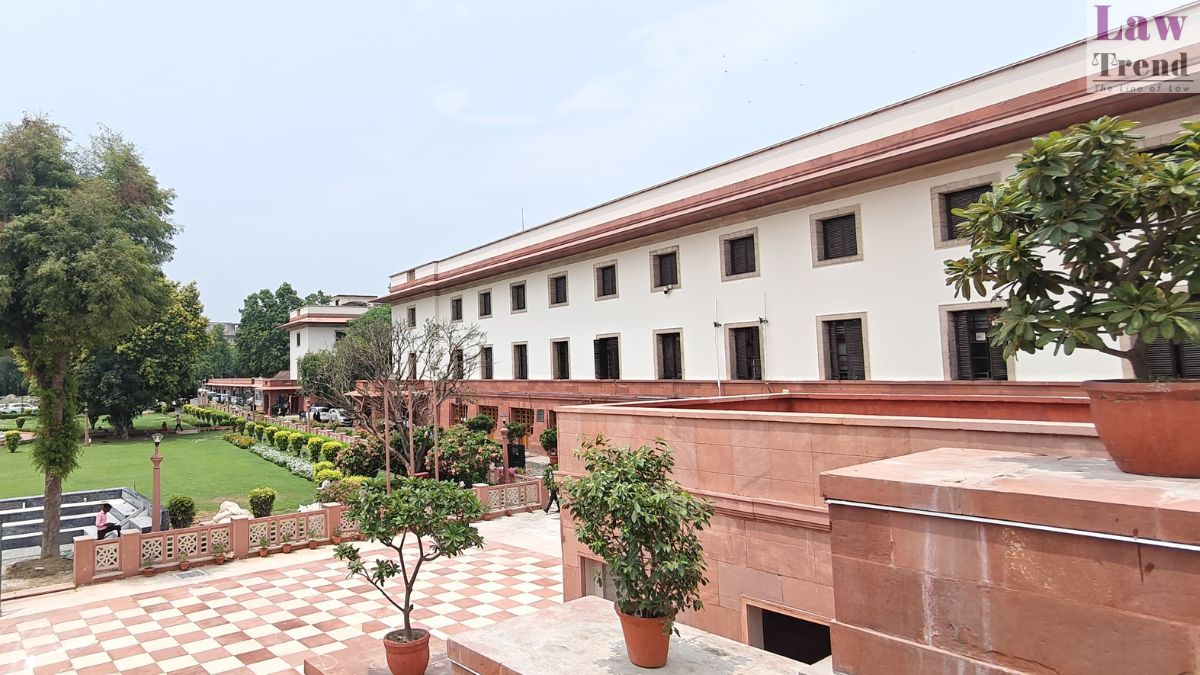
In a decision setting aside a life sentence, the Supreme Court of India held that conviction cannot be sustained on an incomplete chain of circumstantial evidence, uncorroborated extra-judicial confessions, and inadmissible disclosure statements. A bench comprising Justice Sanjay Kumar and Justice Sanjeev Sachdeva extended the benefit of doubt to Sahab Singh alias Sat Pal, quashing his conviction under Sections 302, 201, and 377 of the Indian Penal Code (IPC). The court reaffirmed its earlier direction to release the appellant forthwith, noting that he had already suffered incarceration for more than 16 years and seven months.

The case originated from First Information Report (FIR) No. 70 of 2007, registered at Police Station Baldev Nagar in District Ambala, Haryana, on March 12, 2007. The prosecution alleged that on March 11, 2007, a six-year-old child, Gaurav, went missing after leaving to attend a village wedding. The next morning, following the discovery of the child’s slippers in the post office verandah, his body was found inside an old well in Kakru village. The post-mortem examination determined the cause of death to be asphyxia resulting from smothering and cervical spinal injury, with injuries noted on the anal region.

The prosecution asserted that the appellant was last seen with the victim at a local grocery shop while purchasing namkeen and two cold tablets, administered a tablet to the child, committed unnatural sexual assault, smothered him to death, and threw his body into the well. It was further claimed that two days later, on March 14, 2007, the accused visited the village Sarpanch, made an extra-judicial confession, and subsequently led the police to the scene of the crime through a disclosure statement under Section 27 of the Indian Evidence Act, 1872.

The Sessions Judge, Ambala, convicted the appellant on April 24, 2010, awarding life imprisonment for murder, five years for causing disappearance of evidence, and ten years for unnatural offences. The High Court of Punjab and Haryana at Chandigarh affirmed the conviction on October 18, 2022, primarily relying on the “last seen together” theory, the extra-judicial confession, and forensic reports indicating the presence of human semen.

Challenging these findings, the defense argued before the Supreme Court that the case rested entirely on shaky circumstantial evidence with glaring gaps. The defense highlighted that shopkeeper Inderjit Singh (PW-7) admitted that the police had brought the accused to his shop on March 12, 2007, directly demolishing the prosecution’s claim that the accused made his confession and came into police custody only on March 14, 2007. The defense also pointed out the total absence of DNA evidence matching the semen samples and argued that the disclosure statement disclosed no new facts since the crime scene and well were already known to the police. Conversely, the State supported the concurrent findings of the lower courts, urging that the testimonies of the witnesses, the recovery of a namkeen packet, and the extra-judicial confession formed a coherent chain of guilt.

READ ALSO  Supreme Court Sets Aside Telangana High Court Order; Restores Compensation in Fatal Accident Case

Upon analyzing the record, the Supreme Court ruled that the prosecution had failed to establish guilt beyond reasonable doubt. The bench noted that the recovery of an open generic namkeen packet on March 12 appeared to be an attempt to manufacture evidence, as the alleged purchase story only emerged on March 14, and the brand was sold commonly across the village. Additionally, no wrappers of the cold tablets allegedly administered to the child were ever found.

The Court scrutinized the alleged confession made to the Sarpanch, Shiv Chand (PW-9), rejecting the lower courts’ assumption that the Sarpanch was an objective confidant:

READ ALSO  जरूरी जानकारी का खुलासा ना करने पर कर्मचारी की सेवा समाप्त की जा सकती है , जाने सुप्रीम कोर्ट का निर्णय

“The logic of the trail court does not appeal to us. There is a possibility that the Sarpanch may not be deposing truthfully and there could be several reasons for the same. It could be because the Sarpanch wanted to protect someone or wanted to help the police in showing that the crime had been solved. A child from the village lost his life and had been subjected to brutal treatment before his death and it is natural for the villagers to be highly agitated. With a view to pacify the villagers, it is possible that the police came up with a story that the case had been solved and the culprit caught. The accused, on the other hand, was a poor labourer and may not have the sympathy of the villagers.”

Citing the precedent in Sahadevan v. State of T.N. (2012) 6 SCC 403, the bench emphasized:

“Extra judicial confession is a weak piece of evidence and per se without any independent and cogent corroborative circumstance or evidence cannot be make the sole basis for conviction. Wherever the court, upon due appreciation of the entire prosecution evidence, intends to base a conviction on an extra-judicial confession, it must ensure that the same inspires confidence and is corroborated by other prosecution evidence. If, however, the extra-judicial confession suffers from material discrepancies or inherent improbabilities and does not appear to be cogent as per the prosecution version, it may be difficult for the court to base a conviction on such a confession. In such circumstances, the court would be fully justified in ruling such evidence out of consideration.”

The bench observed that the testimony of witness Pawan Kumar (PW-8) suffered from improvements, as his initial statement to the police made no mention of the victim accompanying the accused. Furthermore, the High Court’s reliance on a disclosure statement under Section 27 of the Evidence Act was legally untenable because the body had already been recovered on March 12, whereas the statement was recorded on March 14. Under Section 27 (now proviso to Section 23(2) of the Bharatiya Sakshya Adhiniyam, 2023), only information leading to the discovery of a distinctly new fact is admissible, which was not the case here since the spot was already inspected and mapped by police days earlier.

READ ALSO  General and Omnibus Allegations: SC Quashes 498A IPC Case Against Husband and Mother-in Law

Addressing the forensic evidence, the Supreme Court pointed out that no DNA test was conducted to link the semen detected on the accused’s underwear with the rectal swab taken from the deceased. The court noted that the lower courts had impermissibly reversed the burden of proof by expecting an unmarried accused to explain the presence of semen on his clothing in the absence of scientific matching.

Concluding that multiple missing links destroyed the prosecution’s circumstantial chain, the Supreme Court set aside the High Court’s judgment dated October 18, 2022, and the Trial Court’s conviction dated April 24, 2010, allowing the appeal and directing the appellant’s release.

Case Title: Sahab Singh alias Sat Pal v. State of Haryana
Case No.: Criminal Appeal No. 4158 of 2026
Bench: Justice Sanjay Kumar and Justice Sanjeev Sachdeva
Date: September 02, 2026

Law Trend
Law Trendhttps://lawtrend.in/
Legal News Website Providing Latest Judgments of Supreme Court and High Court

Related Articles

Latest Articles
