

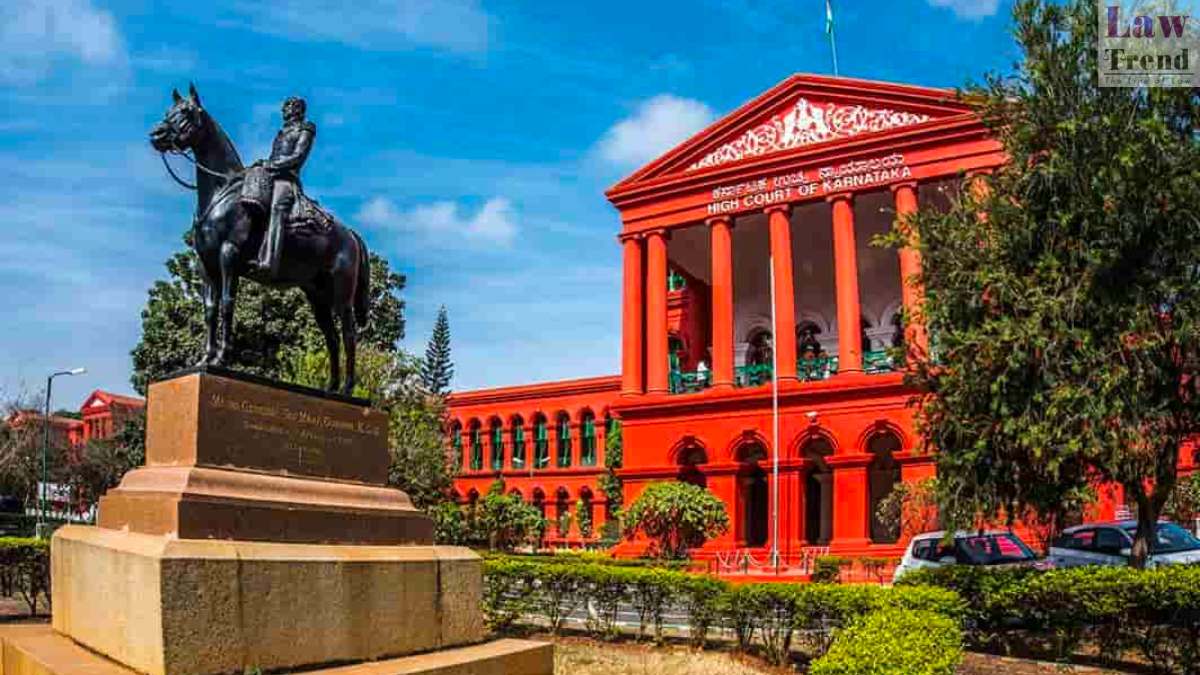
The High Court of Karnataka, Dharwad Bench, has dismissed a criminal petition seeking to quash a First Information Report (FIR) against three factory owners accused of abusing employees with caste-based slurs. The Court held that even if an incident occurs within private factory premises, it can be considered to have occurred in “public view” if it is accessible to other employees.
Background
The petitioners, Shyam Mehta, Bimal Mehta, and Neepa Mehta—owners of “Swims Technology Private Limited Factory”—approached the High Court under Section 482 of the Cr.P.C. (Section 528 of the BNSS) to quash Crime No. 0146/2024. The FIR was registered by the Gokul Road Police Station, Hubli, for alleged offences under Sections 504 and 584 of the IPC, and Sections 3(1)(r) and 3(1)(s) of the SC and ST (Prevention of Atrocities) Act, 1989.
The complainant, Yallappa Karigappa Harijan, a workman in the factory for 20 years, alleged that on April 6, 2024, the owners arrived at the dispatch section door and pressured him and another colleague to file a complaint against one Mahadev Khandekar. Upon their refusal, the owners allegedly used derogatory caste-based language, insulted their livelihood, and threatened them with dismissal and false theft charges.
Arguments of the Parties
The petitioners’ counsel, Sri Shridhar Prabhu, argued that the complaint was an “abuse of process of the Court” and was motivated by an ongoing trade union dispute. Key arguments included:
- Delay: There was a six-month delay in lodging the FIR (incident in April, complaint in October).
- Private Premises: The alleged incident took place inside the factory dispatch section, which they argued is not a “public place” or within “public view.”
- Mala Fide Intent: The complaint followed a strike notice issued by the “Weir BDK Valves Workers Union,” suggesting it was a retaliatory tactic.
Respondent No. 2 (the complainant) and the High Court Government Pleader (HCGP) argued that a prima facie case was established. They contended that the truthfulness of the allegations and the reasons for the delay are matters for trial and cannot be adjudicated at the quashing stage.
Court’s Analysis and Observations
Justice Hanchate Sanjeevkumar analyzed the distinction between “Public Place” and “Public View” under the SC/ST Act.
On “Public View”: The Court observed that the dispatch section and its door are easily accessible to all employees for ingress and egress.
“Public view does not necessity mean public view by any passer by public but if employees are at that place such employees are also to be considered as members of public.”
The Court relied on the Supreme Court’s ruling in Karuppudayar vs. State and Hitesh Verma vs. State of Uttarakhand, noting that a private place can still be within “public view” if members of the public (including non-relative employees) are present or can witness the act.
On the Delay in FIR: The Court noted that a six-month delay is not an absolute ground for quashing. It observed that the complainant, being a “poor workman,” might have feared termination.
“Under these circumstances, the complainant being a poor workman might not have been in a position to face the petitioners/accused Nos. 1 to 3… there would have been chances of termination from the employment.”
On the Trade Union Dispute: The Court rejected the argument that the strike notice automatically invalidated the complaint. It held that the issue of the strike and the individual grievance of the workman must be considered independently.
“Whether trade union has instigated the complainant to lodge complaint… is a question of disputed fact is triable issue in the trial, but cannot be decided at this stage.”
Decision
The Court concluded that the allegations, taken at face value, disclose the ingredients of the offences alleged. Justice Sanjeevkumar emphasized that the inherent powers of the High Court should be used sparingly and only in “rarest of rare cases.” Finding that a prima facie case existed for trial, the Court dismissed the petition.
Case Details
- Case Title: Shyam Mehta S/o Bimal Mehta & Others vs. State of Karnataka & Another
- Case Number: Criminal Petition No. 100213 of 2025
- Bench: Justice Hanchate Sanjeevkumar
- Date: April 2, 2026




