

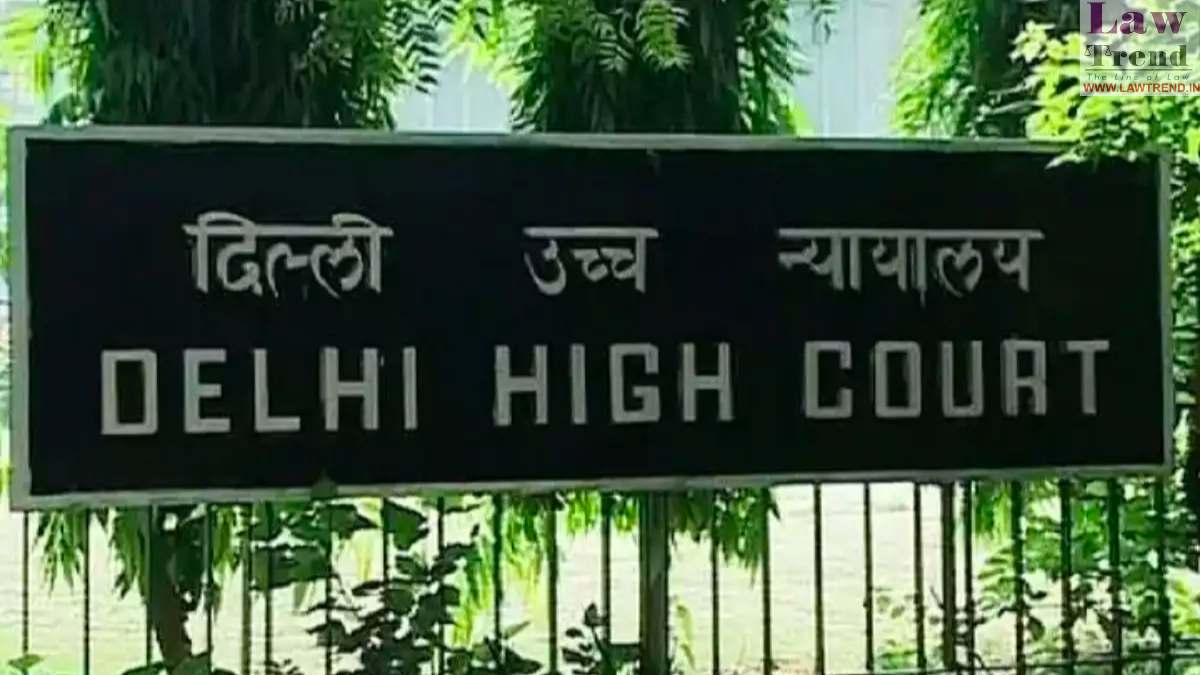
The Delhi High Court on Monday issued notices to the central government and the Central Board of Secondary Education (CBSE) regarding a petition seeking an independent probe into alleged irregularities in the recently introduced digital marking system for Class 12 examinations.
A vacation bench comprising Justices Neena Bansal Krishna and Madhu Jain directed the authorities to submit their responses ahead of the next scheduled hearing on June 12. The Public Interest Litigation (PIL), filed by the National Students’ Union of India (NSUI), demands a temporary reopening of the board’s answer-sheet verification portal and an independent inquiry into the digital evaluation process.
The petition, initiated by NSUI President Vinod Jhakhar and advocate Rishav Ranjan, requests that the CBSE’s verification and revaluation portal, which closed on Sunday night, remain open for another month to accommodate affected students. Additionally, it calls for manual rechecking and physical verification of answer sheets in disputed cases, alongside federal oversight and new guidelines for future digital evaluation systems.
During the hearing, CBSE counsel M.A. Niyaz raised preliminary objections to the petition’s maintainability, arguing that a political student wing should not politicize educational matters. Niyaz stated that the board had repeatedly extended the portal’s deadlines and was actively resolving student grievances. In response, the NSUI counsel argued that the petition was filed on behalf of minors and that political affiliation does not disqualify the organization from seeking judicial relief.
Widespread Student Grievances
The legal dispute follows the board’s introduction of the On-Screen Marking (OSM) system for the 2026 Class 12 evaluation cycle. Designed to improve transparency and efficiency, the system involves scanning physical exam papers, masking student identities digitally, and distributing them to teachers for grading on computer screens. However, the rollout has sparked nationwide protests, with thousands of students reporting technical issues such as blurred scans, missing pages, mismatched sheets, incomplete uploads, and unexpectedly low scores.
The controversy coincides with a decline in student performance. CBSE’s Class 12 results, declared on May 13, showed an overall pass rate of 85.20 percent, down from 88.39 percent the previous year, alongside a drop in the number of students scoring 90 percent or higher. The NSUI argued that the absence of a strong corrective mechanism is severely harming students as they miss admissions deadlines while their grades remain disputed.
Prior Warnings From Educators
Concerns over the system had been raised prior to its implementation. The Delhi Government School Teachers’ Association (GSTA) had previously urged the CBSE to delay the full rollout of the digital system for the 2026 cycle. The association warned that the majority of teachers lacked structured and certified training to use the software and suggested running the system as a limited pilot program first.




