

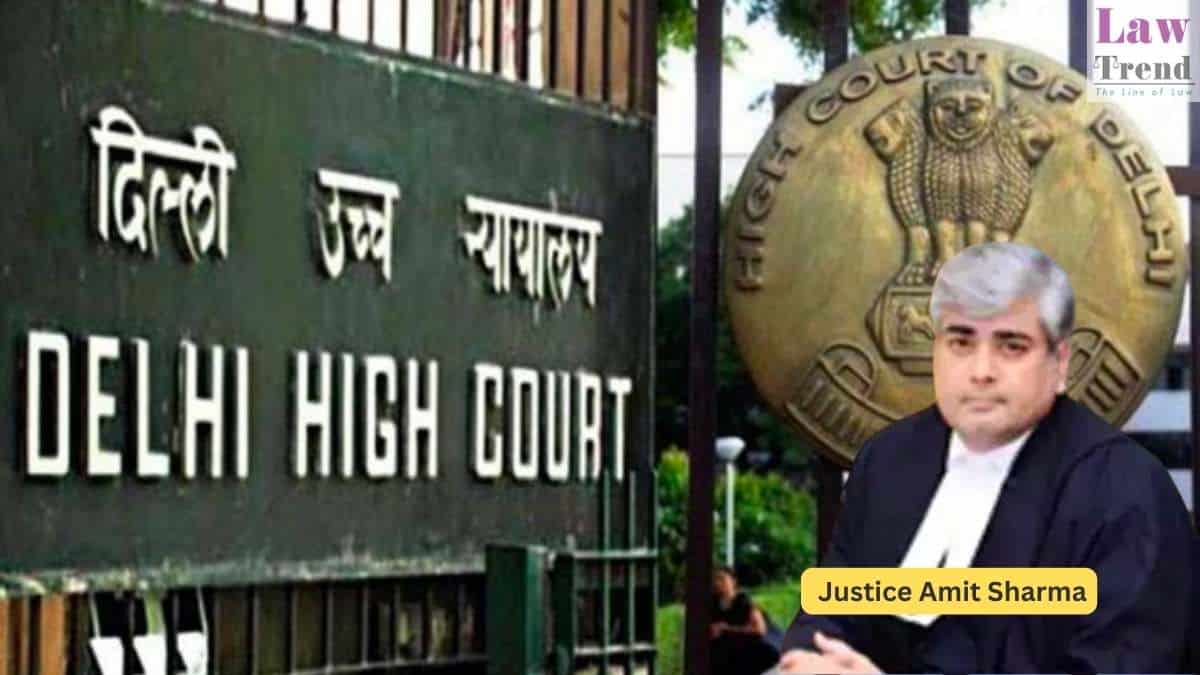
The Delhi High Court has modified a Family Court order regarding the visitation rights of a father, directing that both parents and their minor daughter undergo professional counseling to facilitate unsupervised visitation. The Court observed that while the child is comfortable with the father, she remains hesitant to leave her mother’s company, necessitating professional intervention to ensure the “paramount consideration” of the child’s welfare.
Background
The petitioner and the respondent were married in 2020 and have a daughter, ‘G’, born in March 2021. Following their separation in July 2023, the petitioner filed for divorce under Section 13(1)(ia) of the Hindu Marriage Act, 1955, and subsequently sought interim custody and visitation rights under Section 26 of the Act.
On June 3, 2024, the Family Court at Saket denied the petitioner’s request for unfettered and unsupervised visitation, citing the child’s tender age (then 3 years old) and the potential physical and mental health impact of frequent custody changes. The Family Court had allowed supervised visitation twice a month in the Children’s Room at Saket Court. The petitioner challenged this order under Article 227 of the Constitution of India.
Arguments of the Parties
Petitioner’s Submissions: The petitioner argued that he had been deprived of a meaningful role in his daughter’s upbringing. He contended that the Family Court erred in continuing a restrictive visitation schedule despite a previous High Court order setting aside earlier restrictions. He presented evidence of a loving bond with his daughter and argued that “limited access” was causing parental alienation. He further sought 50% of vacation time and the right to be involved in the child’s educational decisions on an equal footing.
Respondent’s Submissions: The respondent opposed unsupervised visitation, citing the petitioner’s alleged “severe anger issues” and “hostility.” She raised concerns regarding the petitioner’s lifestyle, including alcohol consumption and smoking, which she claimed posed safety and health risks to the child. She argued that the child, being of tender age, required a gradual process to develop comfort with the father. She also highlighted that the petitioner had neglected financial obligations toward the child.
Court’s Analysis
The High Court, presided over by Justice Amit Sharma, noted that the child, now five years old, enjoys spending time with the father and that there is no “element of hostility” toward him. However, the Court observed during interaction that the child was not yet ready to leave the mother’s sight.
Citing Yashita Sahu v. State of Rajasthan & Ors. (2020), the Court emphasized:
“A child, especially a child of tender years requires the love, affection, company, protection of both parents. This is not only the requirement of the child but is his/her basic human right.”
The Court also referred to Amyra Dwivedi v. Abhinav Dwivedi (2021), noting that visitation should happen in a “child-friendly environment” rather than a court complex.
Justice Sharma observed:
“It is the considered opinion of this Court that the parents and child need professional assistance in achieving this goal… it would be in the best interest of the child that both the parents should make joint efforts and make sure that the child is equally comfortable with the petitioner for the purposes of unsupervised visitations.”
The Decision
The High Court modified the impugned order dated June 3, 2024, with the following directions:
- Professional Counseling: The parties and the child are directed to visit a child counselor/psychologist at the Delhi High Court Mediation and Conciliation Centre to facilitate unsupervised visitation.
- Neutral Venue: Visitation will now take place in a mutually acceptable child-friendly environment (e.g., a park or restaurant) near their residences in Gurugram, rather than the Saket Court’s Children’s Room.
- Report to Family Court: The counselor must submit a report to the Family Court within four weeks.
- Restoration of Application: The petitioner’s application under Section 26 of the HMA is restored before the Family Court, which will pass a fresh order on unsupervised visitation after considering the counselor’s report.
The Court clarified that it expressed no opinion on the merits of the pending application, leaving the final determination to the Family Court based on the welfare of the child.
Case Details
- Case Title: Vimlendu Kumar Jha v. Minal Bhatnagar
- Case No.: CM(M) 2800/2024
- Bench: Justice Amit Sharma
- Date: April 2, 2026




