

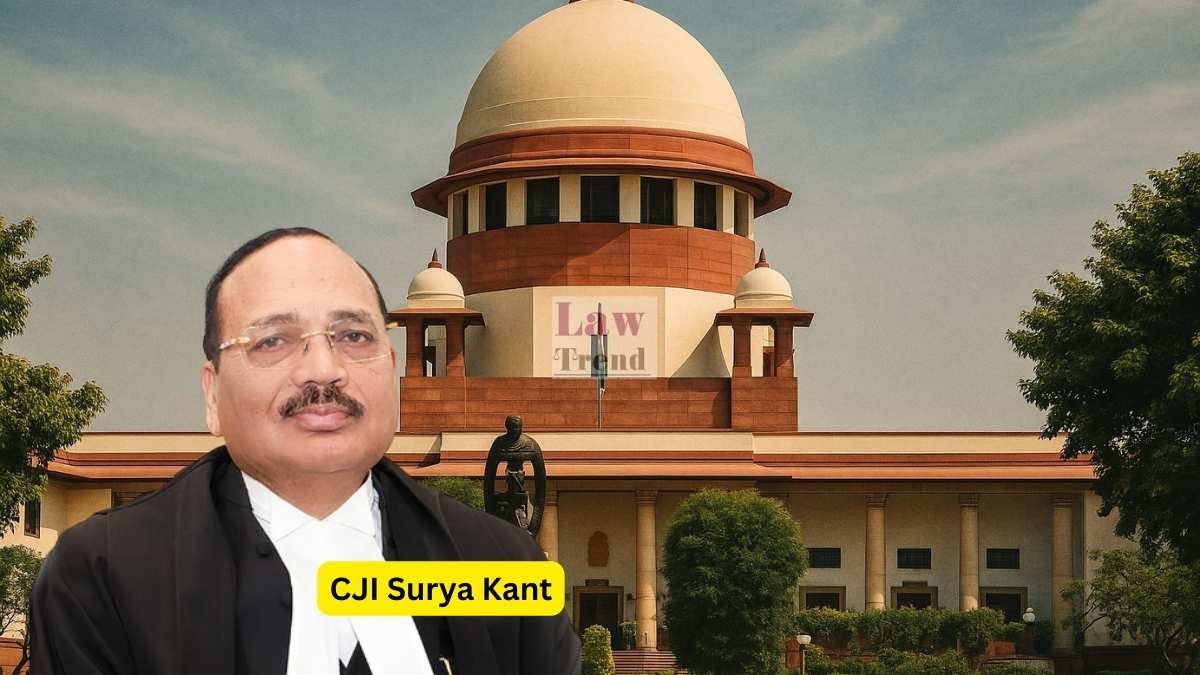
New Delhi: In a significant development concerning the independence of India’s electoral watchdog, the Chief Justice of India (CJI) has recused himself and his bench from hearing a batch of Public Interest Litigations (PILs) challenging the new law governing the appointment of the Chief Election Commissioner (CEC) and Election Commissioners (ECs).
Sitting alongside Justices Joymalya Bagchi and Vipul M. Pancholi, the CJI stated at the outset that it would be inappropriate for him to preside over the matter, given that the legal challenge directly concerns the exclusion of the Chief Justice from the selection panel.
“I will be accused of conflict of interest. There is a conflict of interest,” the CJI remarked during the proceedings.
The Core of the Contention
The petitions challenge the validity of certain provisions of the Chief Election Commissioner and Other Election Commissioners (Appointment, Conditions of Service and Term of Office) Act, 2023. Enacted by Parliament in December 2023, the law established a selection committee comprising:
- The Prime Minister
- A Union Minister nominated by the Prime Minister
- The Leader of the Opposition (or the leader of the largest opposition party in the Lok Sabha)
The petitioners, including Congress leader Jaya Thakur and the Association for Democratic Reforms (ADR), argue that the exclusion of the CJI from this panel—replacing the judicial member with a cabinet minister—undermines the independence of the appointment process and the Election Commission itself.
A Bench Without Prospective Chief Justices
The CJI suggested that the matter should be heard by a bench where no judge is in line to become the Chief Justice of India in the future, thereby eliminating any perception of bias.
Advocate Prashant Bhushan, representing one of the petitioners, supported this view. “I personally don’t have any problem, but it can be listed before a bench not having a prospective CJI,” Bhushan stated, suggesting that such a move would avoid any “perception of bias.”
Accepting this suggestion, the CJI directed that the matter be listed before a different bench on April 7. He indicated that the new bench would specifically comprise judges who are not in the line of succession for the office of the CJI.
Legal Background and Government Defense
The 2023 Act was passed following a landmark March 2023 verdict by a five-judge Constitution Bench. That ruling directed that election commissioners be appointed by a committee consisting of the Prime Minister, the Leader of the Opposition, and the CJI, until Parliament enacted a law on the subject.
The Union Law Ministry has defended the new legislation in an affidavit, asserting that the independence of the Election Commission does not depend solely on the presence of a judicial member on the selection committee. The Centre also rejected claims that two Election Commissioners were “hastily” appointed on March 14, 2024, to pre-empt court orders.
Previously, the Supreme Court had refused to stay the appointments made under the 2023 law. The upcoming hearing on April 7 before the newly constituted bench will be the next critical step in determining the constitutional validity of the selection process.




