

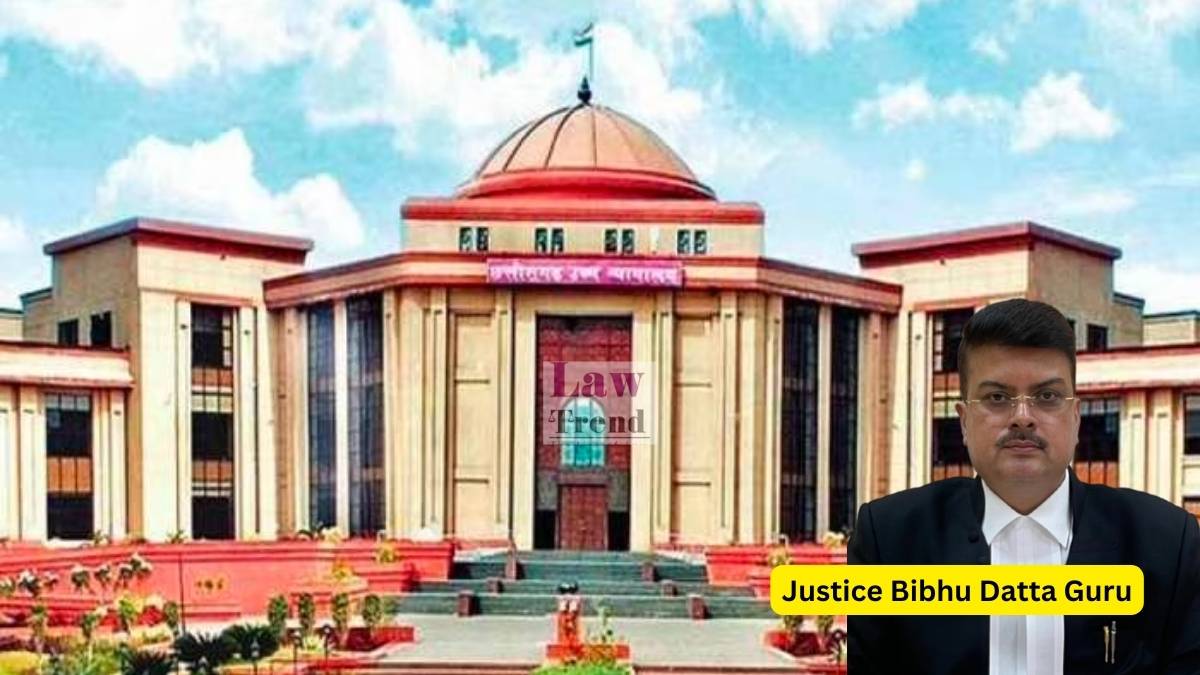
The Chhattisgarh High Court has upheld the recovery of ₹1,56,865 from a retired Higher Education Department employee over excess payment arising from erroneous pay fixation. It held that a plea of hardship against recovery must be pleaded and established with supporting material. The Court also held that an earlier order quashing the recovery for want of hearing did not bar fresh recovery proceedings.
Justice Bibhu Datta Guru dismissed the writ petition filed by retired accountant Umesh Pathak.
Background
The petitioner joined the Higher Education Department as Assistant Grade-III in 1987, was promoted to Accountant Grade-II in 2008 and Accountant Grade-I in 2018, and retired on 31 August 2019. After his retirement, objections were raised over his pay fixation and increments, and on 13 July 2020, recovery of ₹1,56,865 was ordered from his retiral dues.
In an earlier round of litigation, the High Court set aside that order on 16 March 2026 because it was passed without hearing him. The Joint Director, Directorate of Higher Education, was directed to reconsider the matter after notice and hearing, pass a reasoned order within three months, and then consider grant of regular monthly pension. In June 2026, the authorities again held the recovery to be just and proper, which led to the present petition.
Arguments
Advocate Aishwary Diwan, appearing for the petitioner, argued that once the earlier recovery order was set aside, the respondents could not issue a fresh order for the same amount. He also submitted that recovery from a retired employee was impermissible under the Supreme Court’s ruling in State of Punjab vs Rafiq Masih (White Washer).
State counsel Anadi Sharma submitted that the earlier order did not prohibit fresh recovery and that the impugned order was passed on reconsideration as directed. He contended that the amount was paid beyond the petitioner’s lawful entitlement and that he had no absolute right to retain it.
Earlier Quashing No Bar to Fresh Recovery
Reading the earlier directions, the Court held, “The earlier order did not finally adjudicate that the alleged excess payment was irrecoverable in all circumstances.”
It added that the setting aside of the earlier order “cannot be construed as an absolute prohibition against passing a fresh order after complying with the directions issued by this Court.” According to the Court, that order did not, by itself, give the petitioner an unconditional right to retain any amount found to have been paid in excess of his entitlement.
Hardship Must Be Pleaded and Proved
The Court relied on Chandi Prasad Uniyal vs State of Uttarakhand, where the Supreme Court held that any amount paid without authority of law can be recovered, barring a few exceptions of extreme hardship. It also referred to the Supreme Court’s recent ruling in Dr. M.K. Ravi Varma vs National Institute of Technology, which considered Rafiq Masih and other decisions on recovery of excess payments.
The Court noted that the petitioner had placed no material, such as details of his bank account or property, to show exceptional circumstances. Following Ravi Varma, it held that “the question of hardship has to be determined on the facts of each particular case, and the same must be pleaded and established to the satisfaction of the Court.”
It concluded, “In the absence of any such pleading or supporting material, no case for interference on the ground of exceptional hardship is made out.”
Outcome
The High Court dismissed the writ petition, leaving the recovery order intact.
The head note to the order records, “Excess payment made to the Government employee by mistake can always be recovered barring few exceptions of extreme financial hardship, but not as a matter of right.”
Case Title: Umesh Pathak vs State of Chhattisgarh and Others
Case No.: WPS No. 7746 of 2026
Bench: Justice Bibhu Datta Guru
Date: October 29, 2026


