

Chhattisgarh HC Imposes ₹50,000 Cost for Filing “Frivolous” Review Petition Through New Counsel
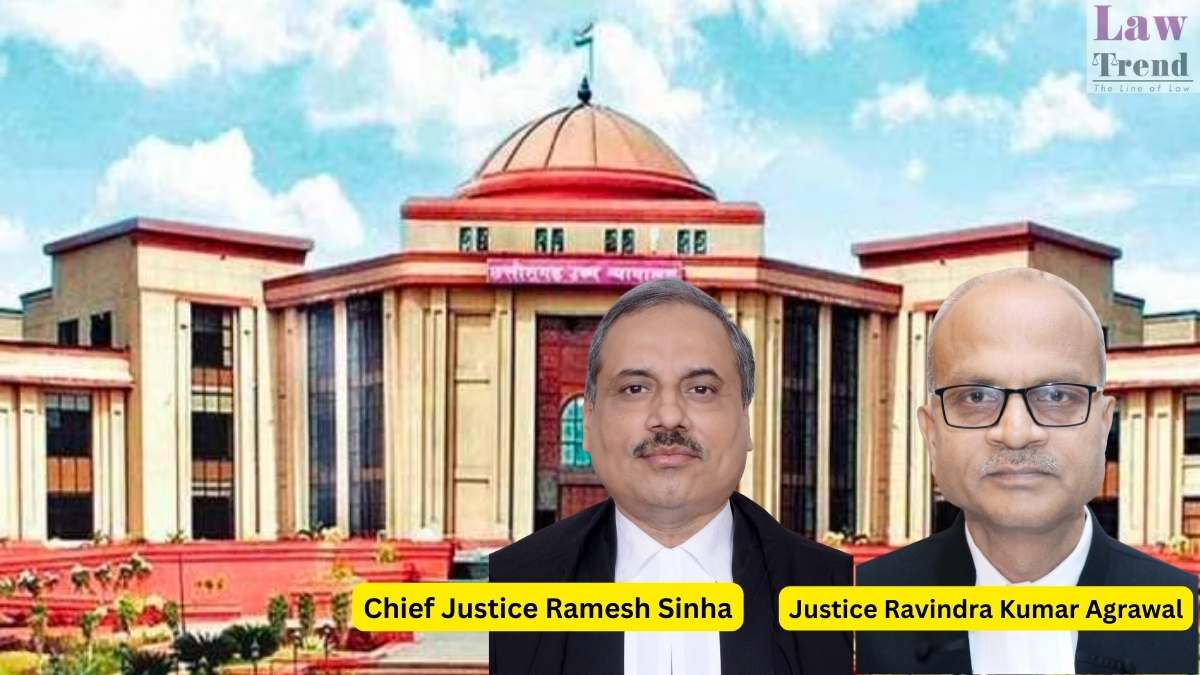
The High Court of Chhattisgarh has dismissed a review petition filed by a government employee, imposing a cost of ₹50,000 for what the Court termed as a “misconceived” petition and an “abuse of the process of law.” The Division Bench, comprising Chief Justice Ramesh Sinha and Justice Ravindra Kumar Agrawal, deprecated the growing practice of litigants engaging different counsel to file review petitions who had not argued the main case.

The review petition, filed by Sanjeev Kumar Yadav, sought a review of the High Court’s order dated March 18, 2025, which had dismissed his writ appeal. The Court found no error apparent on the face of the record and observed that the petitioner was attempting to re-argue the case on merits under the guise of a review. Noting that the petitioner had changed his counsel for the review petition—a practice strongly disapproved by the Supreme Court—the Bench initially proposed a cost of ₹2 Lakhs. However, following the counsel’s unconditional apology, the cost was reduced to ₹50,000.

Background of the Dispute

The legal battle began when the petitioner, Sanjeev Kumar Yadav, filed a Writ Petition (WPS No. 3492 of 2018) challenging orders passed in 2017 and 2018 by the Zila Panchayat, Jashpur, and the Commissioner, Surguja Division. These orders had found him guilty in a departmental enquiry and imposed a penalty of stoppage of four annual increments with cumulative effect.

The petitioner contended that the enquiry violated principles of natural justice as he was allegedly not given an opportunity to cross-examine witnesses or supplied with documents. The Single Judge dismissed the writ petition on January 23, 2025, holding that the enquiry followed the prescribed procedure.

READ ALSO  The Case for Reducing the Tax on Parathas Reached the High Court, Decided to Lower It After Hearing Arguments

Aggrieved by this, the petitioner filed Writ Appeal No. 184 of 2025, which the Division Bench dismissed on March 18, 2025. Subsequently, the petitioner approached the Supreme Court via a Special Leave Petition (SLP), which was also dismissed on August 8, 2025. Following the dismissal by the Apex Court, the petitioner returned to the High Court with the present review petition.

Arguments of the Petitioner

Represented by a new counsel, Mr. Rohitashva Singh, the review petitioner argued that the petition was maintainable despite the dismissal of the SLP, as the Supreme Court had dismissed the case in limine (at the threshold) and not on merits. He relied on the Supreme Court judgment in Khoday Distilleries Limited v. Sri Mahadeshwara Sahakara Sakkare Karkhane Limited (2019).

The primary ground for review was an alleged factual error in the Court’s previous order. The counsel submitted that the observation in the order regarding the receipt of the inquiry report on June 9, 2016, was “factually incorrect and contrary to the record.” He argued that the report was never provided before the penalty order was passed.

Court’s Observations and Analysis

The Division Bench rejected the petitioner’s contentions and focused heavily on the procedural impropriety of changing counsel for review proceedings.

READ ALSO  Court Can Grant Pardon to Accomplice for Truthful Testimony Under Section 307 CrPC/344 BNSS: Chhattisgarh High Court

On Changing Counsel for Review The Court noted that the petitioner had engaged different advocates at every stage: Mr. Vineet Kumar Pandey for the Writ Petition, Mr. B.P. Sharma and Mr. Sameer Oraon for the Writ Appeal, and now Mr. Rohitashva Singh for the Review Petition.

Citing the Supreme Court’s decision in Tamil Nadu Electricity Board v. N. Raju Reddiar (1997), the Court observed:

“It is a sad spectacle that new practice unbecoming of worthy and conducive to the profession is cropping up… Review petition is not, and should not be, an attempt for hearing the matter again on merits. Unfortunately, it has become, in recent time, a practice to file such review petitions as a routine; that too, with change of counsel, without obtaining consent of the advocate on record at earlier stage.”

The Bench held that since the present counsel was neither the arguing counsel when the appeal was heard nor present at the time of arguments, “it would not be in the interest of the justice to permit such practice.”

On the Merits of the Review Regarding the petitioner’s claim of a factual error about the inquiry report date, the Court clarified that paragraph 5 of the impugned order merely recorded the submission of the learned counsel for the appellant, not a finding of fact by the Court. The Court stated:

READ ALSO  UP Waqf Tribunal Extends Deadline for Uploading Property Details on UMEED Portal to June 2026 Due to Technical Glitches

“Thus, the ground raised by the review petitioner for review of the order dated 18.03.2025 is totally misconceived.”

On the Scope of Review Jurisdiction The Court reiterated that a review is not an “appeal in disguise.” Referring to precedents such as Tungabhadra Industries Limited v. Government of Andhra Pradesh and Parsion Devi v. Sumitri Devi, the Bench emphasized that a review lies only for a patent error and not for rehearing a decision.

“In review jurisdiction, mere disagreement with the view of the judgment cannot be the ground for invoking the same,” the Court remarked, citing Kamlesh Verma v. Mayawati (2013).

Decision

The High Court concluded that the petitioner was wasting the Court’s precious time by filing a misconceived petition after the matter had attained finality up to the Supreme Court.

While the Court deemed the petition liable for dismissal with a cost of ₹2 Lakhs, it showed leniency due to the counsel’s apology. The Court ordered:

“…impose a cost of Rs. 50,000/-, which is payable by the petitioner in the Registry of this Court and the same shall be transmitted to the Government Specialized Adoption Agency, Gariyaband (C.G.).”

The petitioner has been directed to deposit the amount within one month, failing which it will be recovered as arrears of land revenue.

Law Trend
Law Trendhttps://lawtrend.in/
Legal News Website Providing Latest Judgments of Supreme Court and High Court

Related Articles

Latest Articles


