

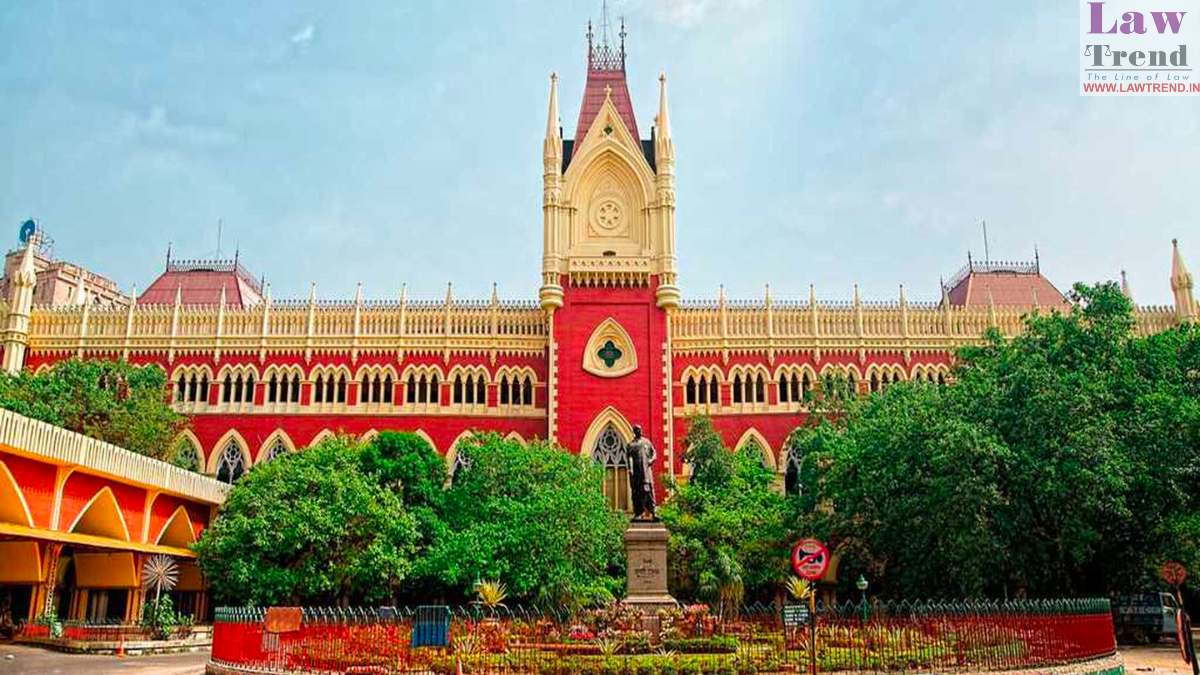
The Calcutta High Court has dismissed a man’s plea seeking compassionate appointment in the Railways, holding that such schemes are intended to provide immediate financial assistance to families facing sudden hardship and cannot be invoked after an unexplained delay spanning decades.
A Division Bench of Chief Justice Ravindra Ghuge and Justice Om Narayan Rai agreed with the railway tribunal that the claim was “hopelessly belated”. The court noted that the petitioner had allowed his original case to be dismissed for default and waited 23 years before seeking its restoration.
The September 29 order also recorded that the petitioner approached the High Court four years after his subsequent plea before the tribunal was rejected.
The court said the petitioner had been unreasonably lax in pursuing the matter and observed that courts cannot assist a litigant who remains inactive for prolonged periods, particularly when delay defeats equitable relief.
Compassionate Appointment Meant For Immediate Financial Distress
The High Court said compassionate appointment schemes are designed to help the family of an employee who suddenly loses its source of livelihood because of death in service, serious illness or another contingency covered by the relevant scheme.
Such appointments, the Bench observed, are concessions meant to give immediate assistance to family members so that they can overcome sudden financial hardship.
The court noted that the petitioner’s father had continued working even after the 1974 All India Strike. There was therefore no requirement to appoint anyone in his place.
It also recorded that the railway administration had rewarded the petitioner’s father with an additional increment apart from his regular increment. In these circumstances, the court held that the petitioner could not seek compassionate employment after 51 years.
First Application Made Nine Years After Retirement
According to the petitioner, his father joined the office of the Divisional Railway Manager, Eastern Railway, Howrah Division, on July 19, 1944 and retired on March 1, 1977.
He claimed that his father had rendered exemplary service during the 1974 All India Strike by continuing to perform his duties and was consequently granted an advance pay increment.
The petitioner’s mother submitted an application on August 4, 1986 seeking compassionate appointment for her son, stating that her husband had retired because of ill health. The petitioner filed another application on December 13, 1986.
The High Court noted that the first request was made about nine years after the father’s retirement.
The Bench observed that the family’s ability to sustain itself for nine years after the retirement reasonably indicated that it had not been reduced to penury. It added that this factor alone could be sufficient to defeat a compassionate appointment claim unless the governing scheme expressly permitted such a long period for making the request.
Litigation Continued For Decades
The petitioner later approached the railway tribunal relying on a circular under which compassionate appointment to Class III and Class IV posts could also be extended to loyal staff, apart from cases involving employees who died prematurely, became permanently disabled or suffered serious illness.
The tribunal dismissed the original application for default on June 12, 1990. The petitioner sought restoration only in 2013, but that application was rejected on May 6, 2013.
He thereafter approached the High Court. While dismissing that petition, the court had clarified that the competent authorities were still free to consider his grievance sympathetically on merits.
The petitioner again moved the tribunal seeking compassionate appointment, but his case was dismissed on October 14, 2015. He subsequently made several representations to the railway authorities and approached the High Court four years later.
Appearing for the petitioner, advocates Shiv Shankar Banerjee and Rahul Dev argued that the claim had initially been rejected on the basis of the Railway Employees’ Union’s opinion, but was later found to be genuine. They maintained that the petitioner had remained vigilant and should not be blamed for the delay.
Government counsel Dhiraj Kr Trivedi and advocate Ajay Gaggar, representing the authorities, argued that the petitioner was a minor when his father retired and that the first compassionate appointment application was made only nine years later. They also pointed out that his father had already been rewarded by the Railways.
Rejecting the plea, the High Court found no ground to interfere with the tribunal’s conclusion that the claim had been pursued after an excessive and unexplained delay.




