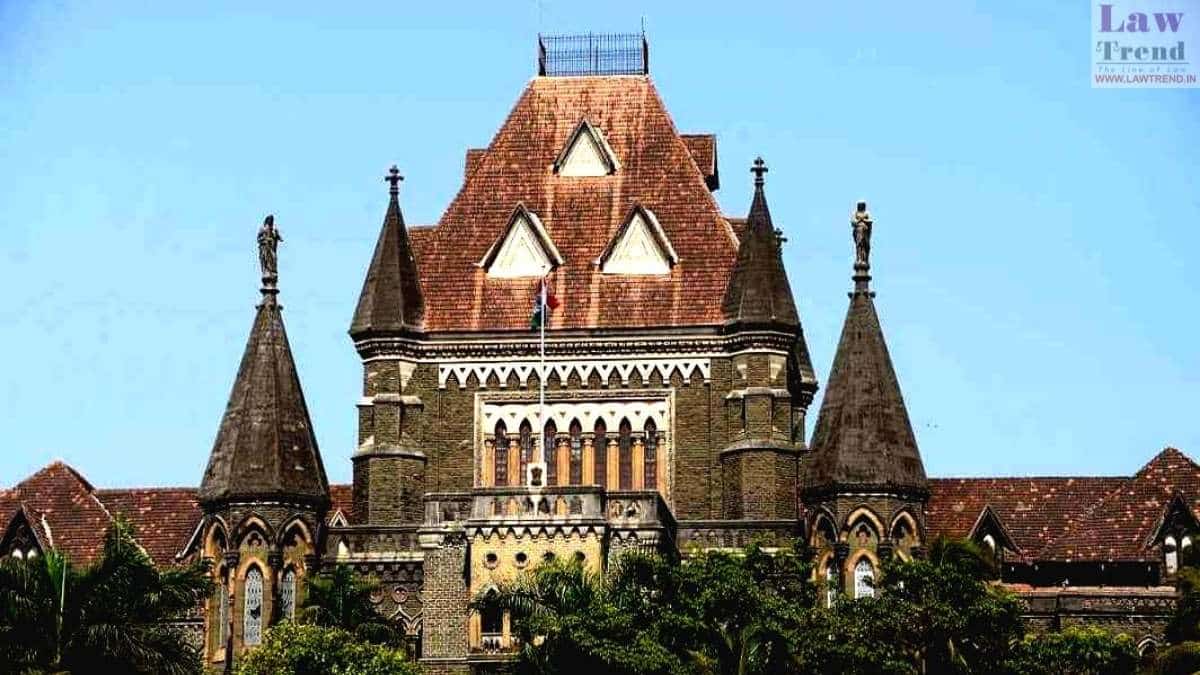
In a significant verdict impacting the urban landscape of Maharashtra, the Bombay High Court has upheld the authority of municipal corporations to regulate and levy fees for the grant and renewal of licenses for sky-signs, hoardings, and billboards. The Court ruled that civic bodies possess complete legal authority to impose such fees, emphasizing that a lack of regulation would lead to a “chaotic situation” where city skylines are dominated by unfettered commercial interests.
The judgment was delivered by a Division Bench comprising Justice G.S. Kulkarni and Justice Advait Sethna on Tuesday, with the detailed order made available on Thursday. The Court was hearing a batch of petitions filed against several municipal corporations, including those of Pune, Nashik, Thane, and Kolhapur.
The petitioners had challenged the decision of these civic bodies to levy and enhance license fees for sky-signs and hoardings. The primary contention raised by the petitioners was that the license fees imposed were unreasonably high, excessive, and discriminatory in nature. They argued that the hike in fees was arbitrary and sought the Court’s intervention to quash the levies.
Dismissing the contentions of the petitioners, the High Court took a stern view regarding the necessity of regulating urban advertising spaces. The Bench observed that sky-signs, hoardings, and billboards play a pivotal role in determining the skyline of modern cities. Consequently, their regulation and control must be handled with the utmost seriousness.
“There cannot be any myopic approach in this regard,” the Bench noted, adding that if the regulatory powers of civic bodies were not recognized, it would result in a scenario where advertisements are displayed at the “unfettered discretion” of installers. “Such a regime cannot be permissible,” the Court stated.
Addressing the specific argument regarding the fees being “excessive,” the High Court refused to accept the petitioners’ claims. It ruled that the rates fixed by the corporations were neither arbitrary nor unreasonable. The Bench clarified that under the Maharashtra Municipal Corporations Act, the Municipal Commissioner is vested with the power to issue licenses and fix fees, which may be revised from time to time with the sanction of the corporation.
The judgment highlighted the evolution of advertising infrastructure, noting that modern licensing requirements are “monumentally different” from those of the past. The Court observed that the landscape has undergone a profound transformation, shifting from traditional painted metal boards to high-resolution electronic screens capable of displaying multiple advertisements throughout the day.
The Bench pointed out that this technological shift has introduced significant challenges regarding safety mandates and regulatory control. The Court stated that municipal bodies are currently balancing the need to accommodate technological advancements with their “onerous responsibility of safeguarding and preserving public interest.” The Court emphasized that any compromise on public interest is “non-negotiable.”
In a strong rebuke, the High Court dismissed the petitions, terming the legal action as “luxury litigation.” The Bench remarked that the litigation had consumed enormous judicial time and appeared to be driven solely by commercial motives to excessively enhance profits.
The Court concluded that there was no illegality or infirmity in the decisions taken by the municipal corporations. It affirmed that the civic bodies acted within their legal rights to fix and enhance license fees for both the grant and renewal of permissions for advertising structures.