

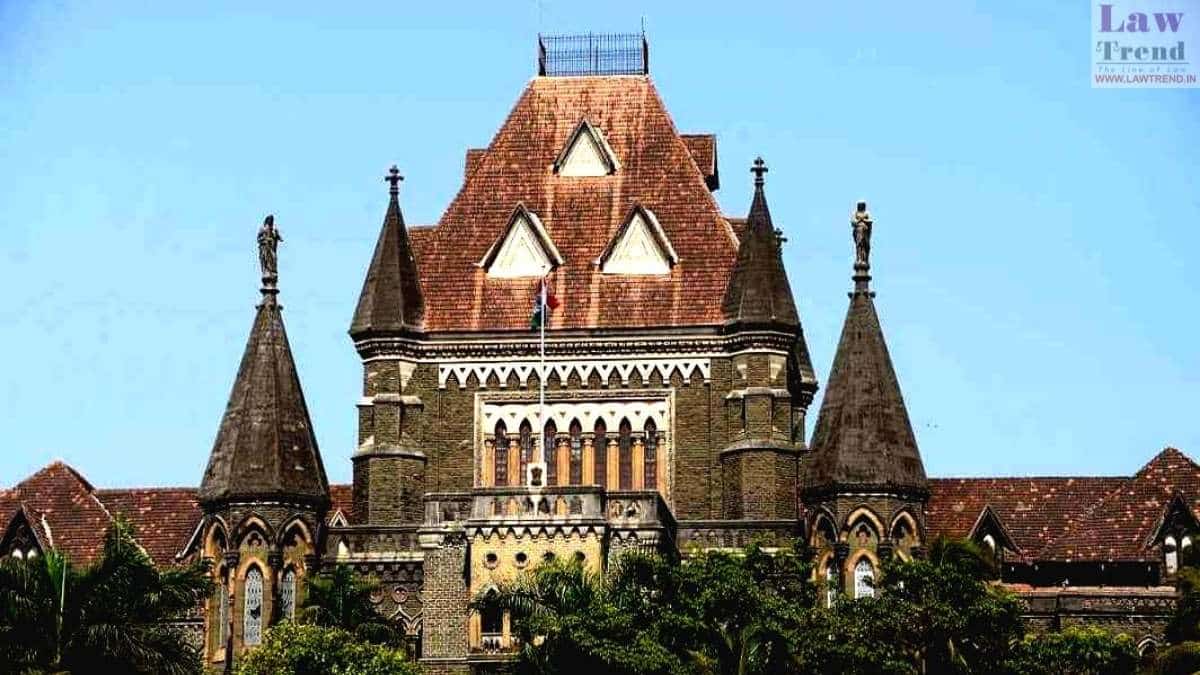
The Bombay High Court has quashed the conviction and death sentence of a man accused of the 2017 rape and murder of a seven-year-old girl in Nashik. A Division Bench comprising Justices Sarang Kotwal and Sandesh Patil ruled that the trial was fundamentally flawed because the accused was not provided with legal representation, violating his constitutional right to a fair trial. The court has remanded the case for a fresh trial to be completed within ten months.
In a significant ruling emphasizing the sanctity of due process, the Bombay High Court on Tuesday set aside the death penalty awarded to a man for the 2017 rape and murder of a minor girl. The court found that the trial conducted by a special POCSO court in Nashik was “hurried” and failed to provide the accused with a lawyer, thereby violating his fundamental rights and resulting in a “miscarriage of justice.”
The case dates back to April 2017 in Nashik, where a seven-year-old girl was allegedly lured by the accused under the pretext of buying tobacco and chocolates. According to the prosecution, when the child went to the man’s house to deliver the items, he raped and subsequently murdered her.
In May 2019, a special court under the Protection of Children from Sexual Offences (POCSO) Act convicted the man, sentencing him to death for murder under the Indian Penal Code (IPC) and awarding life imprisonment under the POCSO Act. The accused subsequently moved the High Court, challenging the verdict on the grounds that he was denied the opportunity to defend himself.
The appellant argued that despite informing the trial court of his inability to afford a lawyer and requesting legal aid, no counsel was appointed to represent him. He contended that from the stage of framing charges to the cross-examination of critical witnesses, he remained unrepresented, rendering the entire judicial process one-sided and prejudicial.
The High Court scrutinized the trial records and found that the accused was indeed left without legal assistance during the most vital stages of the proceedings.
The Division Bench of Justices Sarang Kotwal and Sandesh Patil observed that while the nature of the offense was “horrific and grave,” the gravity of a crime does not authorize the state to bypass constitutional protections. The bench criticized the lower court for showing “unnecessary hurry” in concluding the trial.
“Undoubtedly, it was a serious case and the trial needed to be expedited, but that could not be done at the expense of principles of fair trial,” the court remarked.
The bench further noted that the failure to provide legal aid to an indigent accused is a direct violation of the right to a fair trial. The judges expressed regret that the victim’s family has waited nine years for a resolution, noting that “this is a case where till today justice was not given to the victim and her family” precisely because the initial trial was not conducted fairly.
Upholding the appeal, the High Court set aside the 2019 conviction and death sentence. The case has been remanded back to the Nashik special court for a de novo (fresh) trial.
The High Court directed the lower court to ensure that all precautions are taken to provide a fair environment for both the prosecution and the defense. To prevent further delays in a case that has already spanned nearly a decade, the bench ordered that the new trial must be concluded within a strict timeframe of ten months.




