

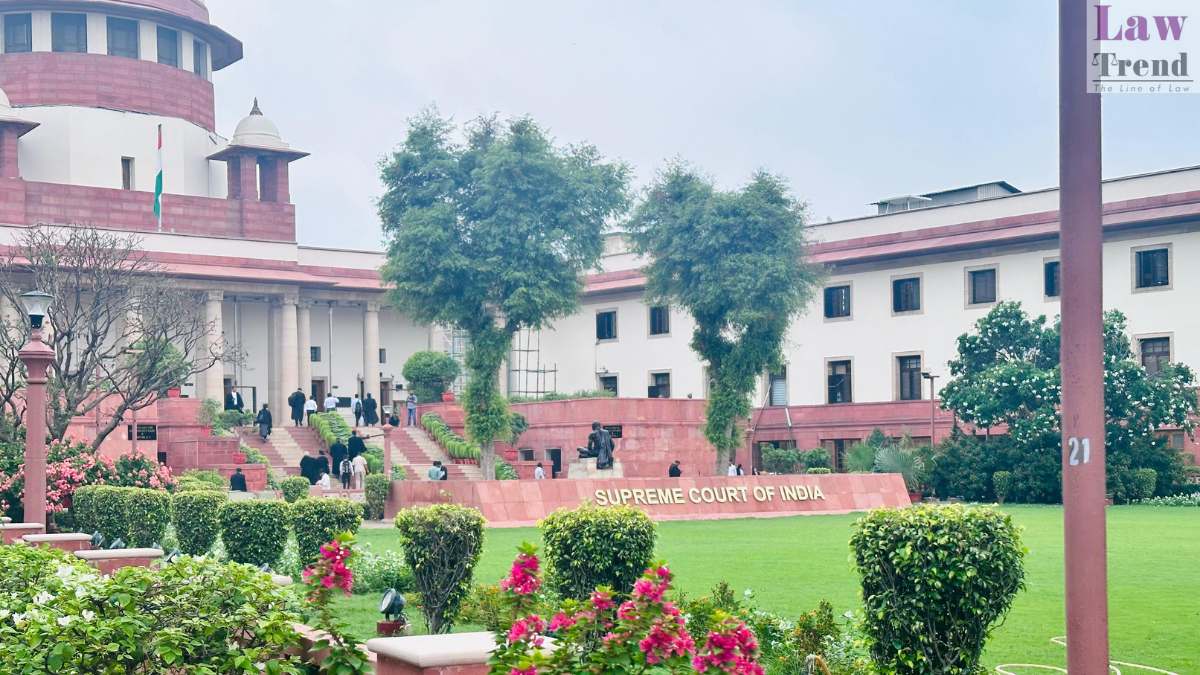
The Supreme Court of India has sounded a dire alarm over the proliferation of organized child trafficking networks, warning that the situation will spiral “beyond control” unless state governments and Union Territories take immediate, decisive action.
During a hearing on Wednesday, a bench comprising Justices JB Pardiwala and KV Viswanathan expressed grave concern over the “lackadaisical” implementation of a landmark 2025 judgment designed to dismantle trafficking syndicates. The court emphasized that while it can monitor the situation, the primary responsibility for safety lies with the home departments and law enforcement agencies of the states.
The bench pointedly noted that the retrieval of children in some instances proves the problem is solvable, yet a critical lack of political and administrative will persists.
“As a court we can monitor, but ultimately the action has to be on the part of the state government, the police, and other agencies. Therefore, this is our humble request,” the bench observed, underscoring the urgency of the matter.
The court was particularly critical of several states that have failed to file compliance reports in the prescribed format or have submitted reports previously described as “nothing but an eye wash.”
The current proceedings stem from a verdict delivered on April 15, 2025, which established a comprehensive framework for tackling human trafficking. Key mandates of that judgment include:
- Expedited Justice: Completion of trials in trafficking cases within six months on a day-to-day basis.
- AHTU Strengthening: Enhancing the capabilities and investigation standards of Anti-Human Trafficking Units (AHTUs).
- Proactive Identification: Setting up state-level committees to identify and monitor “vulnerable hotspots.”
- Legal Presumption: A directive to authorities to treat all cases of missing children as trafficking unless proven otherwise.
Despite these clear instructions, the bench noted that at least 15 states have yet to constitute the required review committees.
The court identified Madhya Pradesh, Goa, Haryana, Lakshadweep, Mizoram, Odisha, and Punjab as jurisdictions that have failed to submit reports correctly. When the Home Secretary of Madhya Pradesh offered an apology for the lapse during the hearing, the bench granted a “final opportunity.”
However, the warning was clear: any continued failure to comply with the 2025 directives will result in those states being officially branded as “defaulting” entities.
The matter has been scheduled for a follow-up hearing on April 29, 2026, by which time the court expects significant progress on the implementation of the mandated reforms.




