

Best Interest of Minor Served by Converting Undivided Land into Usable Flat and Cash: Supreme Court Permits Development Agreement
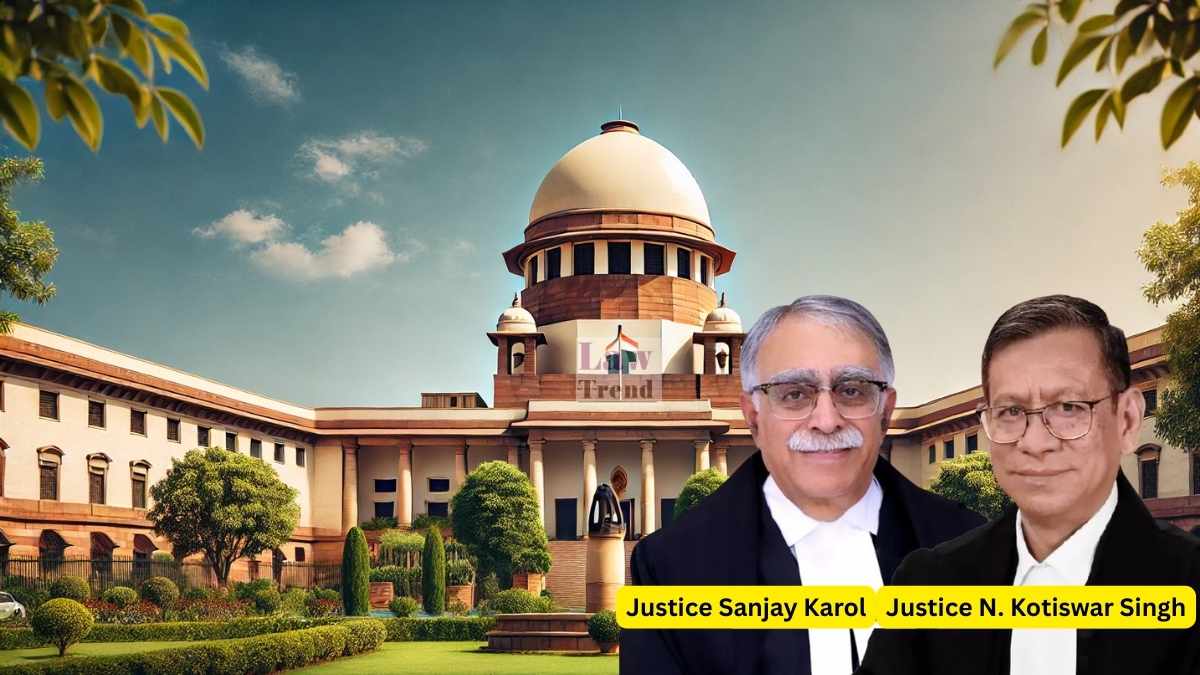
The Supreme Court of India has allowed an appeal filed by a mother seeking permission to transfer her minor son’s share of land for a real estate development agreement, ruling that converting an undivided, passive interest in land into tangible, usable assets like a residential flat and cash consideration aligns with the minor’s best interest. The division bench of Justice Sanjay Karol and Justice Nongmeikapam Kotiswar Singh set aside the concurrent decisions of the District Judge, Darjeeling, and the Jalpaiguri Circuit Bench of the Calcutta High Court, which had previously rejected the mother’s application. The apex court held that while courts must meticulously scrutinize transactions involving a minor’s property under the doctrine of parens patriae, they must also balance the rights of adult co-owners to derive reasonable economic benefits from joint properties.

Background of the Case

The appellant, Shephali Chakraborty, acting as the mother and natural guardian of her minor son, Master Basab Chakraborty (born on March 4, 2009), sought permission from the District Court under Section 8 of the Hindu Minority and Guardianship Act, 1956 (HMGA). The permission was required to dispose of the minor’s share in a family land parcel located in Darjeeling, which he had inherited following the intestate death of his father, Late Basudeb Chakraborty, on January 25, 2018.

The history of the property traces back to 1957 when it was originally procured by the minor’s paternal great-grandfather, Nagendra Nath Das. In 1965, a 1/7th share of the property devolved upon his daughter, Bela Chakraborty, who was the minor’s grandmother. Following her intestate demise in 1978, her share was divided equally among her three children: Biplab Chakraborty, Basudeb Chakraborty, and Beauty Sarkar. When Basudeb Chakraborty passed away in 2018, his share of his mother’s 1/6th share in the 0.13-acre plot was inherited equally by his wife, Shephali Chakraborty, and their minor son, Basab.

In 2022, the surviving family co-owners decided to transfer the property to a developer, M/s Shivam Estates and Developers, in exchange for a monetary payment and constructed flats. Under the terms of the Development Agreement, the developer agreed to construct flats for the owners and pay a total sum of Rs. 10,00,000. Specifically, the owners’ allocation included a first-floor flat (No. 1B) to be jointly allocated to the legal heirs of Late Bela Chakraborty, namely Biplab Chakraborty, Shephali Chakraborty, Basab Chakraborty, and Beauty Sarkar. To execute this agreement, Shephali Chakraborty applied for judicial permission to transfer the minor’s share.

Arguments of the Parties and Decisions of the Lower Courts

The appellant argued before the District Court that entering into the Development Agreement was essential for the future of the minor and for the better utilization of the property. She submitted that she lacked the independent resources to maintain her child, including his upbringing, medical treatment, and education.

READ ALSO  MACT Claims | Notional Income of Student Victim Must Be Based on Future Potential, Not Minimum Wage: SC

The District Court of Darjeeling rejected the application, holding that under Section 8(5) of the HMGA read with Section 29 and Section 31(2) of the Guardians and Wards Act, 1890, any order granting permission to transfer a minor’s property must recite the specific necessity or advantage to the minor. The District Court observed that the appellant’s petition relied on “bald statements” without describing how or why the development was essential for the child’s future. The court also noted that the appellant had not revealed whether the minor’s father had left other assets, had not shown how the property was currently being utilized, and had failed to elaborate on how a 1/3rd share of a flat in a proposed building of unknown identity would benefit the child. On appeal, the Circuit Bench of the Calcutta High Court at Jalpaiguri affirmed the District Court’s dismissal.

The Court’s Analysis of Ex Ante vs. Ex Post Regimes and Section 8 HMGA

The Supreme Court began its analysis by distinguishing between ex ante and ex post judicial and regulatory mechanisms. While ex post mechanisms (such as criminal liability under Article 20(1) of the Constitution or divorce grounds under Section 13 of the Hindu Marriage Act, 1955) scrutinize the legality of acts after they have occurred, ex ante mechanisms perform assessments beforehand to prevent harm.

The Court identified Section 8 of the HMGA as a prime example of an ex ante protective mechanism. Analyzing the section, the Court noted that it is divided into four parts: general powers of a natural guardian, restrictions on the alienation of immovable property, the legal effect of unauthorized alienation, and the standards to be applied by courts. Under Section 8(2), a natural guardian is prohibited from mortgaging, selling, gifting, or exchanging a minor’s immovable property without previous permission from the court. Section 8(4) mandates that no court shall grant such permission except in cases of necessity or for an “evident advantage” to the minor.

The Court deduced several established principles from its prior rulings, including:

  1. Section 8 imposes a statutory restraint on natural guardians as a protective measure (Vishwambhar & Ors. v. Laxminarayan).
  2. Unauthorized alienations are not void ab initio but voidable at the instance of the minor upon attaining majority (Vishwambhar & Ors. and Nangali Amma Bhavani Amma v. Gopalkrishnan Nair).
  3. Reliefs like the recovery of possession are contingent on prior avoidance of the transaction (Murugan & Ors. v. Kesava Gounder).
  4. Section 8 applies to a minor’s separate or self-acquired property, not to undivided joint family property governed by traditional Hindu law (Sri Narayan Bal & Ors. v. Sridhar Sutar & Ors.).
READ ALSO  Police Officer Who Registered Suo Moto Case Can't Be Asked To Compensate Accused U/S 250 CrPC Upon Acquittal: Kerala High Court

The Doctrine of Parens Patriae

The Bench traced the origins of the parens patriae (“parent of the nation”) doctrine to the moral and legal responsibility of the State to safeguard those incapable of protecting their own interests. The Court referenced the philosophical writings of John Stuart Mill, who excluded children from his general principle against State interference because autonomy presupposes capacity, and Martha Albertson Fineman, who argues that the State has an affirmative obligation to respond to human vulnerability. The Court also highlighted the presence of this doctrine in the Indian classical tradition, quoting Kautilya’s Arthashastra:

“The king shall provide the orphans, (bála), the aged, the infirm, the afflicted, and the helpless with maintenance… Elders among the villagers shall improve the property of bereaved minors till the latter attain their age…”

In Indian jurisprudence, the Court noted that parens patriae is embedded across constitutional and statutory frameworks, including the Guardians and Wards Act, 1890 (Annie Besant v. G. Narayaniah and McKee v. McKee), Order XXXII of the Code of Civil Procedure, 1908, the Juvenile Justice (Care and Protection of Children) Act, 2015, the Mental Healthcare Act, 2017, and various protective provisions within the Bharatiya Nagarik Suraksha Sanhita, 2023. The Court observed:

“Welfare’ supersedes all else as the governing standard. Courts and statutory bodies do not merely adjudicate disputes; they assume responsibility.”

Applying the Standard to the Case Facts

Applying these principles, the Supreme Court evaluated whether the minor’s “best interest” lay in retaining an undivided interest in 0.13 acres of undeveloped land (yielding a 1/3rd share of a 1/6th portion) or in receiving a 1/3rd share of a 1,198 square-foot first-floor flat (yielding 399.33 square feet) along with a portion of the Rs. 10,00,000 cash consideration.

The Court noted that under Hindu law, the powers of a property manager or guardian are limited, referencing the Privy Council decision in Hunooman Persaud Panday v. Mussumat Babooee Munraj Koonweree:

“…The power of the Manager for an infant heir to charge an estate not his own, is, under the Hindoo law, a limited and qualified power. It can only be exercised rightly in a case of need, or for the benefit of the estate…”

The Bench emphasized that the evaluation of the minor’s interest must be forward-looking:

READ ALSO  Consensual Intimacy Cannot Be Retrospectively Branded As Rape: Allahabad HC Quashes Rape Case Arising From Broken Relationship

“The best interest of the child is not passive consideration but a vigorous principle that requires foresight, caution, and meticulous scrutiny in every matter affecting the minor’s property-‘for an evident advantage to the minor’.”

The Court explained that an undivided share in undeveloped, jointly-held land often remains a purely notional interest with no immediate utility and is highly vulnerable to encroachment or disputes. Conversely, transforming this passive asset into a constructed, habitable residential unit and liquid cash provides immediate, secure, and measurable benefits. The cash component offers necessary liquidity for the minor’s education and health, while the flat provides a tangible, usable asset.

The Court also observed that the presence of a minor should not act as an unreasonable barrier to the rights of adult co-owners who seek to derive economic value from their property. The duty of the court is to reconcile these interests carefully without compromising the minor’s security.

Furthermore, the Supreme Court rejected the District Court’s finding that the co-owners of the proposed flat were “in the dark,” pointing out that the Development Agreement explicitly detailed the family genealogy and how the property devolved to the current owners.

The Decision

The Supreme Court allowed the appeal and granted the necessary permission to execute the Development Agreement, subject to the following protective conditions:

  1. The monetary share received on behalf of the minor under the contract must be deposited in a nationalized bank under an auto-renewal scheme until the minor attains majority. The guardian holds liberty to approach the District Court to modify these terms if prevailing circumstances require it.
  2. Any future alterations to the Development Agreement must receive prior approval from the concerned District Court.
  3. If the adult co-owners of the allocated flat wish to sell their shares before the minor attains majority, they must inform the District Court and obtain its permission.
  4. The District Judge, Darjeeling, is empowered to impose any additional conditions deemed necessary through a reasoned order.

Case Details

  • Case Title: Shephali Chakraborty v. The State of West Bengal
  • Case No.: Civil Appeal No. ___ of 2026 (Arising out of Special Leave Petition (Civil) No. 25053 of 2025)
  • Bench: Justice Sanjay Karol, Justice Nongmeikapam Kotiswar Singh
  • Date: June 3, 2026

Law Trend
Law Trendhttps://lawtrend.in/
Legal News Website Providing Latest Judgments of Supreme Court and High Court

Related Articles

Latest Articles
