

Article 14 Cannot Be Invoked to Claim or Perpetuate Benefits Not Sanctioned by Statutory Rules or Governing Policy: Chhattisgarh High Court
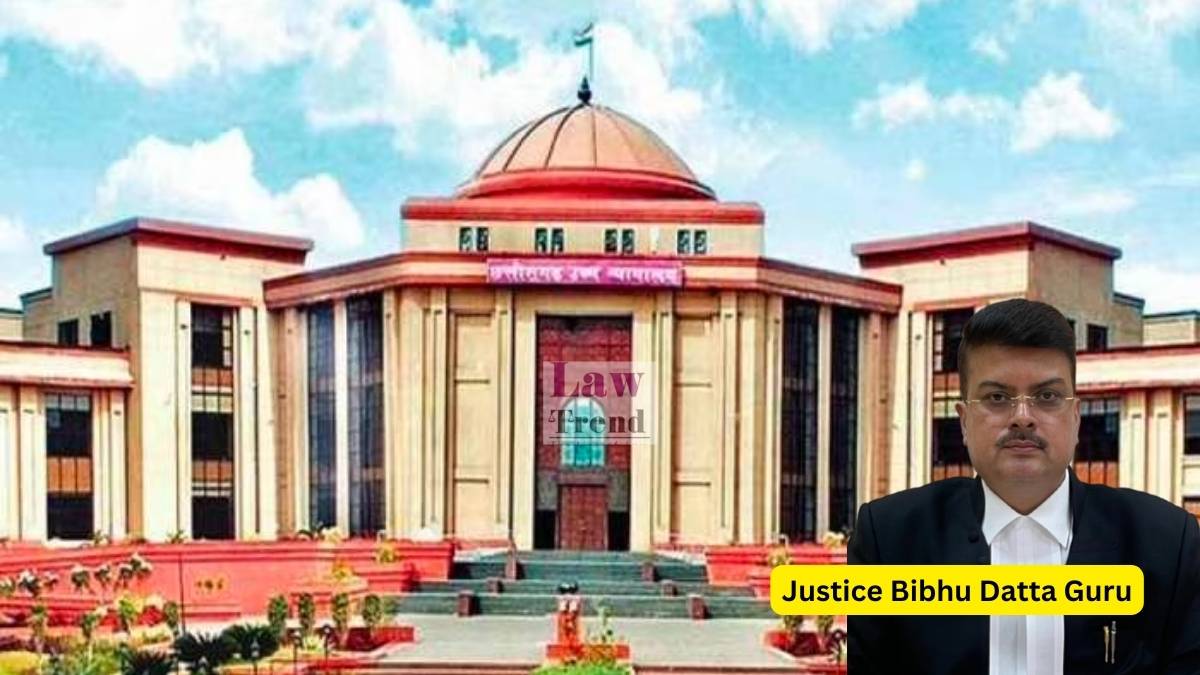

The High Court of Chhattisgarh at Bilaspur, presided over by Justice Bibhu Datta Guru, has ruled that a writ petitioner cannot claim or perpetuate a benefit that lacks the sanction of prevailing statutory rules, regulations, or governing policies under Article 14 of the Constitution of India. With this legal finding, the court dismissed a batch of petitions filed by Assistant Veterinary Field Officers (AVFOs) seeking directions to compel the State Government to relieve them to pursue the Bachelor of Veterinary Science and Animal Husbandry (B.V.Sc. & A.H.) degree course as departmental candidates for the Academic Session 2025–26.

Background of the Case

The petitioners were appointed as Assistant Veterinary Field Officers (AVFOs) in the Veterinary Department of the State of Chhattisgarh. Under the Chhattisgarh Veterinary (Gazetted) Recruitment Service Rules, 2011 (the Rules, 2011), the post of AVFO serves as the feeder cadre for promotion to the post of Veterinary Assistant Surgeon. Under these rules, acquiring a B.V.Sc. & A.H. degree is an essential qualification for promotion to the higher post.

The petitioners, having completed more than five years of service, appeared in the NEET-UG Examination, 2025, and secured qualifying marks to seek admission as in-service departmental candidates. However, the State Government denied them permission to pursue the course, relying on administrative orders dated October 12, 2020, and December 3, 2020. These orders directed the Director of the Department of Veterinary Science not to send AVFOs for the B.V.Sc. & A.H. course at the state’s expense until further notice. Consequentially, on March 24, 2025, the Deputy Director of Veterinary Services returned the petitioners’ applications.

Arguments of the Parties

Petitioners’ Contentions

The petitioners argued that the issue was no longer res integra (an undecided point of law) due to a previous High Court decision in Tosh Kumar Sinha v. State of Chhattisgarh and others (WPS No. 4752/2024), where similarly situated AVFOs were permitted to join the degree course as departmental candidates. This judgment was affirmed in writ appeal and survived a challenge in the Supreme Court. The petitioners claimed parity under Article 14.

They further contended that the Bachelor of Veterinary Science and Animal Husbandry Course Admission Rules, 2025 (the Admission Rules, 2025) were introduced midstream and could not retrospectively defeat the vested rights they acquired under the 2011 Rules and the Admission Rules, 2020, which were active when the admission process commenced.

READ ALSO  Chhattisgarh High Court Seeks Details on Pending Revenue Cases from Government

Lastly, the petitioners challenged the validity of the Admission Rules, 2025, under Section 41(5) of the Chhattisgarh Kamdhenu Vishwavidyalaya Act, 2011 (the Act, 2011). They argued that any statute passed by the Executive Council requires the mandatory assent of the Chancellor to be valid, and no such assent had been proven for the 2025 Rules.

Respondents’ Contentions (State and Chhattisgarh Kamdhenu University)

The respondents countered that the petitioners possessed no enforceable right to admission as in-service candidates for the 2025–26 session. They argued that the 2011 Rules merely lay down eligibility conditions for promotion and do not obligate the University to reserve seats or guarantee admission.

The respondents clarified that the admission process for the 2025–26 session is exclusively governed by the Admission Rules, 2025, which were approved by the Executive Council in its 25th meeting on July 30, 2025, prior to the admission notice on August 7, 2025. These rules contain no reservation or quota for in-service candidates of the Veterinary Department.

Furthermore, they stated that the Tosh Kumar Sinha judgment was granted under different factual circumstances when the Admission Rules, 2020, were still active, and the court in that case had explicitly declared its direction to be an exceptional measure that should not serve as a precedent. They added that the state had decided not to send candidates due to staff shortages, administrative exigencies, and high workloads. Finally, they argued that Section 41(5) of the Act, 2011, applies only to a “Statute” and not to administrative admission notifications.

READ ALSO  Right to Property is Still an Essential Constitutional Right: SC

Court’s Analysis and Observations

Justice Bibhu Datta Guru thoroughly analyzed the statutory framework and the previous judgments cited. The court observed that the Rules, 2011, only regulate recruitment and promotional eligibility, and do not create a vested right for a serving employee to demand admission to a professional course, nor do they force the State or University to create departmental seats.

Regarding the Tosh Kumar Sinha judgment, the court noted that the relief in that case was explicitly restricted to the special circumstances of that academic session. The court quoted the relevant portion of that judgment to emphasize its non-precedential nature:

“The respondents are accordingly directed as an exceptional case without treating it as a precedent to ensure that the petitioners are granted permission to partake in the B.V.Sc. Course in the next academic session treating them to be cleared for the said Course by virtue of the petitioners having successfully cleared the NEET Examination in the year 2024.”

Therefore, the court held that the petitioners could not mechanically demand identical treatment for the 2025–26 academic session, especially when a different regulatory regime was in place.

Addressing the argument on Section 41(5) of the Act, 2011, the court found that the Chancellor’s assent is only required for a “Statute.” The court noted that administrative resolutions or admission guidelines issued for a specific academic session do not acquire the character of a statute, stating that:

“In the absence of such assent, the same does not have statutory force. In the present case, the document relied upon by the petitioners is, on its own showing, merely a notification governing admissions.”

The court held that a notification lacking statutory force cannot override the governing Admission Rules, 2025.

Summarizing the core constitutional principle on equality and Article 14, the court observed:

READ ALSO  Delivery of signed copy of Arbitral Award should be made to a party who is competent to take a decision as to whether or not Award is to be challenged: Delhi High Court

“A Writ Petitioner cannot invoke Article 14 of the Constitution of India to claim or perpetuate the benefit that is not sanctioned by the prevailing statutory rules, regulation or governing policy.”

On the issue of issuing a writ of mandamus, the court reiterated:

“It is trite law that a writ of mandamus can be issued only where the petitioner establishes a subsisting legal right and a corresponding public duty on the part of the respondent authority. In the facts of the present case, neither requirement stands satisfied.”

The court ruled that any interference at this stage would disrupt an ongoing admission process that has already progressed substantially under the prevailing framework.

The Decision

The High Court held that the State’s refusal to permit and relieve the AVFOs did not suffer from arbitrariness, bad faith, or statutory violations. The court concluded that no grounds were established to force the respondents to create a departmental category outside of the Admission Rules, 2025.

Consequently, all the consolidated writ petitions were dismissed as being devoid of merit. No order was made as to costs.

Case Details

Case Title: Kanchan Rahul @ Kanchan Kaur Rajput v. State of Chhattisgarh & Ors. (with connected matters)

Case No.: WPS No. 9730 of 2025 (along with WPS No. 9804 of 2025, WPS No. 10191 of 2025, and WPS No. 10126 of 2025)

Bench: Justice Bibhu Datta Guru

Date of Order: 25/06/2026

Law Trend
Law Trendhttps://lawtrend.in/
Legal News Website Providing Latest Judgments of Supreme Court and High Court

Related Articles

Latest Articles

