

Classic Misuse’ of Section 498A | Disputes Over Cooking and Dress Do Not Amount to Cruelty: Karnataka High Court
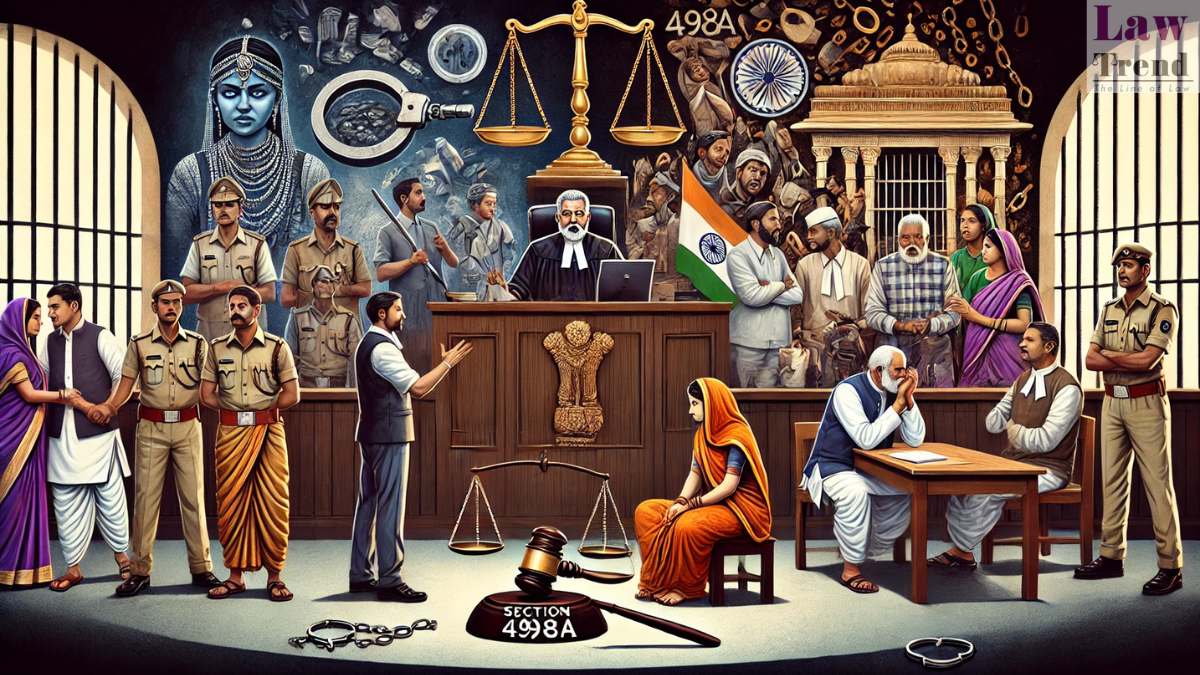

The Karnataka High Court has quashed a criminal case registered against a husband and his family members for offences under Section 498A of the Indian Penal Code (IPC), observing that the allegations in the complaint—ranging from disagreements over cooking and cleaning to dietary restrictions—did not constitute statutory cruelty. The Court termed the proceedings a “classic illustration of abuse of Section 498A” and remarked that the criminal justice system cannot be used as a “criminal dragnet” to ensnare relatives on “omnibus allegations.”

Justice M. Nagaprasanna, allowing the petition, observed that permitting the investigation to continue on such “tenuous” allegations would allow the law to become “a weapon rather than a remedy.”

The High Court was hearing a petition filed by the husband, his parents, and his brother, seeking to quash the FIR registered against them for offences punishable under Sections 498A (cruelty) and 504 (intentional insult) of the IPC, read with Sections 3 and 4 of the Dowry Prohibition Act, 1961. The Court held that the allegations, which included grievances about household chores and lifestyle differences, fell short of the threshold for cruelty defined under the law. Consequently, the Court quashed the proceedings pending before the 37th Additional Chief Metropolitan Magistrate Court, Bengaluru.

Background of the Case

The first petitioner (husband) and the second respondent (complainant) were married on August 25, 2017. Following the marriage, the couple relocated to the United States, where the husband was employed. They resided there for nearly six years, during which two children were born.

In January 2023, the complainant returned to India. Subsequently, in 2024, she lodged a complaint alleging harassment by her husband and in-laws. Based on this complaint, the Basavangudi Women Police Station registered Crime No. 90 of 2024. The complaint cited incidents such as the husband insisting on her doing household chores, criticisms regarding her cooking, restrictions on her diet and attire, and alleged indifference towards her and the children. It was also noted that a Look Out Circular (LOC) had been issued against the husband, preventing him from travelling.

READ ALSO  कर्नाटक हाई कोर्ट ने तलाक के लंबित मामले में पति की मस्तिष्क स्थिति की विशेषज्ञ समीक्षा के लिए पत्नी की याचिका खारिज की

Arguments of the Parties

Petitioners’ Submissions: The counsel for the petitioners contended that the couple had lived in the United States and the allegations pertained to “minor problems that would happen in a marriage.” It was argued that the complainant had returned to India in January 2023 and the complaint, filed in 2024, alleged harassment over the telephone. The counsel submitted that continuing the proceedings would be an abuse of the process of law, highlighting that the LOC issued against the husband had unjustly restricted his movement.

Respondents’ Submissions: The counsel for the complainant and the State Public Prosecutor opposed the petition, arguing that the complaint clearly detailed instances of harassment by the husband and his family. They insisted that the investigation should be permitted to continue, particularly against the husband, as the allegations met the ingredients of the offences.

READ ALSO  BBMP वार्डों के परिसीमन को फिर से करने के लिए हाई कोर्ट ने कर्नाटक सरकार को 12 सप्ताह का समय दिया

Court’s Analysis and Observations

The Court carefully perused the complaint and noted that the grievances were primarily regarding “dietary restrictions, expectations regarding attire, allocation of household responsibilities, disagreements over television preferences laced with a statement that the husband treated the complainant/wife as his servant.”

On the Nature of Allegations: Justice Nagaprasanna observed:

“These allegations even if accepted at face value, portray a portrait of marital discord, but falls woefully short of depicting the statutory cruelty contemplated under Section 498A of the IPC. The law does not criminalize incompatibility, nor does it punish imperfect marriages. Section 498A of the IPC is not a panacea for all matrimonial ills.”

The Court emphasized that Section 498A is a targeted provision meant to address “grave cruelty” or harassment related to unlawful dowry demands. The Bench found the complaint “conspicuously bereft” of such particulars.

On Implication of In-Laws: The Court expressed concern over the implication of the husband’s family members who resided in India while the couple lived abroad. The judgment stated:

“What is more disquieting is, the indiscriminating roping in of the parents-in-law and brother-in-law, despite their residence in India, while the marital life was largely lived abroad… Such prosecutions founded on vague and omnibus allegations… do not advance justice, they in fact corrode it.”

Reliance on Precedents: The Court referred to several Supreme Court judgments to support its decision, including:

  • Shobhit Kumar Mittal v. State of Uttar Pradesh (2025): Highlighting that “cruelty” cannot be established without specific instances.
  • Abhishek v. State of Madhya Pradesh (2023): Noting that “minor skirmishes” between spouses cannot be projected as crimes.
  • Achin Gupta v. State of Haryana (2024): Lamenting the repeated abuse of Section 498A.
  • Belide Swagath Kumar v. State of Telangana (2025): Observing that allegations reflecting “daily wear and tear of marriage” do not qualify as cruelty.
  • Dara Lakshmi Narayana v. State of Telangana: Cautioning against the “tendency to implicate all the members of the husband’s family.”
READ ALSO  पीएम के खिलाफ अपशब्द अपमानजनक, देशद्रोही नहीं: हाई कोर्ट

Decision

The High Court allowed the criminal petition, holding that the continuation of the investigation would “serve no purpose other than to prolong harassment, stigmatize the petitioners and squander the precious time of criminal Courts.”

The Court concluded:

“The issuance of a look out circular against the 1st petitioner, on allegations so tenuous, would only compound injustice. Therefore, to permit the criminal process to lumber forward would be to allow law to become a weapon rather than a remedy.”

Accordingly, the FIR in Crime No. 90 of 2024 and the proceedings pending before the 37th Additional Chief Metropolitan Magistrate Court, Bengaluru, were quashed against all the petitioners.

Case Details

Case Title: Abuzar Ahmed & Ors. v. The State of Karnataka & Anr.

Case No.: Criminal Petition No. 7053 of 2024

Coram: Justice M. Nagaprasanna 

Law Trend
Law Trendhttps://lawtrend.in/
Legal News Website Providing Latest Judgments of Supreme Court and High Court

Related Articles

Latest Articles

