

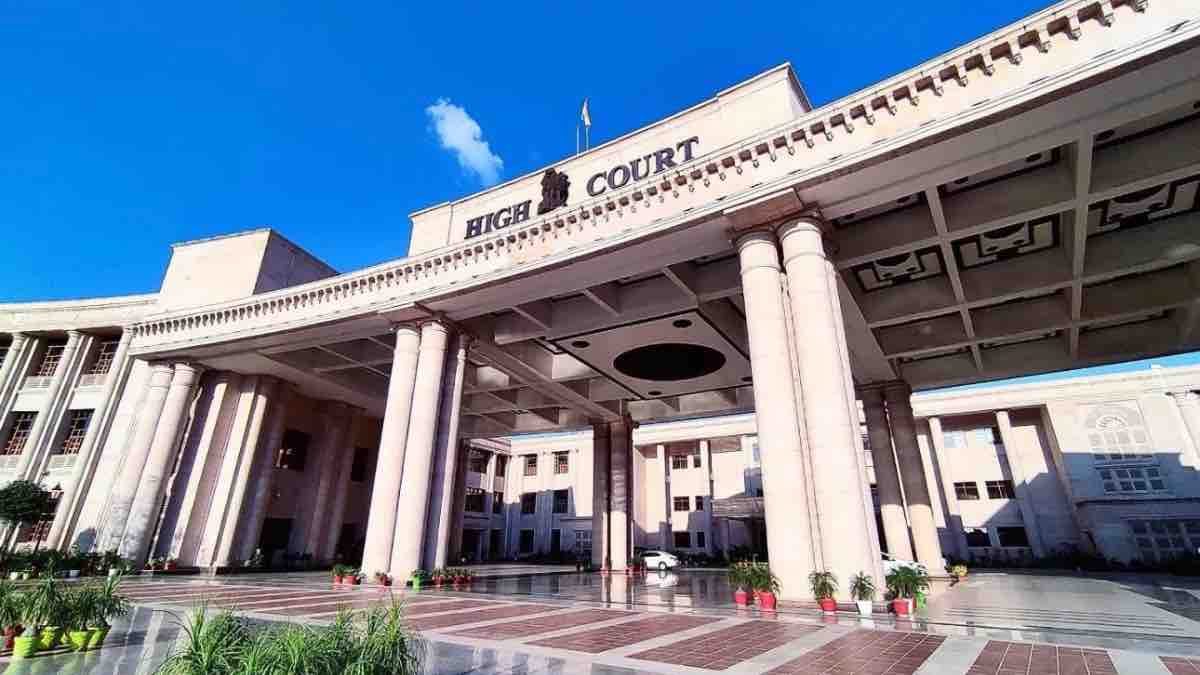
The Allahabad High Court has established that third parties do not have the standing to file special appeals in service-related disputes based solely on indirect impacts or future apprehensions. The Lucknow bench of the court clarified that only a “genuinely aggrieved” person, whose legal rights are directly and tangibly affected, can maintain such an appeal.
The ruling was delivered by a bench comprising Chief Justice Arun Bhansali and Justice Jaspreet Singh while dismissing a special appeal filed by Neeraj Kumar Singh.
The dispute originated from a decision by a single-judge bench of the court, which had quashed the termination of an employee at King George’s Medical University (KGMU). The single-judge bench had subsequently ordered the reinstatement of the said employee following a writ petition.
Neeraj Kumar Singh, also an employee at KGMU but not a party to the original proceedings, filed a special appeal challenging the reinstatement. He contended that the return of the terminated employee was contrary to service rules and would negatively impact his own future promotion prospects.
The division bench rejected the appeal, emphasizing that service disputes are fundamentally matters between the employer and the specific employee. The court noted that for a third party to intervene, they must demonstrate a “direct and tangible infringement” of their legal rights.
The bench observed:
“Mere apprehension regarding promotional prospects cannot be treated as sufficient ground.”
The court underlined the strict application of the doctrine of locus standi (the right to bring an action in court) within service jurisprudence. The judges noted that allowing third parties to challenge service matters without evidence of concrete legal injury could disrupt judicial discipline and place an unnecessary burden on the legal system.
The court found that the appellant, Neeraj Kumar Singh, failed to establish any real legal harm and was not a party to the initial litigation. Consequently, he could not be categorized as an “aggrieved person” under the law.
The bench dismissed the special appeal as not maintainable. However, the court clarified that the employer institution, KGMU, remains at liberty to challenge the single-bench order in accordance with the law if it chooses to do so.




