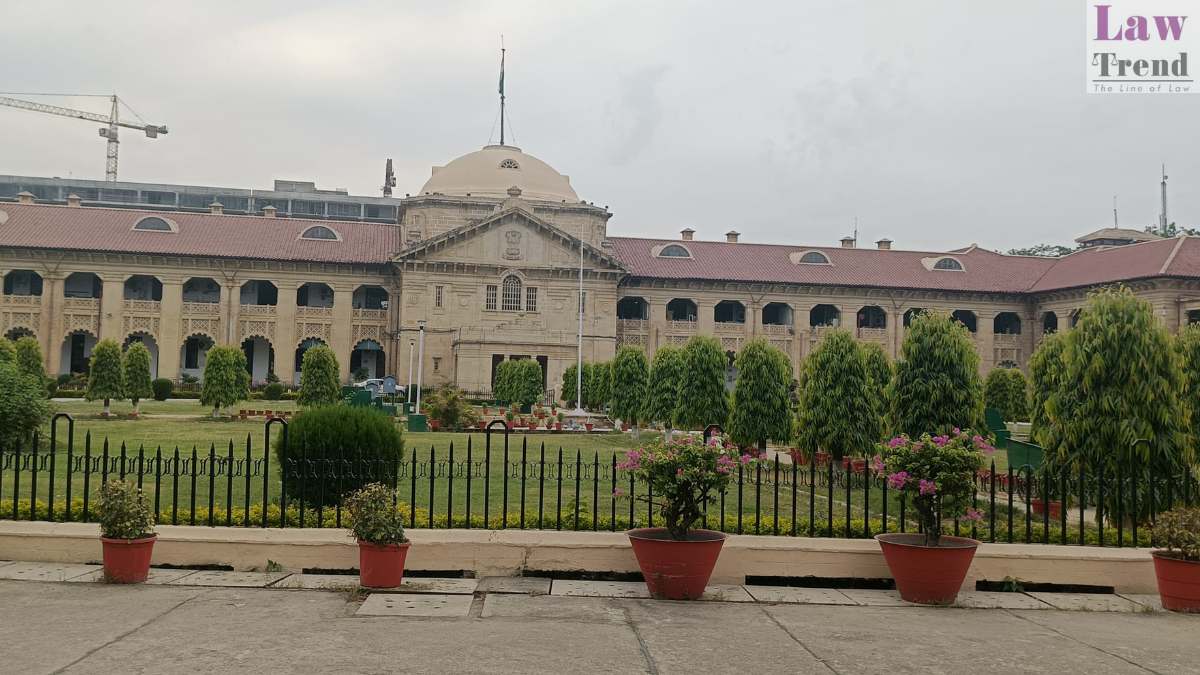
In a significant move to uphold constitutional rights regarding religious practices on private property, the Allahabad High Court has issued a contempt notice to Bareilly District Magistrate Avinash Singh and Senior Superintendent of Police Anurag Arya. The court’s action follows allegations that the officials prevented a group of Muslims from offering Namaz inside a private house in Mohammadganj village.
The primary legal question before the court was whether the state can restrict religious gatherings within a private residence that do not spill over into public spaces. A division bench comprising Justice Atul Sreedharan and Justice Siddharth Nandan, while hearing a petition filed by Tarik Khan, initiated proceedings under the Contempt of Courts Act, 1971, on February 12. The High Court has stayed any coercive action against the petitioner and sought a formal response from the two officers by the next hearing date.
Background of the Case
The dispute traces back to January 16, when a group of Muslims was detained and subsequently released after offering Namaz inside a vacant house in Mohammadganj. The property is owned by Reshma Khan, who confirmed she had granted permission for the gathering and emphasized that the prayers were conducted strictly within the confines of her private premises.
Despite the private nature of the event, administrative intervention led the petitioners to approach the High Court, citing a breach of established legal precedents regarding the rights of minorities to worship on private property.
Arguments of the Parties
The petitioner, Tarik Khan, relied heavily on the High Court’s ruling in Maranatha Full Gospel Ministries vs. State of UP. This case involved Christian organizations seeking to conduct prayer meetings in private spaces. The petitioner argued that the ruling—which states that individuals can pray on their own property without prior state permission—applies equally to all minority sections.
“The Jan 27 order related to another minority section — Christians — clearly stated that prayers can be offered within the premises of a private property. We too are a minority, so the same rule should apply to us,” Khan stated.
Senior High Court lawyer SFA Naqvi, representing the petitioner, argued that the state’s intervention lacked legal backing. He noted that the state had previously admitted that no prohibitory orders were in place. “In such circumstances, how can members of the public claim that the practice is illegal?” Naqvi questioned, adding that managing public protests is an administrative duty that should not result in the infringement of a citizen’s constitutional rights.
Court’s Analysis and Observations
The High Court observed that its earlier ruling in the Maranatha case prima facie applied to the present situation. In that precedent, the court held that:
- Individuals may conduct prayers within their own property without prior permission.
- Permission is only requisite if the gathering extends into public roads or land.
- Organizers are only required to intimate the police if there is a potential for public spillover.
By issuing the contempt notice, the court signaled that the Bareilly administration’s actions appeared to disregard these established judicial guidelines.
Ground Realities and Administrative Stance
The situation in Mohammadganj remains tense. Following the resumption of prayers, several Hindu residents expressed apprehension that the residential property could be converted into a permanent place of worship. In protest, five families painted “House for Sale” on their walls and submitted a representation to Chief Minister Yogi Adityanath.
SSP Anurag Arya stated that police deployment has been increased to maintain law and order. He clarified the administration’s position, stating, “Our concern is only to ensure that no residential property is clandestinely converted into a notified place of public worship without due process.”
The High Court has fixed March 11 as the next date of hearing to examine the responses of the DM and SSP.