In a touching conclusion to a legal battle spanning over two decades, the Supreme Court of India has successfully ensured that a widow, who had disappeared into the anonymity of a remote village in Bihar, received her rightful compensation from the Indian Railways.
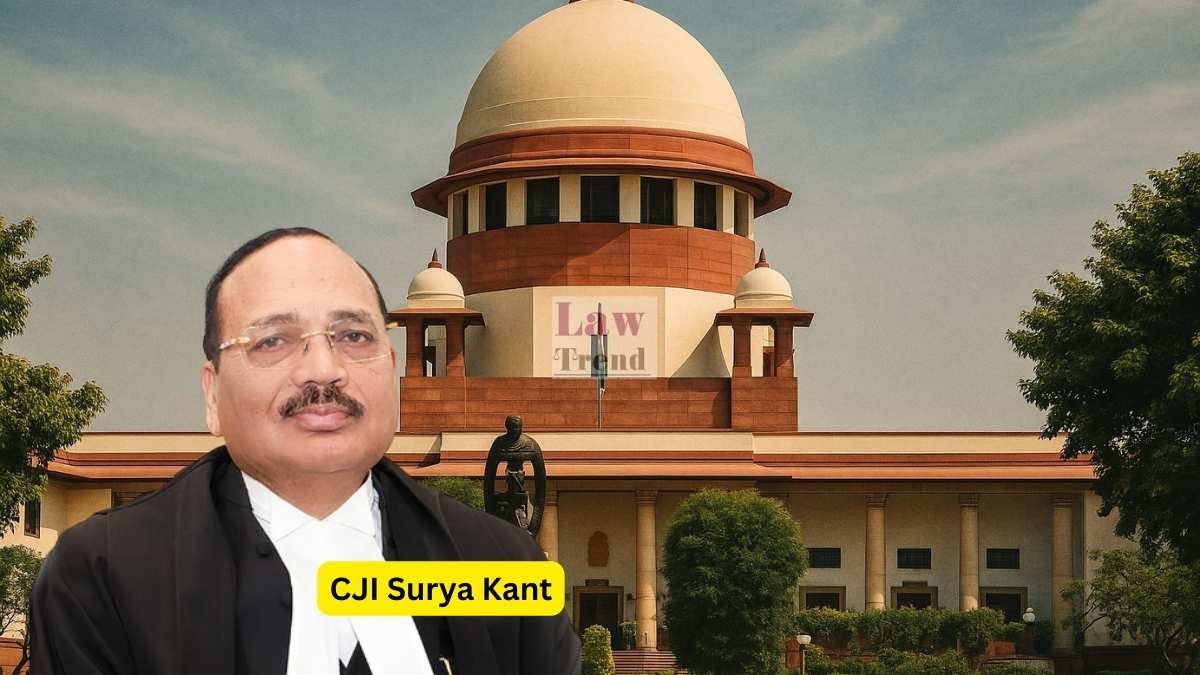
The saga, which began with a tragic train accident in 2002, culminated this Thursday when Chief Justice of India (CJI) Surya Kant expressed profound satisfaction at the outcome, remarking, “A smile on a poor person’s face is what we want to earn, nothing else.”
The Railways informed the court that a sum of ₹8.92 lakh has been remitted to the account of the claimant, Sanyokta Devi, finally closing a chapter marked by tragedy, administrative apathy, and a relentless judicial pursuit of justice.
A 23-Year Struggle for Justice
The case dates back to March 21, 2002, when Sanyokta Devi’s husband, Vijay Singh, died in a tragic accident. Singh, who held a valid ticket for a journey from Bakhtiyarpur to Patna aboard the Bhagalpur-Danapur Intercity Express, accidentally fell from the running train at the originating station due to the immense rush in the compartment.
What followed was a harrowing legal struggle. For years, the Railway Claims Tribunal and subsequently the Patna High Court rejected Devi’s plea for compensation. In a reasoning that the Supreme Court later termed “completely absurd” and “imaginary,” the lower forums denied relief on the grounds that the deceased was of “unsound mind” and had been knocked down by an unidentified train.
Supreme Court’s Intervention
Aggrieved by the High Court’s denial, Devi approached the Supreme Court through advocate Fauzia Shakil. In February 2023, the Apex Court set aside the lower courts’ orders. The bench observed that if the deceased had indeed been of unsound mind, it would have been impossible for him to purchase a valid ticket and attempt to board the train independently.
The Court directed the Railways to pay ₹4 lakh with 6% interest per annum from the date the claim petition was filed. However, a new complication arose: Devi could not be found.
The Search for the Claimant
Following the 2023 order, the Railways attempted to comply but hit a dead end. Devi’s local lawyer had passed away, severing her link to the legal proceedings. Furthermore, owing to financial hardship and family circumstances, she had moved from her previous residence to a far-flung village, leaving no forwarding address.
Unable to disburse the payment, the Railways approached the Supreme Court expressing helplessness. Refusing to let the order remain on paper, the Supreme Court ordered a manhunt for the beneficiary.
In October 2025, the Court directed the Principal Chief Commercial Manager of Eastern Railway to issue public notices in leading newspapers. Simultaneously, the SSP of Nalanda and the SHO of Bakhtiyarpur police station were ordered to physically verify her whereabouts.
“A Difficult Task Achieved”
On Thursday, the bench, also comprising Justice Joymalya Bagchi, was informed that the mission was successful. The Railways’ affidavit stated that in compliance with the Court’s October 6, 2025 order, staff members, assisted by local police, traced Sanyokta Devi.
Documents including her PAN Card, Aadhaar Card, and Gram Panchayat certificates were collected. Although she initially lacked bank particulars, she forwarded them via speed post on November 10, 2025. Consequently, the Railways remitted ₹8,92,953 to her account on November 13.
Lauding the collective effort, CJI Surya Kant specially praised advocate Fauzia Shakil, who represented the widow pro bono.
“This young lawyer, who represented her pro bono, ensured that she gets the compensation after 23 years. We had to trace her with the help of local police and administration and finally railways managed to pay her,” the CJI observed, adding that despite the difficulty of the task, the relief provided to the elderly woman was the ultimate reward for the court.