

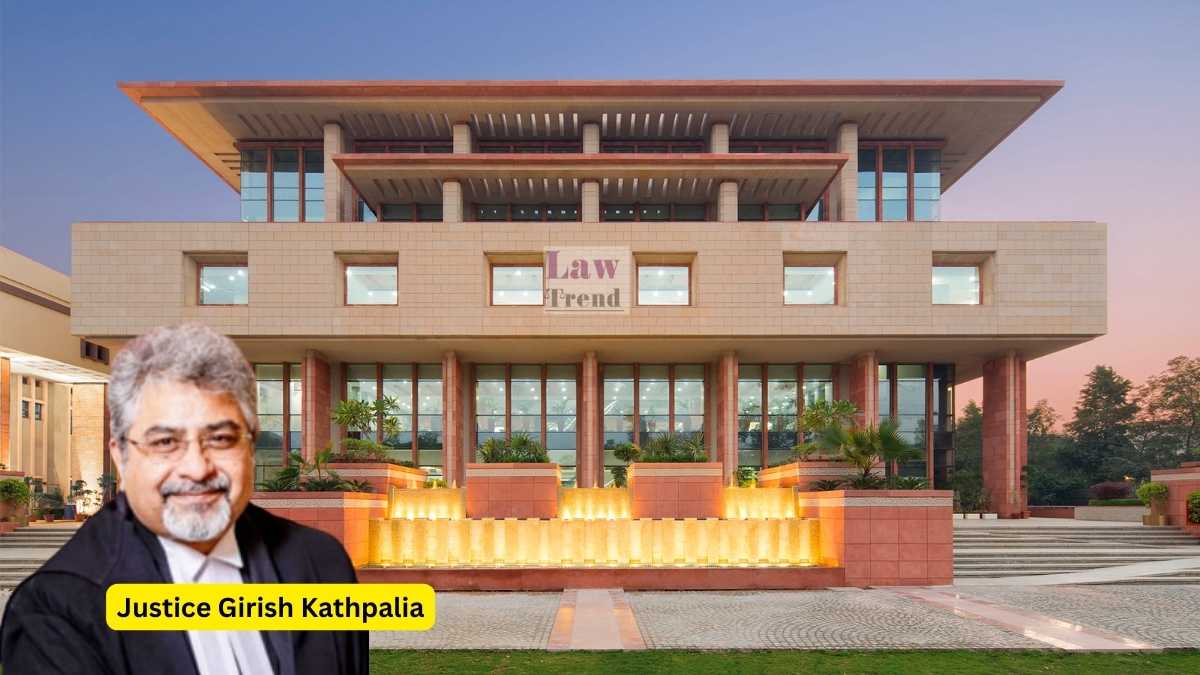
The Delhi High Court has refused to exempt a cheque bounce convict from depositing 20% of the compensation amount under Section 148 of the Negotiable Instruments Act. The convict had claimed he resigned as a director of the company before the cheque was issued. The Court noted that he admittedly signed the cheque and never took the plea that he was not a director during the trial. It dismissed the petition with costs of ₹20,000, calling it a frivolous effort to protract the proceedings.
Justice Girish Kathpalia declined to issue notice on the petition, which challenged a Sessions Court order dated September 24, 2026.
Background
The petitioner was convicted under Section 138 of the NI Act by a judgment dated December 12, 2023, in a complaint case filed in 2011. When he appealed, the Sessions Court on March 7, 2024 directed him to deposit 20% of the fine or compensation within 60 days.
A coordinate bench of the High Court set aside that direction on October 21, 2024. It allowed the petitioner to place his exceptional circumstances before the appellate court so that the deposit could be reconsidered. Before the appellate court, the petitioner said he was a senior citizen with health ailments, had been unemployed since 2018, and had resigned as a director on November 18, 2009, while the cheque was issued in 2011. The appellate court examined each ground and found none of them to be an exceptional circumstance.
Arguments
Advocates Vaibhav Dubey and Priyanshu Maheshwari, appearing for the petitioner, argued that because he had resigned from the company long before the cheque was issued, no liability could be fastened on him. They said this in itself was an exceptional circumstance entitling him to exemption. The petitioner’s other grounds were not pressed before the High Court. No one appeared for the respondent, Olam Agro India Ltd.
Court’s Findings
The Court noted that the cheque was admittedly signed by the petitioner, though he described himself as an authorised signatory. It also noted that it was nobody’s case that he had never been a director. On his claim of resignation in 2009, the Court said, “This is a matter of fact to be examined during trial.”
Examining the trial court judgment, Justice Kathpalia found that the petitioner had failed to prove Form-32 in accordance with law. His counsel had not cross-examined the complainant and had not led any other evidence on the point. The Court observed that “the petitioner has not disputed that the cheque in question was signed by him and has not proved in any manner that he had resigned from directorship of the concerned company before the accrual of cause of action and completion of the alleged offence.”
The Court further noted that the petitioner never raised the non-director plea in response to the notice of accusation or in his statement under Section 313 CrPC. Throughout the trial, his defence was that the cheque was a blank security cheque.
Referring to the delay, the Court recorded that the complainant was still waiting for closure of a dispute over a cheque that bounced in 2011, while the petitioner had been protracting the proceedings at every possible stage. It observed, “The present petition is yet another effort on the part of petitioner to somehow drag the case on so as to frustrate the complainant into giving up.”
Outcome
Holding that “The petition is not just completely devoid of merits but a frivolous effort to somehow protract the proceedings”, the Court dismissed it with costs of ₹20,000. The petitioner must deposit the costs online at www.bharatkeveer.gov.in within one week. The accompanying applications were also dismissed, and a copy of the order was directed to be sent to the appellate court.
Case Title: Rajesh Khanna v. Olam Agro India Ltd.
Case No.: CRL.M.C. 8696/2026
Bench: Justice Girish Kathpalia
Date: November 26, 2026


