

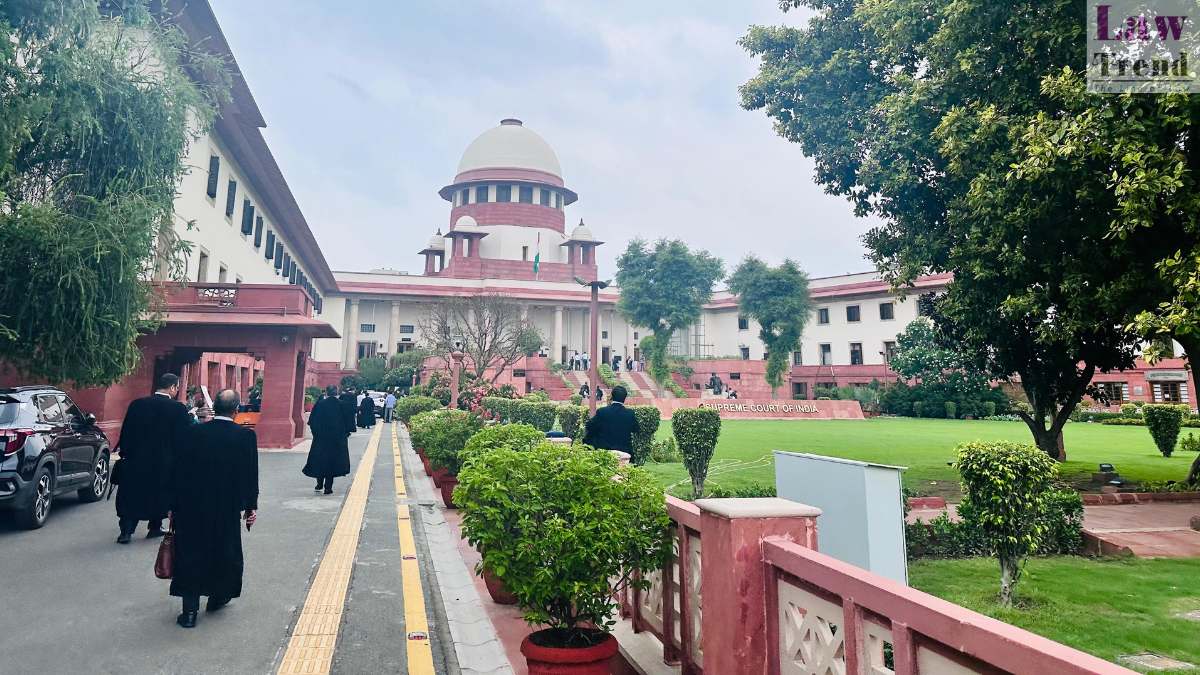
The Supreme Court has held that a High Court exercising power under Section 11 of the Arbitration and Conciliation Act, 1996 to appoint arbitrators cannot extend an arbitrator’s mandate under Section 29A. That power vests only in the “court” defined in Section 2(1)(e), which is the principal civil court of original jurisdiction or a High Court with ordinary original civil jurisdiction.
A Bench of Justice Ujjal Bhuyan and Justice Atul S. Chandurkar set aside the Patna High Court’s finding on this point. However, it upheld the High Court’s rulings on waiver of the three-member tribunal clause and the corporate debtor’s right to pursue arbitration, dismissed the appeals of South Bihar Power Distribution Company Ltd., and directed the sole arbitrator to pass the award within six weeks.
Background
South Bihar Power Distribution Company Ltd., a distribution licensee, entered into a Distribution Franchisee Agreement dated December 31, 2013 with India Power Corporation Ltd. and its special purpose vehicle, India Power Corporation (Bodhgaya) Ltd. Clause 17.2.5 of the agreement provided for arbitration by a panel of three arbitrators.
After disputes arose, the Patna High Court, with the parties’ consent, appointed Justice Shashank Kumar Singh as sole arbitrator in 2018. When he could not continue, it appointed former Chief Justice of India Justice Dipak Misra on March 10, 2021, again with consent. The mandate was extended by six months by consent, and the respondents then sought a further four-month extension before the High Court.
The appellant opposed this, arguing that the High Court lacked jurisdiction and that the agreement required a three-member tribunal. By its order of September 15, 2023, the High Court held that the appellant had waived the three-member requirement, that the SPA could pursue arbitration despite insolvency proceedings, and that it had jurisdiction under Section 29A. It extended the mandate by four months.
While the appeals were pending, the Supreme Court on January 21, 2026 directed the Patna District Court to decide a separate extension application. The Principal District Judge-cum-Commercial Court, Patna extended the mandate by six months on March 23, 2026.
Arguments
Senior Advocate Sundaram, appearing for the appellant, argued that the agreement permitted arbitration only by a three-member tribunal, that the first respondent was merely a proforma party, and that the corporate debtor had ceased to exist. Senior Advocate Raju Ramachandran, for the appellant in the connected appeal, supported these submissions and sought a new three-member tribunal.
Senior Advocate Atmaram Nadkarni, appearing for respondent No. 2, defended the High Court’s judgment, submitting that the arbitrator had made sufficient progress and that aborting the proceedings now would seriously prejudice the respondents.
Section 29A Power Lies With ‘Court’ Under Section 2(1)(e)
Relying on State of West Bengal v. Associated Contractors, Jagdeep Chowgule v. Sheela Chowgule and C. Velusamy v. K. Indhera, the Bench held that Section 11 provisions deal only with the appointment of an arbitral tribunal. It held that “the Supreme Court or the High Court referred to in Section 11 cannot be deemed to be the ‘court’ as defined in Section 2(1)(e).”
The Court found the High Court’s view on its jurisdiction under Section 29A “clearly unsustainable in law” and set it aside. It added that, since the District Court had already extended the mandate, this would not materially affect the outcome.
Waiver of Three-Member Tribunal
The Court noted that the appellant had consented twice before the High Court to a sole arbitrator, never challenged those appointment orders, consented to the six-month extension, and filed a counter claim and supplementary counter claim. It held that “by its conduct, the appellant had clearly waived its right to object to the composition of the arbitral tribunal within the time limit provided by the statute,” relying on Sections 4 and 16 and Union of India v. Pam Development.
IBC Moratorium No Bar to Corporate Debtor’s Claim
Agreeing with the High Court, the Bench held that Section 14 of the IBC does not stop a corporate debtor from pursuing recovery of its dues. It observed that the moratorium “would not impair any claim by the corporate debtor, such as, an arbitral claim, which if successful, would only bolster the financial health thereby enhancing the value of the corporate debtor.” It also noted that the resolution professional had authorised signatories to pursue the arbitration, as approved by the committee of creditors.
Outcome
The Supreme Court upheld the High Court’s findings on waiver and the IBC, set aside its finding on Section 29A jurisdiction, and dismissed the appeals without costs. Lifting its February 12, 2024 order that had barred the award from being declared, the Court directed the arbitrator to pass the award within six weeks.
Case Title: South Bihar Power Distribution Company Ltd. v. India Power Corporation Ltd. & Anr.
Case No.: Civil Appeal No. 9313 of 2026 (with Civil Appeal No. 9325 of 2026)
Bench: Justice Ujjal Bhuyan and Justice Atul S. Chandurkar
Date: October 28, 2026


