

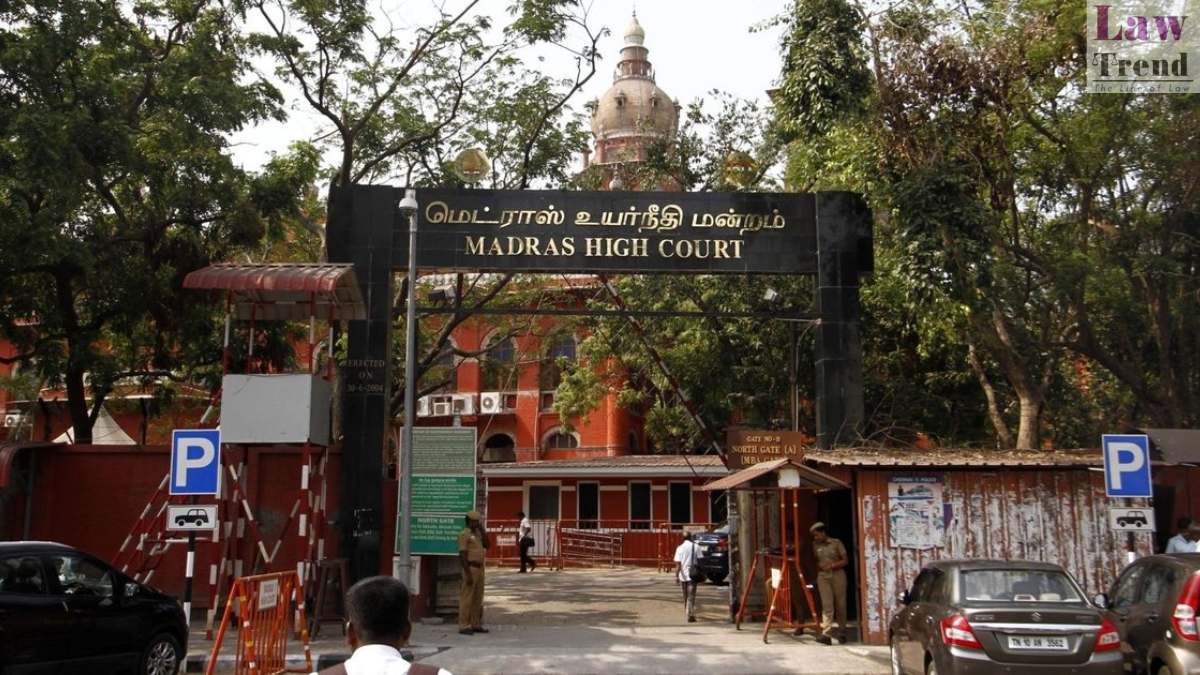
The Madras High Court has directed authorities to strictly enforce entry regulations at Agamic temples, holding that non-Hindus who decline to affirm their reverence for the deity or comply with established religious customs cannot claim unrestricted access to such shrines.
A Division Bench of Justices G R Swaminathan and P Murugan delivered the ruling on Tuesday while dealing with a public interest litigation filed by K Thangam Venkatesh seeking enforcement of the Tamil Nadu Temple Entry Authorisation Act and action against violations of its provisions.
The court clarified that its decision was confined to Agamic temples, which are constructed, consecrated and administered in accordance with the Agama shastras governing Hindu religious practices.
Religious Reverence, Not Conversion, Required
The Bench explained that allowing visitors from other faiths into such temples did not require them to embrace Hinduism. However, they must acknowledge the sanctity of the deity and respect the customs governing worship.
Referring to Chief Minister C Joseph Vijay, whom the court described as a Christian, the judges noted that he had visited the Madurai Meenakshi Amman temple after signing the prescribed undertaking.
The court observed that Vijay had not been required to change his religion. Instead, he had merely affirmed his reverence for the presiding deity, which the Bench considered an example of an inclusive approach consistent with temple traditions.
Court Questions Political Displays During Temple Visits
The judges also expressed concern over visits by political personalities who, despite professing faiths other than Hinduism, publicly display Hindu religious symbols during temple visits for political purposes.
The Bench described such conduct as political sycophancy and observed that the electoral appeal of these displays was evident. It maintained that longstanding temple customs could not be subordinated to political considerations or symbolic gestures intended to attract voters.
The court further referred to instances of politicians entering religious spaces while displaying religious markings or wearing skull caps despite objections raised locally.
Incident Involving TVK MLA Cited
The judgement also addressed a recent incident involving TVK MLA Badrudeen Mustafa, who allegedly climbed temple towers during a Kumbabishekam ceremony, claiming that he was inspecting the facilities.
The Bench questioned the conduct in the context of political statements advocating the eradication of Sanatana Dharma, while also referring to the religious significance of the consecration ceremony.
It emphasised that political status or public displays of religious identification could not override the practices traditionally followed at Agamic temples.
Authorities Directed to Enforce Temple Entry Rules
The High Court directed the authorities concerned to ensure compliance with the applicable temple entry provisions and established religious customs.
The Bench maintained that preserving the sanctity of Agamic temples required consistent enforcement of their rules, irrespective of the political position or religious affiliation of visitors.
The ruling remains specifically applicable to Agamic temples and does not extend to all Hindu places of worship.


