

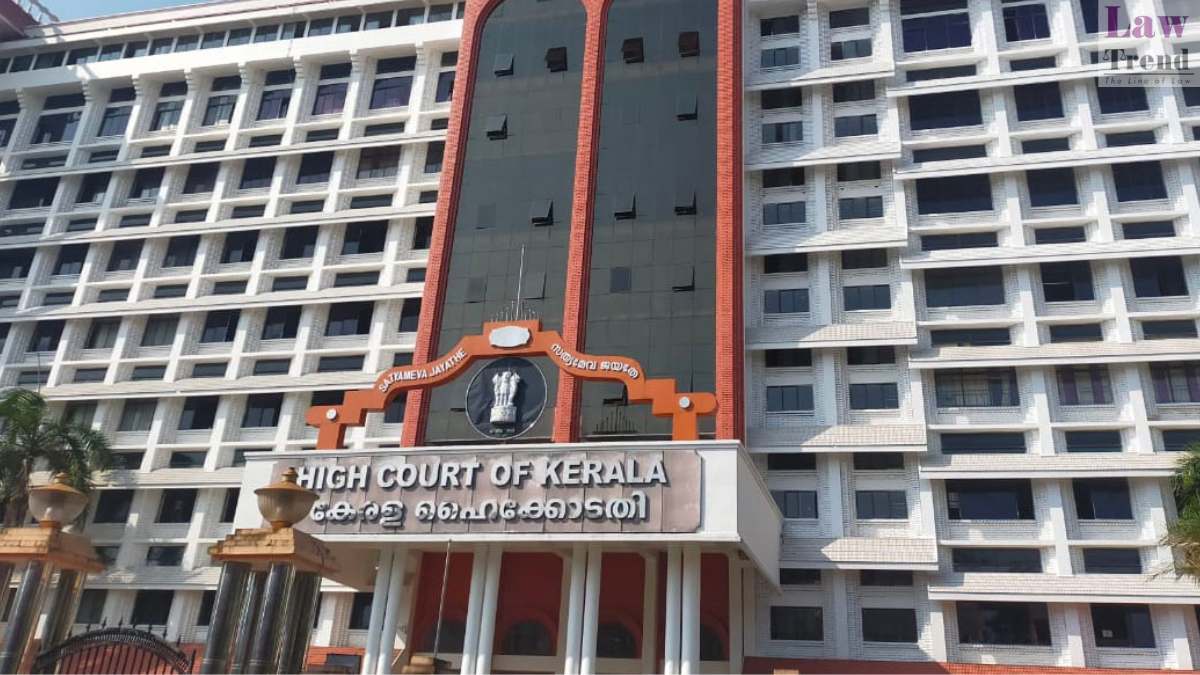
The Kerala High Court has instructed the Unique Identification Authority of India to cross-check crime scene fingerprints against its biometric records for Coimbatore district to help state police trace unidentified suspects in a nearly eight-year-old double murder case.
Justice G. Girish issued the directive on October 14, ruling in favour of a petition moved by the Kerala State Police. The court explicitly noted that the direction was issued in light of the exceptional facts and circumstances of the case and must not be treated as a precedent for future proceedings.
Under the ruling, the UIDAI must verify the latent fingerprints collected by investigators against biometric records stored for Coimbatore district in neighbouring Tamil Nadu and disclose the whereabouts of any matching individuals to the investigating officer. Justice Girish noted that once investigators receive the location details of individuals whose records match the scene-of-crime prints, it will remain the responsibility of the police to collect fresh prints directly from those individuals to proceed with formal forensic comparisons.
Investigation Stalled Despite Hundreds Of Verifications
The case stems from the double murder and robbery of a middle-aged couple at their residence in Kannukurissi, Palakkad, on the night of November 14, 2016. According to police records, the assailants killed the couple to steal three sovereigns of gold ornaments and 4,000 rupees in cash.
Investigators recovered six fingerprints from the scene of the crime. While the police subsequently apprehended one suspect whose prints matched the forensic evidence, they were unable to identify the remaining perpetrators. Investigators previously compared the crime scene prints against more than 1,200 individuals without finding another match.
Following the impasse, the police formally approached the UIDAI for biometric assistance. After the statutory authority declined to run the check, the state police moved the High Court for relief.
UIDAI Raised Privacy And Technical Concerns
Opposing the petition, Deputy Solicitor General of India O.M. Shalina and Advocate Suvin R. Menon, representing the central government and the UIDAI, argued that statutory provisions prohibit the disclosure of biometric data stored in the repository.
Counsel for the authority warned that granting the police request would violate the privacy rights of crores of citizens and trigger a flood of similar applications from law enforcement agencies seeking to screen evidence against confidential data belonging to more than 130 crore residents.
The authority further highlighted technical barriers, arguing that matching physical fingerprint impressions lifted from surfaces against digitized Aadhaar records posed significant practical constraints.
Scope Limited To Single District
Representing the Kerala Police, Advocate P. Narayanan clarified that investigators were not seeking a nationwide database search. The prosecution submitted that investigators had reason to believe the absconding suspects were hiding in Coimbatore, making a localized search of records from that district sufficient.
Addressing the technical objections, the police counsel informed the court that the Centre for Development of Advanced Computing had confirmed the compatibility of the files. The agency verified that crime scene prints in JPEG format could be converted into binary files using specialised software alongside the National Automated Fingerprint Identification System.
Court Distinguishes Statutory Hearing Norms
Examining the governing provisions, the High Court observed that confidentiality safeguards under the Aadhaar Act do not bar disclosure when ordered by a High Court judge.
While the statute generally requires the court to hear both the UIDAI and the affected Aadhaar cardholder before ordering information disclosure, Justice Girish observed that hearing the cardholders was not feasible in this instance. The bench reasoned that the investigating agency had approached the authority precisely because the identities and locations of the suspects remained unknown.
The court also took note of the statutory bar preventing the direct disclosure of core biometric information itself, structuring the direction so that the authority only conducts the comparison within Coimbatore district records and shares the whereabouts of any matching individuals with the police.




