

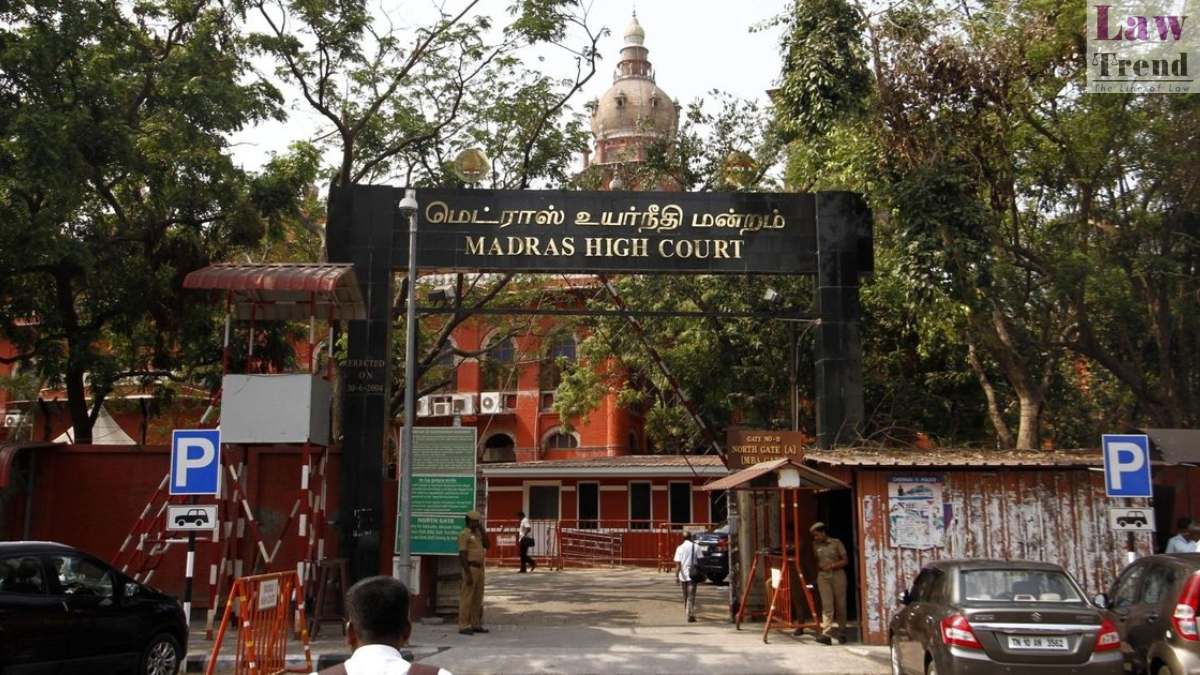
The Madras High Court has quashed a move by the Railway Protection Force to initiate fresh caste verification against a woman employee, ruling that an established Scheduled Tribe status cannot be reopened without new evidence.
Setting aside an August 2021 directive from the RPF, Justice Bharatha Chakravarthy held that while state-level scrutiny committees generally possess the authority to verify tribal certificates, re-verification is prohibited once a certificate has already been evaluated and affirmed on its merits. The court observed that the agency had neither uncovered new material nor received fresh complaints that would justify casting doubt on her background.
The court also pointed out that the entire dispute originally stemmed from a grievance submitted by the employee’s husband during matrimonial discord. Addressing the absence of caste details in her childhood school files, Justice Chakravarthy observed that the blank column reflected her parents’ illiteracy and the family’s social disadvantages, which also explained why she was able to secure a formal certificate only in 1989.
Decades of Judicial Scrutiny
The employee received her Scheduled Tribe certificate from the Mylapore Tahsildar on June 26, 1989, recognizing her as a member of the Kattunaicken community. On September 27, 1990, she joined the Railway Protection Force as a junior clerk based on that document.
Following her husband’s complaint, the district collector conducted an inquiry and cancelled the certificate in April 1992, citing an absence of supporting school documentation. The employee challenged the decision before the Madras High Court, where a single-judge bench set aside the cancellation in October 1999.
Finality of Merits Assessment
A division bench of the high court upheld that decision in November 2006 after examining the substantive merits of her heritage. The bench accepted evidence establishing that her parents belonged to the Kattunaicken community, as well as official service records of her uncle that specifically confirmed his Kattunaicken status.
Despite that ruling, the RPF issued a communication in August 2021 referring her certificate to the state-level scrutiny committee, claiming it was required to follow standard verification procedures. The employee petitioned the high court once more, arguing that a matter conclusively resolved by a division bench could not be revisited arbitrarily.
Ruling in her favor, Justice Chakravarthy held that the 2006 judgment had definitively settled the validity of her Scheduled Tribe status, leaving the RPF without any legal ground to reopen the inquiry.




