

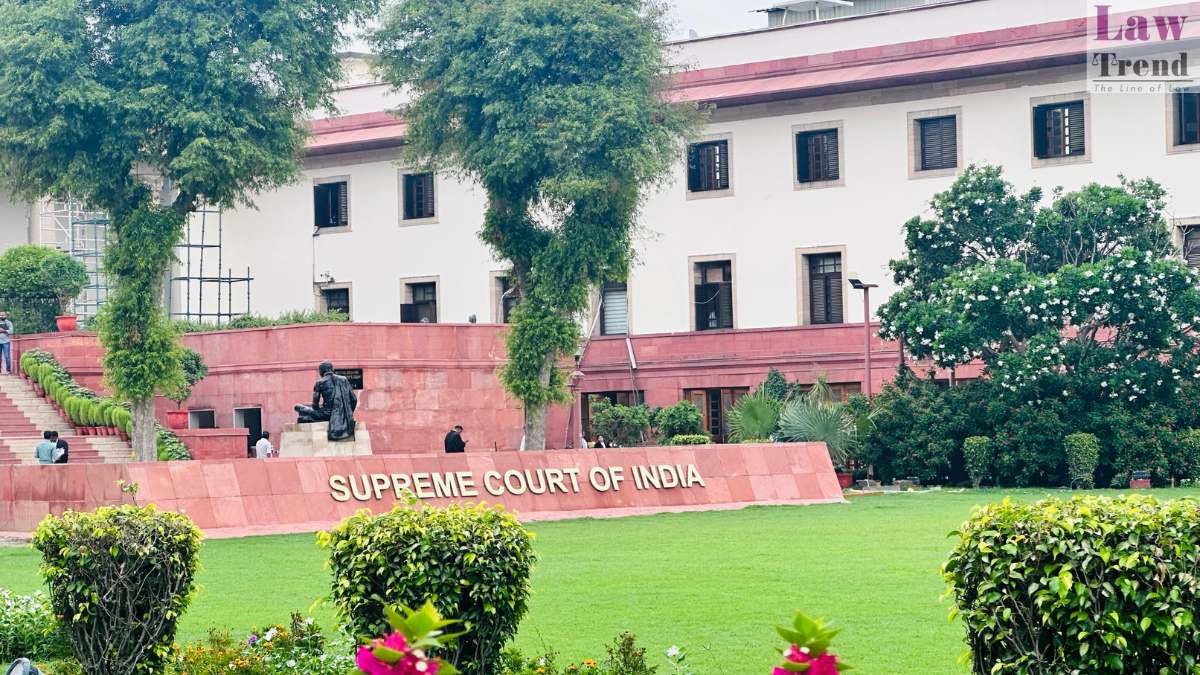
The Supreme Court on Monday agreed to take up petitions seeking instructions to the Delhi Police to permit peaceful demonstrations in the capital, following allegations that law enforcement has systematically prevented the public, students, and lawmakers from assembling.
A bench comprising Chief Justice of India Surya Kant and Justices Joymalya Bagchi and V Mohana said it would first determine whether any connected or similar matters were currently pending before scheduling the case for arguments.
Court Inquires Into Nature of Petitions
The matter was brought before the court by an advocate who submitted that authorities in the national capital were not permitting peaceful gatherings. The lawyer told the bench that restrictions were being imposed broadly across the city, preventing ordinary citizens, students, and officials of registered political parties—including Members of Parliament—from exercising their right to protest.
Chief Justice Kant inquired about the specifics of the filing, asking the advocate to identify the petitioner, the precise nature of the relief sought, and whether the petition was filed as a public interest litigation.
In response, the counsel stated that the plea seeks explicit judicial directives ordering the Delhi Police to facilitate peaceful assemblies in accordance with the law. The bench maintained that it would look into the issue and review existing dockets before finalizing the listing, adding that arguments would be heard once the petition is formally scheduled.
Protests Follow Disclosures Over Election Commission Decisions
The legal challenge comes after several days of demonstrations across the national capital involving political parties and other groups. The public demonstrations were directed at the Election Commission of India following an investigation published by The Indian Express.
According to that report, Election Commissioners Sukhbir Singh Sandhu and Vivek Joshi formally recorded objections on at least 14 occasions over the past 10 months regarding decisions and orders tied to the Special Intensive Revision of electoral rolls. Both commissioners stated that the administrative orders in question had been issued without their prior knowledge or recommendation.
Poll Body Defends Deliberative Process
Facing criticism over the recorded objections, the Election Commission, headed by Chief Election Commissioner Gyanesh Kumar, defended its functioning and administrative procedures.
The poll body stated that the expression of differing opinions and written observations constitutes a standard feature of deliberations within any institutional body. The commission maintained that all decisions and orders issued by the authority carry complete legal validity and strictly comply with established statutory requirements.




