

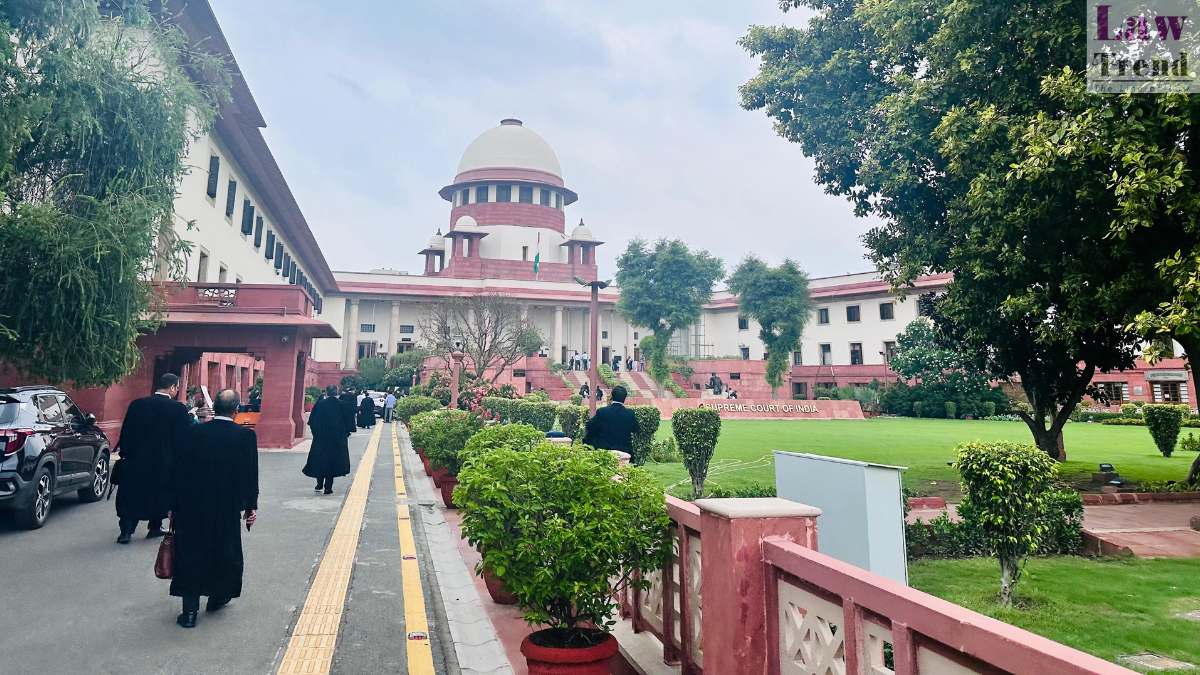
The Supreme Court on Friday turned down a petition seeking directions to the central government, the Delhi government, and law enforcement authorities to conduct an independent and fair investigation into the July demonstrations held at Jantar Mantar by the Cockroach Janta Party.
A three-judge bench comprising Chief Justice of India Surya Kant, Justice Joymalya Bagchi, and Justice V Mohana also declined a related prayer seeking a formal declaration that police authorities hold sovereign, autonomous powers equivalent to the judiciary in maintaining public order and investigating criminal offenses.
Court Defends Quashing FIRs Against Students
During the hearing, the bench noted that the petition was effectively an attempt to obtain a review of the top court’s earlier decision to quash First Information Reports (FIRs) connected to the protests through the exercise of its plenary powers under Article 142 of the Constitution.
Chief Justice Kant defended the decision to invoke Article 142, stating that the court prioritized the future and well-being of young students and their families to spare them from entanglement in judicial proceedings. While remarking that no court can guarantee complete infallibility in every order, the Chief Justice pointed out that the protesters were not hardened criminals.
The Chief Justice cited a past precedent from Himachal Pradesh, where public property was damaged during political demonstrations during the COVID-19 pandemic. In that instance, the apex court granted relief after the High Court refused to quash proceedings, concluding that the individuals had reacted under extraordinary public distress rather than criminal intent. The bench also observed that the petitioner had overlooked earlier court rulings concerning members of legislative assemblies and Parliament.
Objections Raised Over Litigant Standing
The petition was filed by L Ramanathan and argued by advocate Mathews Nedumpara. Submitting his arguments, Nedumpara challenged the maintainability of public interest litigations brought forward in the absence of actual aggrieved litigants, asserting that petitioners frequently approach the court as if it were private property.
The plea formally named several respondents, including the Union government, the Delhi government, the Commissioner of Police, Cockroach Janta Party leader Abhijeet Dipke, and Shailendra Mani Tripathi, a petitioner in an earlier case related to the demonstration. Through a writ of mandamus, the plea sought to compel the authorities to ensure all FIRs arising from the Jantar Mantar gathering were handled independently and according to statutory procedure.
Arguments on Police Autonomy and Agitation Background
The petition argued that police functions occupy an independent sphere comparable to the judicial mandate to administer justice. According to the filing, just as the executive cannot meddle in judicial duties, law enforcement agencies must remain free from interference within their jurisdiction unless they act contrary to statutory provisions or with demonstrated bad faith.
The July protests at Jantar Mantar were launched by the Cockroach Janta Party in response to the controversy surrounding the NEET examination paper leak. The unrest stemming from the agitation ultimately culminated in the resignation of Union Education Minister Dharmendra Pradhan.




