

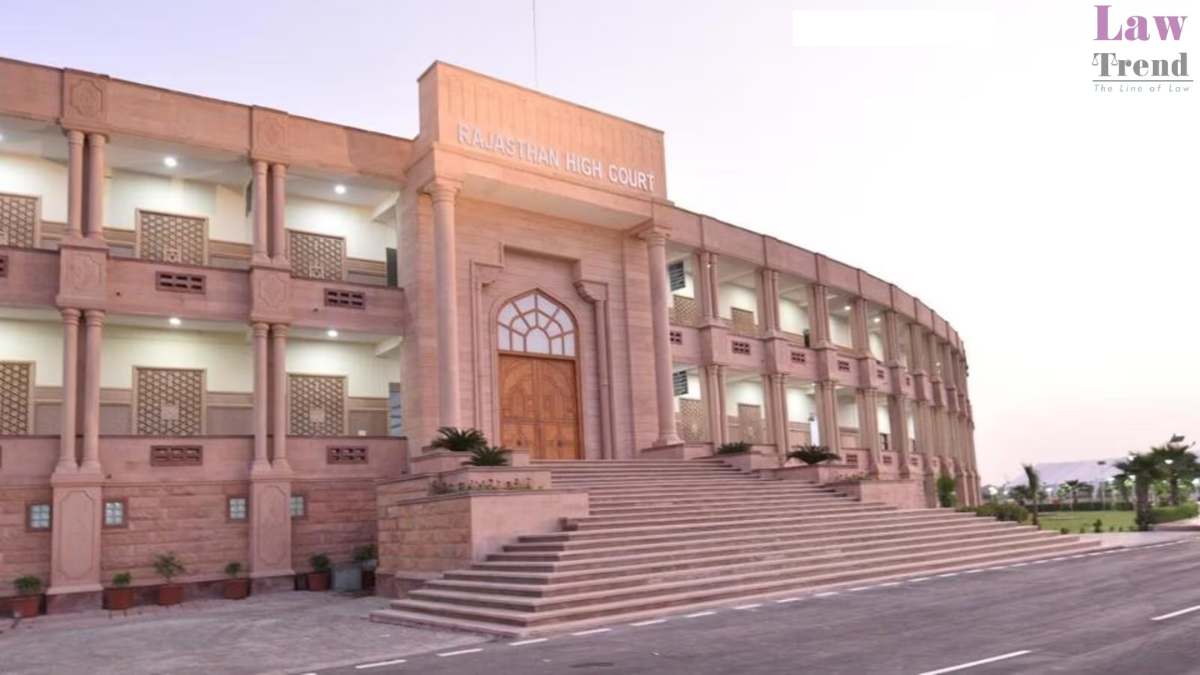
The Rajasthan High Court has directed the state government to file a detailed affidavit outlining measures for the effective management, supervision and functioning of nearly 3,000 madrasas across the state.
A division bench of Justices Vinit Kumar Mathur and Chandra Shekhar Sharma passed the order while hearing petitions raising concerns over the regulatory framework governing madrasas in Rajasthan.
The court observed that the pleas raised serious questions regarding the manner in which madrasas are regulated and operated. It also noted an apparent lack of effective control, supervision and regulatory oversight by the state government and authorities with expertise in education.
The bench asked Additional Advocate General B L Bhati to place before it a detailed response suggesting steps that could be taken for better management, control and operation of madrasas. The September 28 order also said the state may consider proposals made by the petitioner for improving their functioning.
Petitioner Questions Existing Regulatory Framework
The petitioner argued that the existing guidelines were insufficient to ensure effective governance and operation of madrasas and that a stronger mechanism was needed.
It was submitted that the Rajasthan Madarsa Board Act, 2020, did not contain adequate provisions or an effective mechanism for regulating the manner in which education is imparted in these institutions.
The petitioner sought directions requiring the state to establish a proper management framework and ensure that teaching in madrasas is carried out by qualified teachers.
Suggestions Include Registration Review, Common Exams
Among the proposals placed before the court was a suggestion to prepare a report on madrasas offering secondary and senior secondary education and to review their registration and affiliation status.
The petitioner also sought reconsideration of financial assistance being provided to institutions functioning as secondary schools while remaining registered with the Madarsa Board.
Other suggestions included preparation of a syllabus for primary and upper-primary madrasas and introduction of common examinations under the supervision of district-level education authorities.
The petitioner further urged the state to ensure that children studying in madrasas receive school education in accordance with the Right to Education Act, 2009.
Authorities were also asked to examine registered and unregistered madrasas against prescribed educational standards and take appropriate action against institutions that fail to meet those norms.
After considering the submissions, the High Court directed the state to place on record a detailed account of the steps that may be taken to strengthen the management and regulation of madrasas, including the feasibility of the petitioner’s suggestions.
The matter has been listed for further hearing on October 27.




