

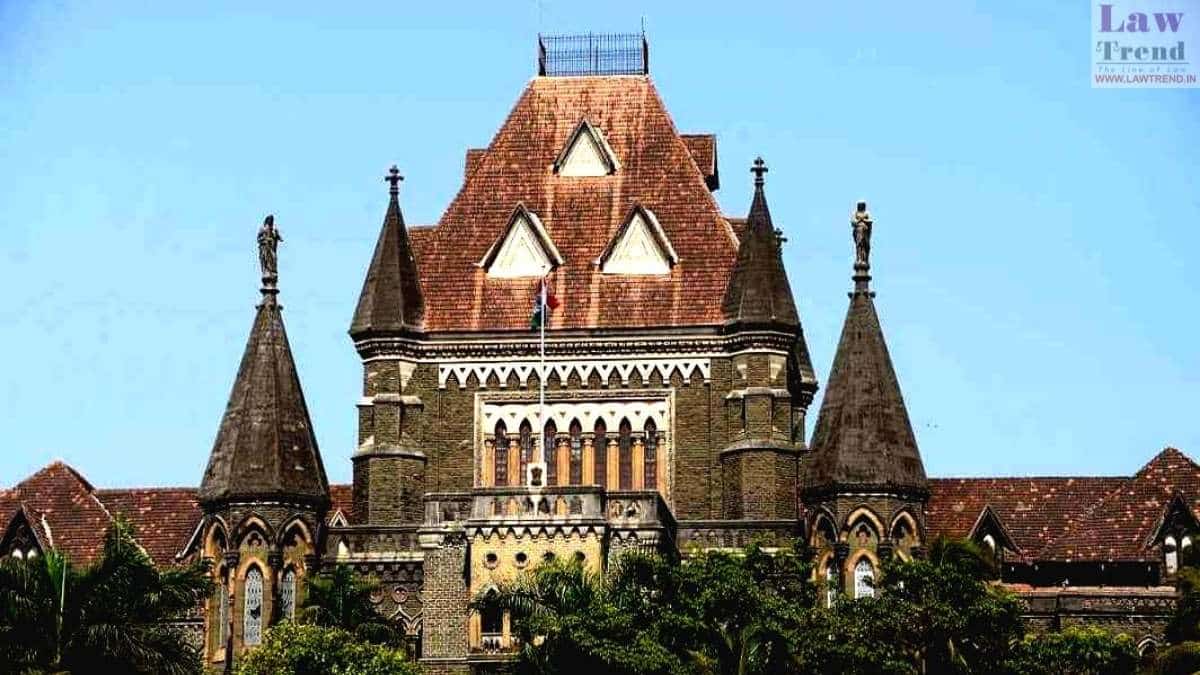
The Bombay High Court has directed the Maharashtra government to pay Rs 2.5 lakh in costs to a 91-year-old litigant, rebuking the administration for subjecting him to nearly four decades of protracted litigation and administrative hurdles over a retail liquor vendor licence.
In an order passed on September 10, Justice Somasekhar Sundaresan clarified that the financial penalty was not damages, but a judicial acknowledgement of the state’s conduct. The court noted that authorities had repeatedly forced the petitioner, Suryakant Khaladkar, through bureaucratic channels to assert his established entitlements, only to abruptly thwart him with unstated policy positions against issuing fresh licences.
The bench observed that Khaladkar had spent the past quarter-century trapped in legal proceedings, having approached the High Court on three separate occasions. In each instance, the dispute was contested across three successive tiers of executive authority—the district collector, the excise commissioner, and the state excise minister—spanning roughly 40 years.
Origin of the Decades-Long Ownership Dispute
The conflict traces back to an FL-II vendor licence granted by the state excise department to Balkrishna Wadkar in 1973. Six years later, in 1979, the enterprise was restructured into a partnership between Wadkar and the Khaladkar family, with the latter holding a 90 per cent stake alongside Wadkar’s 10 per cent interest.
Following Wadkar’s death in 1985, an extended legal contest broke out between Khaladkar and Wadkar’s widow, Shobha. The High Court intervened in 2002, holding that both the partnership and the underlying licence had legally ceased to exist upon Wadkar’s passing. The court instructed both parties to submit fresh applications for independent evaluation under Rule 25 of the Foreign Liquor Rules.
Although all parties, including the state, accepted that verdict without appeal, the directives were not carried out, prompting the High Court to record non-compliance in 2016.
Administrative Reversals and Ministerial Interference
Subsequent administrative handling resulted in contradictory official rulings. In 2017, the collector reallocated the licence exclusively to Shobha. That decision was later overturned in 2022 by the state excise commissioner, who ruled that the licence rights should reflect the original partnership split of 90 per cent to Khaladkar and 10 per cent to Wadkar’s legal heirs.
The dispute escalated when Shobha appealed to the minister-in-charge of state excise. On October 26, 2023, the minister set aside the commissioner’s equitable distribution and restored the collector’s order granting the licence entirely to Wadkar’s heirs, prompting Khaladkar to file the present writ petition.
Before the High Court, Khaladkar’s advocates, Vinayak Salokhe and Megha Jani, argued that the 1979 partnership enjoyed valid recognition under Rule 25 and reaffirmed that the original licence had extinguished with the firm. Countering this, advocate S.P. Telgote, representing Shobha’s heirs, maintained that the reallocation was a valid revalidation rather than an impermissible transfer, asserting that original licensees’ heirs held superior inheritance claims under evolving government policies.
Judicial Rebuke and Path to Resolution
Rejecting the state’s stance, Justice Sundaresan held that the administration lacked any legal foundation to confer the expired licence solely upon Wadkar’s widow by prioritising an original licensee over an inducted partner—the precise error already struck down by the court in 2002.
The court noted that the state was legally confined to assessing fresh applications under Rule 25. Authorities held the prerogative to reject both claims if prevailing policy barred new licences, but creating an exclusive exception for Wadkar’s heir directly breached binding judgments delivered in 2002 and 2016. The bench dismissed the government’s characterisation of the transaction as a re-grant or reissue as untenable semantics, describing it as old wine in a new bottle.
Justice Sundaresan observed that the state could still remedy its non-compliance with prior judicial writs. The court suggested that policymakers consider adapting existing regulatory restrictions to resolve the long-standing impasse by issuing a licence shared in the original 90:10 proportion.




