

NCTE and Executive Committee Have Statutory and Ancillary Power to Mandate Annual Performance Appraisal Reports from Teacher Education Institutes: Supreme Court
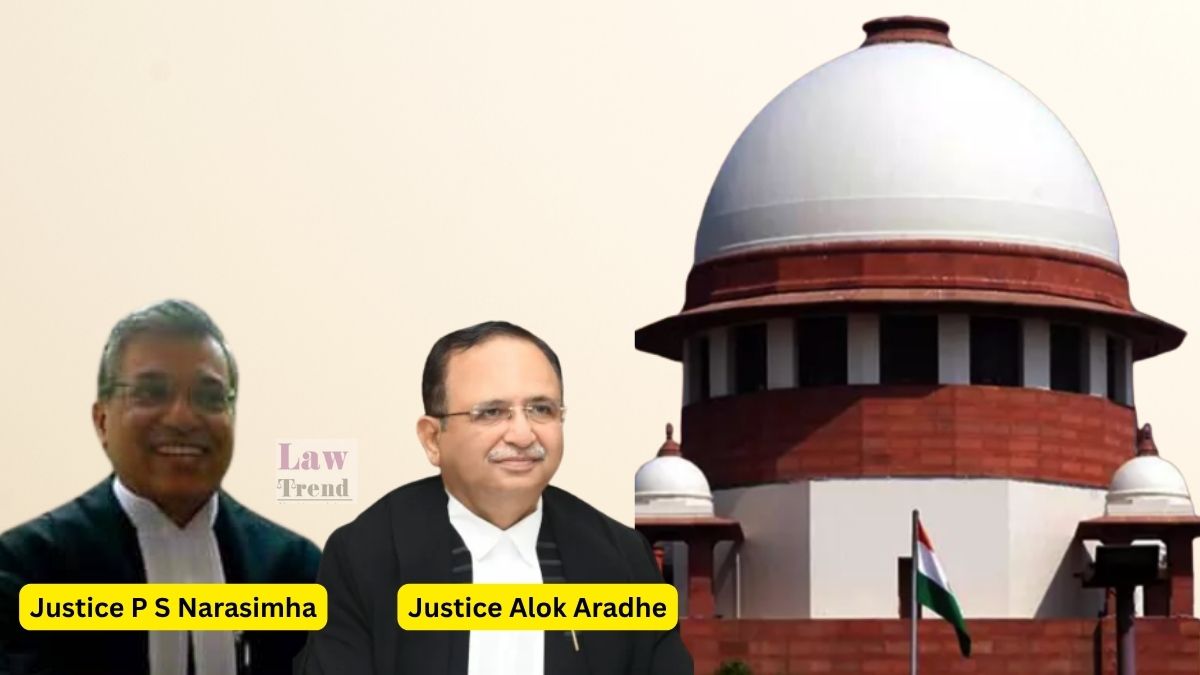
NEW DELHI: In a significant ruling on the regulatory oversight of teacher education, the Supreme Court of India, comprising Justice Pamidighantam Sri Narasimha and Justice Alok Aradhe, has held that the National Council for Teacher Education (NCTE) and its Executive Committee possess ample statutory and ancillary authority to mandate Teacher Education Institutions (TEIs) to submit an annual Performance Appraisal Report (PAR). Setting aside a judgment of the Division Bench of the High Court of Delhi, the apex court ruled that the Public Notice issued by the NCTE’s Member Secretary on September 22, 2019, was legal and valid, emphasizing that constitutional courts must not take a pedantic view that impairs a regulator’s statutory duties.

Background of the Case

The dispute originated from a Public Notice issued on September 22, 2019, by Sanjay Awasthi, Member Secretary of the NCTE Executive Committee. The notice mandated all recognized TEIs to submit their annual PAR online for the academic year 2018–2019 on a designated portal. It also required Central and State Government institutions to pay a fee of Rs 5,000 per institution, and all other categories of institutions to pay Rs 15,000 per institution, warning that non-submission would attract action under Section 17(1) of the National Council for Teacher Education Act, 1993 (NCTE Act).

Prior to this notice, the NCTE General Body in its 46th meeting had approved an “Annual Renewal of Recognition” regime. However, when that decision faced extensive litigation across various High Courts, the General Body reconsidered the matter in its 48th meeting on February 5, 2019. The Council resolved that an annual renewal regime was unfeasible and approved substituting it with the PAR mechanism to establish a Management Information System (MIS), approving a proposal authorizing NCTE to proceed through a proforma to be developed for that purpose.

Following the issuance of the 2019 Public Notice, an association of institutions challenged the directive before the High Court. While a Single Judge dismissed the challenge, the Division Bench of the High Court allowed the appeal and quashed the notice. The High Court reasoned that there was nothing on record to show that the specific proforma uploaded with the notice had been placed before or approved by the Council itself, or that the Council’s power under Section 12(k) of the NCTE Act had been delegated to the Member Secretary under Section 27 of the Act.

Contentions Raised

The respondents contended that the Council alone was empowered under the NCTE Act to issue and implement such a regulatory notice. Relying on the minutes of the General Body meeting, they argued that the Executive Committee lacked the empowerment to issue the Public Notice, as the Council’s decision specifically contemplated that the proforma was to be developed and approved by the Council itself.

READ ALSO  सम्मन चरण में दूसरी शादी के लिए सप्तपदी को साबित करने में एक साथी की असमर्थता को कानूनी परिणामों से बचने के लिए बचाव के रास्ते के रूप में दुरुपयोग नहीं किया जाना चाहिए: दिल्ली हाईकोर्ट

On the other hand, the appeal before the Supreme Court concerned the regulatory powers of the NCTE to achieve the planned and coordinated development of teacher education and whether calling for an annual PAR fell within the statutory framework of the Act.

The Court’s Analysis

The Supreme Court rejected the High Court’s restrictive approach, observing: “When a High Court is called upon to examine the exercise of power by a statutory regulator, the approach must be to see whether the functioning of the authority is in violation of any mandatory provision or that it has transgressed the power that is vested in it.”

Examining the constitutional and statutory framework, the bench highlighted the critical link between the fundamental right to elementary education under Article 21A of the Constitution and the Right of Children to Free and Compulsory Education Act, 2009 (RTE Act). Referring to Dinesh Biwaji Ashtikar v. State of Maharashtra & Ors., where five duty bearers were identified—appropriate governments, local authorities, neighbouring schools, parents/guardians, and elementary school teachers—the bench held that two more duty bearers must be recognized: the Teacher Education Institutions as the sixth duty bearer, and the NCTE as the seventh duty bearer. The Court emphasized: “We have no hesitation in declaring that the duties to be performed by the Council and the bodies that are constituted along with it, such as the Executive Committee and the Regional Committees, are perhaps the highest of all the duty bearers.”

The Court noted that under Section 19 of the NCTE Act, the Executive Committee is the statutory body that actually discharges the functions of the Council. Furthermore, the power to require a PAR is directly traceable to Section 12(k) of the NCTE Act, which empowers the Council to evolve suitable performance appraisal systems and mechanisms for enforcing accountability.

READ ALSO  Section 113B Evidence Act Presumption Mandatory When Death Occurs Within 7 Years of Marriage: SC Cancels Bail in Dowry Death Case

The bench held that once the Council deliberated on the issue and approved the substitution of annual renewal with PAR, it was the duty of the Executive Committee and its Member Secretary to carry forward that mandate. The Court observed: “We fail to understand as to how a regulatory measure of a statutory body, empowered to achieve planned and coordinated development of teacher education system in the country could be restrained from calling upon the TEIs to file Performance Appraisal Report. We are of the opinion that even without a specific empowerment under the statute, such a regulatory measure can always be incidental and ancillary to the duties and functions of a regulator.”

The Court added that because the Comptroller and Auditor General of India (CAG) conducts performance audits of the NCTE itself, it is natural and incidental for the NCTE to require appraisal reports from the stakeholders it regulates. Citing Vijay Rajmohan v. CBI, the bench underscored that accountability is an essential principle of administrative law, comprising responsibility, answerability, and enforceability.

READ ALSO  Tendency to Involve All Family Members of Husband: Rajasthan HC Quashes Charge Sheet U/s 498A Against Husband's Family Members

Regarding the monetary charge, the Court held that the payment required along with the report is in the nature of a process fee, representing an incidental and ancillary power inherent to the regulator.

Decision of the Court

The Supreme Court held that the Council and the Executive Committee acted well within their jurisdiction and that the Public Notice issued by the Member Secretary was legal and valid. Consequently, the Court allowed the appeal and set aside the judgment and order of the Delhi High Court dated March 13, 2023, passed in LPA No. 190 of 2021, with no order as to costs.

Case Title: The National Council for Teachers Education v. Association of NCTE Approved Colleges Trust and Ors.

Case No.: Civil Appeal No. /2026 (@Special Leave Petition (C) No. 11756/2023)

Bench: Justice Pamidighantam Sri Narasimha and Justice Alok Aradhe

Date: September 03, 2026

Law Trend
Law Trendhttps://lawtrend.in/
Legal News Website Providing Latest Judgments of Supreme Court and High Court

Related Articles

Latest Articles
