

Quashed FIR Cannot Form Basis For Preventive Detention, Consideration Of Bail Orders Mandatory: Andhra Pradesh High Court
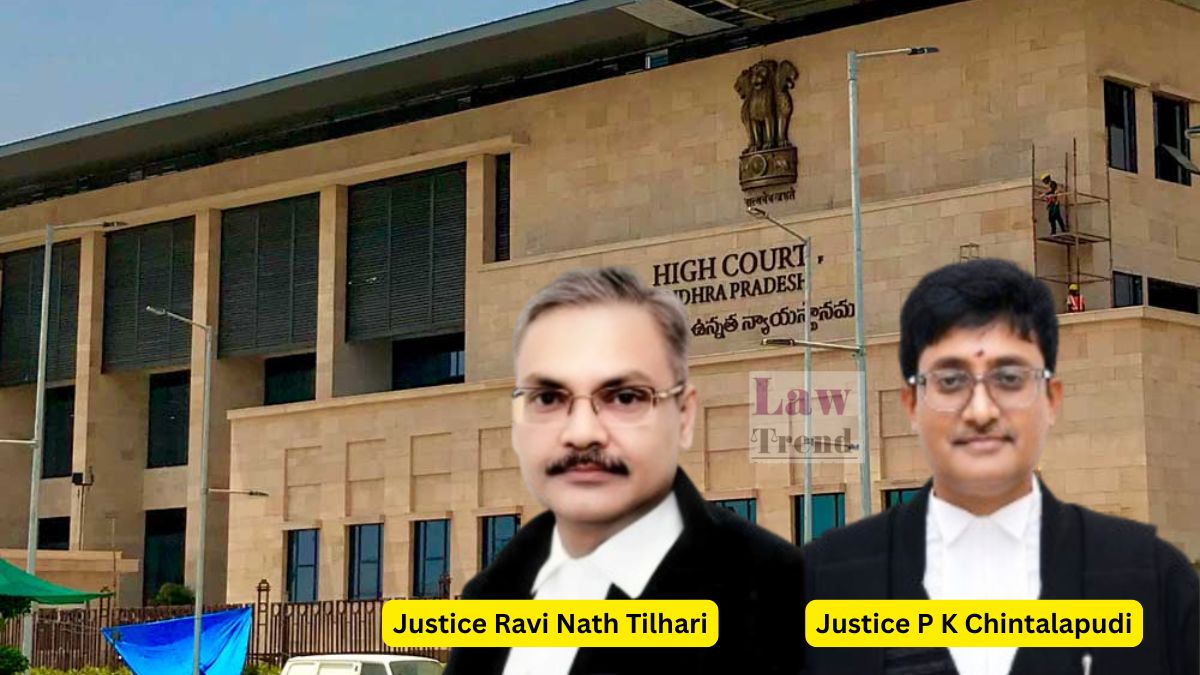

Setting aside a preventive detention order, the High Court of Andhra Pradesh has held that a criminal case in which the First Information Report (FIR) has been quashed cannot be relied upon or made a ground to order preventive detention. A Division Bench comprising Justice Ravi Nath Tilhari and Justice Purushottam Kumar Chintalapudi allowed a habeas corpus petition and ordered the immediate release of the detenu, ruling that ignoring quashment orders, failing to consider existing bail orders, and an unexplained delay of 143 days in deciding the detenu’s representation vitiates the subjective satisfaction of the detaining authority.

Background of the Case

The petitioner, Konduri Naga Lakshmi, filed a writ petition in the nature of Habeas Corpus seeking the release of her brother, Konduri Manikanta alias Pandu alias KTM Pandu, who was detained at the Central Prison, Rajamahendravaram.

The detention order had been passed on February 11, 2026, by the District Collector and District Magistrate, Krishna District, under Section 3 of the Andhra Pradesh Prevention of Dangerous Activities of Boot-Leggers, Dacoits, Drug-Offenders, Goondas, Immoral Traffic Offenders and Land-Grabbers Act, 1986. The order was subsequently approved by the State Government on February 19, 2026, and confirmed on March 26, 2026, following the report of the Advisory Board.

The detention order was founded on three criminal cases registered at Penamaluru Police Station:

  1. Crime No. 126/2025 under Section 109(1) read with Section 3(5) of the Bharatiya Nyaya Sanhita, 2023.
  2. Crime No. 180/2025 under Section 8(c) read with Section 20(b)(ii)(C) of the Narcotic Drugs and Psychotropic Substances (NDPS) Act, 1985.
  3. Crime No. 725/2025 under Section 109(1) read with Section 3(5) of the Bharatiya Nyaya Sanhita, 2023.

Arguments of the Parties

Appearing in person, the petitioner argued that Crime No. 126/2025 had ended in a compromise and the FIR had been quashed by the High Court in Criminal Petition No. 2653 of 2025 on March 11, 2025. She further submitted that the detenu had already been granted bail in the other two cases—on July 14, 2025 (in Crime No. 180/2025) and on January 9, 2026 (in Crime No. 725/2025)—prior to the passing of the detention order, but the detaining authority failed to consider these bail orders. Additionally, she pointed out that the representation submitted against the detention was rejected after an unexplained delay of 143 days, thereby rendering continued detention illegal.

READ ALSO  Delhi High Court Quashes FIR in Rape and POCSO Case Following Amicable Settlement and Marriage

Opposing the petition, the learned Government Pleader submitted that the detaining authority took into account the fact that the first FIR ended in compromise. Relying on the Supreme Court ruling in Pesala Nookaraju v. Government of Andhra Pradesh and Others, he contended that even if a criminal case was quashed, it could still be considered for passing a preventive detention order. Regarding the non-consideration of the bail orders in the second and third grounds, the Government Pleader relied on Muppidi Swapna v. State of Telangana & Others to argue that the omission to consider conditional bail orders does not vitiate the detention order.

Court’s Analysis and Findings

The Court examined the three core issues: the effect of relying on a quashed FIR, the non-consideration of bail orders, and the unexplained delay in disposing of the detenu’s representation.

1. Quashed FIR Cannot Be Taken Into Account

The Bench observed that the detention order merely noted that Crime No. 126/2025 was compromised, omitting any consideration of the High Court’s judicial order explicitly quashing the FIR.

Referring to the Supreme Court decision in Shree Chamundi Mopeds Ltd vs. Church of South India Trust Association CSI Cinod Secretariat, Madras, the Court highlighted the legal consequence of quashing:

READ ALSO  विशेष अदालत खत्म होने के बाद हाईकोर्ट में भूमि कब्जा अपीलें सुनवाई योग्य नहीं: आंध्र प्रदेश हाईकोर्ट

“Quashing of an order results in the restoration of the position as it stood on the date of the passing of the order which has been quashed.”

Applying this principle, the Bench held:

“In view of Shree Chamundi Mopeds Ltd. (supra), it can be said that on the quashing of the FIR, the position is restored prior to the lodgment of the FIR. In other words there was no such criminal case as registered in the FIR. So, the case in crime in FIR was not liable to be taken into account.”

The Court also drew support from Dasa Kavitha vs. State of A.P., reiterating that cases in which proceedings or FIRs have been quashed cannot be taken into consideration for passing a preventive detention order. Distinguishing the judgment in Pesala Nookaraju, Justice Tilhari observed:

“If there is an order of acquittal or even discharge, the order of preventive detention can be passed, taking into consideration that criminal case, so also it can be passed with or without prosecution and in anticipation, but, the Criminal case under ground No.1 is not a case of discharge or acquittal. It is a case in which the FIR has been quashed. Once the FIR has been quashed, such crime case could not be considered nor made the ground for passing the order of preventive detention.”

Consequently, the detaining authority’s failure to consider the quashment order vitiated its subjective satisfaction on Ground No. 1.

2. Non-Consideration of Bail Orders Vitiates Detention

On the omission of the bail orders relating to Crime Nos. 180/2025 and 725/2025, the Court relied on the Supreme Court’s authoritative ruling in M. Ahamed Kutty v. Union of India as well as the Coordinate Bench decision in Buddiga Dhana Lakshmi v. State of A.P. The Court ruled:

“In view of the law as laid down by the Hon’ble Apex Court in M. Ahamed Kutty (supra) the consideration of bail orders is must and the satisfaction arrived at ignoring the relevant material in the form of bail orders will not be as per the settled law.”

3. Unexplained Delay in Deciding Representation

The High Court further found that there was an unexplained delay of 143 days in considering the detenu’s representation, which directly violated the constitutional safeguards under Articles 21 and 22 of the Constitution of India:

“It is well settled in law that the detenue has a fundamental right to make a representation, which is required to be considered ‘as soon as possible’. In the absence of any sufficient explanation, the delay will be without any justification violating the fundamental right of the detenue of consideration ‘as soon as possible. The continued detention in such a case would become invalid.”

Decision of the Court

Holding that the subjective satisfaction was vitiated by the non-consideration of vital materials and the inclusion of an impermissible ground, the High Court allowed the writ petition and set aside the detention order as well as the confirmation order.

The Court directed that the detenu be set at liberty immediately, provided he is not required in any other case, while granting liberty to the detaining authority to pass an appropriate fresh order in accordance with law.

READ ALSO  Consent Cannot Be Presumed From Past Relationship: Bombay High Court Upholds Gang-Rape Conviction

Case Title: Konduri Naga Lakshmi v. The State of Andhra Pradesh & 3 others
Case No.: Writ Petition No. 11834 of 2026
Bench: Justice Ravi Nath Tilhari and Justice Purushottam Kumar Chintalapudi
Date: 06.08.2026

Law Trend
Law Trendhttps://lawtrend.in/
Legal News Website Providing Latest Judgments of Supreme Court and High Court

Related Articles

Latest Articles

