

Composite Appeal Against Common Judgment In Two Suits Is Maintainable If Required Fees And Decrees Are Filed: Supreme Court
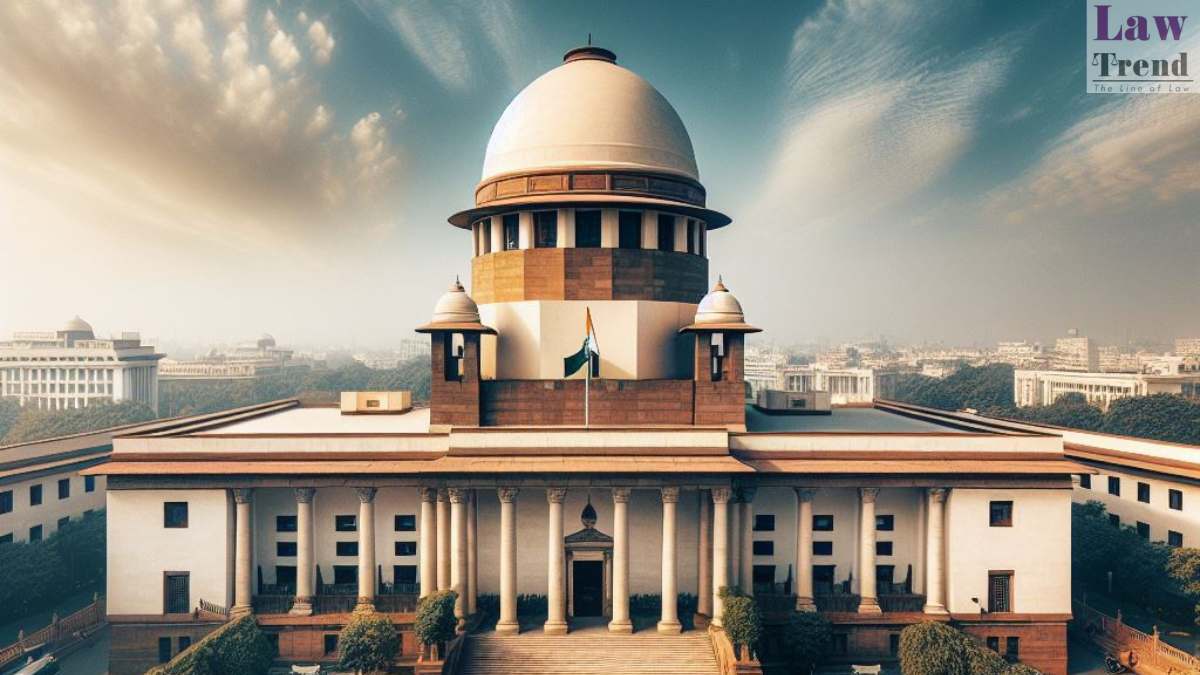

The Supreme Court, comprising Justice Ujjal Bhuyan and Justice Atul S. Chandurkar, has held that a single composite appeal filed under Section 96 of the Code of Civil Procedure, 1908 (CPC) challenging a common judgment in two consolidated suits brought by the same plaintiff is maintainable, provided certified copies of both decrees are produced and full court fees for both challenges are paid. Overturning a decision of the High Court of Karnataka, the apex court ruled that the absence of a separate memorandum of appeal for each suit is merely a curable procedural defect of form rather than substance and cannot be used to non-suit a litigant on technical grounds.

Background of the Case

The predecessor of the appellants (the plaintiff) instituted two civil suits before the trial court in Shahapur. The first suit, O.S. No. 14 of 1986, was filed seeking a declaration that a registered sale deed dated April 16, 1977, executed by the second defendant in favor of the first defendant for land measuring 8 acres 11 guntas in Survey No. 132/1-A, was null, void, and not binding. The second suit, O.S. No. 135 of 1987, was filed against the first defendant seeking a permanent injunction to restrain interference with the plaintiff’s possession over a smaller portion measuring 4 acres 5 guntas in Survey No. 132/1-Aa.

Upon an application moved by the common defendant under Section 151 of the CPC, to which the plaintiff consented, the trial court ordered the clubbing of both suits on June 16, 1988. Common evidence was recorded across the consolidated proceedings. By a common judgment dated December 7, 1990, the trial court dismissed both suits.

Aggrieved by the dismissal, the plaintiff filed a single composite appeal (R.A. No. 2 of 1991) under Order XLI Rule 1 of the CPC before the first appellate court. Along with the appeal, the plaintiff filed certified copies of both decrees, paid the combined court fees required for challenging both decrees, and sought a prayer to set aside the common judgment and decree both suits, while requesting dispensation of filing duplicate copies of the judgment under Order XLI Rule 1 of the CPC.

The first appellate court allowed the appeal on August 17, 2007, setting aside the trial court judgment and decreeing both suits in favor of the plaintiff. The defendants then filed two second appeals (RSA Nos. 3214 and 3215 of 2007) before the High Court of Karnataka. The High Court allowed the second appeals solely on the procedural ground that since two separate suits were instituted, the plaintiff was required to file two separate appeals under Section 96 of the CPC. As a result, the High Court set aside the first appellate court’s judgment and dismissed both suits.

READ ALSO  सुप्रीम कोर्ट नए पद पर कार्यभार ग्रहण करने से पहले इस्तीफा देने वाले अधिकारियों के लिए पेंशन लाभ की गणना पर केंद्रीय सिविल सेवा नियमों की जांच करेगा

Arguments of the Parties

Senior Advocate Basava Prabhu S. Patil, appearing for the appellants, submitted that the High Court erred by prioritizing technical formalities over substantive justice. He highlighted that the composite appeal was accompanied by certified copies of both decrees and the full aggregate court fees required for two separate appeals. Since both suits were consolidated at the instance of the defendant, common evidence was led, and a common judgment was delivered, there was no justification to non-suit the appellants. He further argued that the High Court’s ruling left the appellants remediless without any adjudication on the merits of their claims. He distinguished the precedents relied upon by the High Court, including Mallanna alias Appaiah v. Smt. Muninanjamma alias Nanjamma and Karnataka State Agro Corn Products Ltd. v. M/s Kerala Agro Seeds.

Counsel Sharanagouda Patil, appearing for the respondents, supported the High Court’s judgment. He contended that notwithstanding the clubbing of suits and a common judgment, Section 96 of the CPC mandated the filing of two independent appeals. He argued that a single appeal challenging two decrees was legally maintainable and asserted that the High Court correctly applied the law laid down in Mallanna alias Appaiah, M/s S.A.L. Steel Limited v. M/s Sreenidhi Trading Company, and Sri Dinesh Poojary v. Sri Venkappa Gowda.

Court’s Analysis

The Supreme Court examined the procedural provisions of the CPC, noting that consolidation of suits under Section 151 of the CPC is undertaken to prevent multiplicity of proceedings, delay, and unnecessary costs. Citing M/s Chitivalasa Jute Mills v. M/s Jaypee Rewa Cement, the Court observed that consolidation relieves parties from adducing duplicate evidence.

The Court observed that the proviso to Order XLI Rule 1(1) of the CPC empowers an appellate court to dispense with filing more than one copy of a judgment when suits are tried together. Citing P.A. Oommen v. Moran Mar Baselius Marthoma, the Court highlighted that the object of this provision is to avoid extra expenses. The Court noted that the plaintiff had complied with all statutory requirements, including payment of separate court fees, submission of certified copies of both decrees, and explicit prayers seeking to set aside both decrees.

READ ALSO  पहले से विवाहित और चार साल के बच्चे की मां किसी यौन उत्पीड़न करने वाले व्यक्ति के साथ लंबी अवधि तक संबंध बनाए रखेगी, इसकी संभावना नहीं: सुप्रीम कोर्ट

Addressing the nature of the procedural flaw, the apex court observed:

“The deficiency, if any, was the absence of a separate memorandum of appeal for each appeal. In other words, what could be challenged by filing two separate appeals was done by filing a composite appeal. The deficiency was more of ‘form’ and not of ‘substance’. This deficiency was curable and did not render the composite appeal not maintainable.”

The Court held that if the High Court deemed separate memoranda of appeal necessary, an opportunity to cure the procedural defect ought to have been granted rather than overturning a decree on merits. Quoting Charan Singh v. Ram Saroop, the Court stated:

“‘Form’ should not be permitted to prevail over ‘substance’. The rules of procedure enumerated in the Code are treated as the handmaid of justice and are not to be utilised as a sword to curtail the proceedings.”

Evaluating the rule of res judicata under Section 11 of the CPC, the Court analyzed Manohar Vinayak v. Laxman Anandrao Deshmukh and Narhari v. Shankar, noting:

“It is now well settled that where there has been one trial, one finding, and one decision, there need not be two appeals even though two decrees may have been drawn up.”

The Court clarified that res judicata applies qua judgments, not decrees. Because the single judgment deciding both suits was directly challenged in the composite appeal, the bar of res judicata was not attracted.

The Supreme Court further distinguished the citations produced by the respondents. In Mallanna alias Appaiah, Sri Dinesh Poojary, and M/s S.A.L. Steel Limited, separate suits had been filed by opposing parties or involved counter-claims with distinct trials or unchallenged decrees, requiring independent appeals. Conversely, in the present case, both suits were brought by the same plaintiff. The Court aligned its view with the Division Bench decision of the Himachal Pradesh High Court in Ramesh Chand v. Om Raj, which held that consolidated suits decided via a common judgment could be challenged through a single appeal.

READ ALSO  "No Judge Ought to Have Passed Such a Terrifying Order" - HC Raps Civil Judge - Know Why

Decision of the Court

The Supreme Court allowed the civil appeals and set aside the judgment of the High Court of Karnataka dated September 2, 2022. The apex court answered the question of law by declaring that the composite appeal filed by the plaintiff under Section 96 of the CPC was maintainable under the circumstances in which it was presented.

The Court restored both second appeals (RSA Nos. 3214 of 2007 and 3215 of 2007) back to the High Court of Karnataka for fresh adjudication on merits, clarifying that it expressed no opinion on the substantive merits of the property dispute.

Case Title: Bassanna Since Deceased By LRs. And Others v. Bhimanna And Others

Case No.: Civil Appeal Nos. 9923-9924 of 2026

Bench: Justice Ujjal Bhuyan and Justice Atul S. Chandurkar

Date: August 12, 2026

Law Trend
Law Trendhttps://lawtrend.in/
Legal News Website Providing Latest Judgments of Supreme Court and High Court

Related Articles

Latest Articles

