

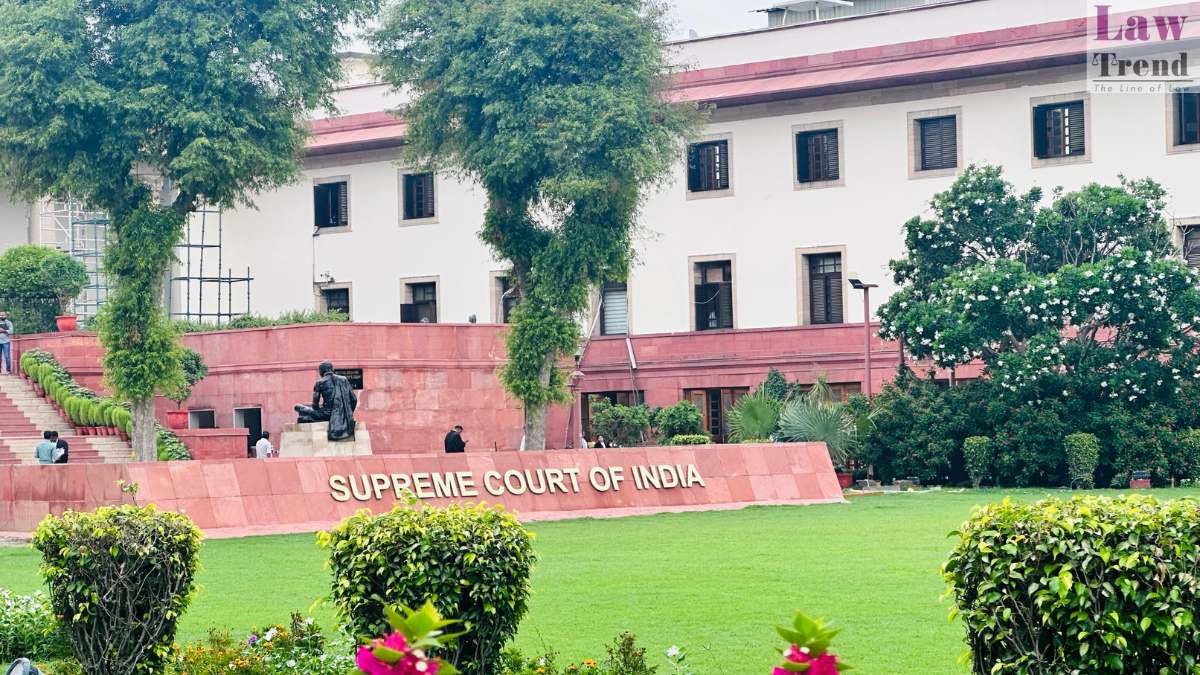
The Supreme Court on Tuesday directed the Union government to evaluate a detailed representation demanding systemic action against severe digital offences, including online violent threats, doxxing, and non-consensual intimate content.
A three-judge bench comprising Chief Justice Surya Kant, Justice Joymalya Bagchi, and Justice V Mohana ordered the Ministries of Electronics and Information Technology, Home Affairs, and Law and Justice to examine the submission alongside other key stakeholders and implement necessary remedial steps.
Concerns Over Digital Harms
The directive was issued during the hearing of a public interest litigation filed by Narendra Kumar Goswami, who argued his case in person. Goswami urged the apex court to mandate an effective supervisory framework to curb grave digital abuses, emphasizing that such activities severely infringe upon fundamental rights to privacy, dignity, life, equality, and freedom of expression.
Among the specific offenses outlined in the plea were non-consensual intimate media, digital impersonation, exposure to dangerous toxins, and the unauthorized publication of sensitive personal details, including children’s school locations. To illustrate the immediate danger posed by digital harassment, the petitioner questioned whether an online post revealing a woman’s residential address accompanied by a rape threat should be allowed to remain accessible.
Expert Intervention and Executive Action
Acknowledging the scope of the issue, Chief Justice Kant remarked that the petitioner had clearly demonstrated the varied dimensions of modern cyber threats. However, the bench observed that technical detection techniques and preventive frameworks require the intervention of domain experts rather than judicial prescription.
The court noted that Goswami had previously submitted his representation to the Secretaries of the three relevant Union ministries on June 22. In his filing, the petitioner also drew comparisons between India’s existing legal apparatus and international regulatory frameworks designed to counter unlawful digital activities.
Concluding that administrative review is the appropriate recourse at this stage, the Supreme Court asked the designated government bodies to consider the issues raised in the June 22 representation and determine the required remedial measures.




