

Delivery Of Possession Mandatory For Valid Hiba Under Muslim Law, Registration Alone Not Enough: Chhattisgarh High Court
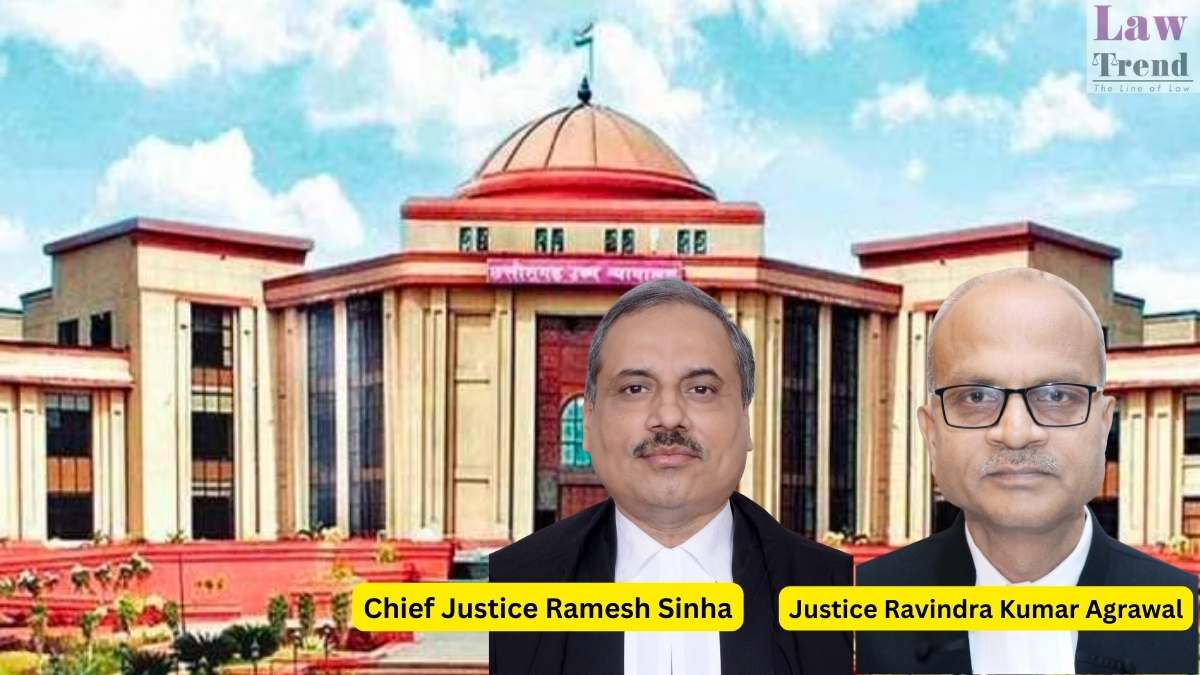

Addressing the essential conditions of a valid gift under Islamic jurisprudence, the High Court of Chhattisgarh, comprising Chief Justice Ramesh Sinha and Justice Ravindra Kumar Agrawal, has held that mere registration of a gift deed or recitals of transfer contained therein do not satisfy the requirement of delivery of possession for a valid Hiba under Muslim law. Dismissing a first appeal, the High Court affirmed a trial court decree declaring a registered gift deed void and non-binding on family members who remained in continuous, settled possession of a residential portion of the suit property.

Background of the Case

The suit property involves Plot No. 46, admeasuring 1,500 sq. ft., located at Rani Durgavati Ward No. 47, Khanij Nagar, Puraina Telibandha, Raipur. Defendant No. 5, Rajab Ali, an employee of NMDC, purchased the plot from the Housing Board, Raipur, on March 3, 1994, under his company’s housing scheme.

According to the plaintiffs—Smt. Nasima Ali (widow of Rajab Ali’s late son, Naushad Ali) and her two minor children—late Naushad Ali carried on business under the proprietorship firm “Alite Bio Medical” and had paid the consideration for the land purchase. Following his marriage to plaintiff No. 1 in 2005, Naushad Ali constructed a house over 1,000 sq. ft. out of his own income and subsequently constructed another residential portion over 370 sq. ft. after obtaining a Rs. 5,00,000 loan from Bajaj Finance Company. The plaintiffs resided in this 370 sq. ft. portion.

Following Naushad Ali’s demise on June 4, 2018, disputes arose within the family. On March 27, 2019, Rajab Ali executed a registered gift deed transferring the entire suit property jointly to defendants Nos. 1 to 4 (his daughters, Smt. Shakila Parveen, Mu. S. Najma Ali, and Mu. S. Shabnoor Ali, and his wife, Smt. Salma Khatun). The defendants subsequently mutated their names in the revenue records and attempted to dispossess the plaintiffs.

The plaintiffs instituted Civil Suit No. 42A/2029 before the 11th District Judge, Raipur, seeking a declaration that the registered gift deed dated March 27, 2019, was null and void and not binding upon them, along with a permanent injunction. On November 24, 2025, the trial court decreed the suit in favor of the plaintiffs, invalidating the gift deed and granting a permanent injunction. Aggrieved by this decree, defendants Nos. 1, 3, 4, and 5 preferred a first appeal before the High Court.

READ ALSO  Writ Petition Must Be Filed with Full Disclosure and Within Reasonable Time; Delay and Laches Can Lead to Dismissal Without Considering Merits: Supreme Court

Arguments of the Parties

Counsel for the appellants contended that Rajab Ali was the sole and exclusive owner of the suit property, having purchased it from his own earnings and constructed the house through an NMDC loan without any financial contribution from late Naushad Ali. It was submitted that as exclusive owner, Rajab Ali was fully competent to execute the registered gift deed dated March 27, 2019, in favor of his wife and daughters. The appellants argued that the gift was legally executed, possession was transferred under the deed, and the plaintiffs were residing in the property as unauthorized occupants without any right or title.

Conversely, counsel for the plaintiffs/respondents maintained that the gift deed failed to satisfy the mandatory statutory requirements of a valid Hiba under Muslim law. It was submitted that the plaintiffs remained in continuous, settled possession of the 370 sq. ft. residential portion built by Naushad Ali, and that no actual delivery of physical possession took place under the gift deed. Furthermore, it was argued that the gift deed failed to specify or separate the respective shares of the four joint donees.

READ ALSO  Chhattisgarh High Court Halts Bulldozers in Historic Early Morning Hearing

Court’s Analysis

The High Court systematically examined the legal requirements of a valid gift under Muslim personal law. The Bench emphasized that three essential elements must coexist for a valid Hiba: declaration of gift by the donor, acceptance by the donee, and actual delivery of possession.

While declaration and acceptance were substantially established through the registered document, the Court found that delivery of possession of the entire suit property was never effected. The Court observed:

“Under Muslim law, a gift is a voluntary transfer of property without consideration and, for a valid Hiba, the essential requirements are: (i) a declaration of gift by the donor; (ii) acceptance of the gift by or on behalf of the donee; and (iii) delivery of possession of the subject-matter of the gift.”

Addressing the effect of registration, the High Court clarified that statutory registration does not automatically validate a gift under Islamic law if physical possession remains unfulfilled:

“Mere execution or registration of an instrument does not, by itself, dispense with the requirement of establishing a valid Hiba in accordance with Muslim law.”

Regarding the recitals within the registered document claiming transfer of possession, the Bench held:

“The mere recital contained in the gift deed that possession of the gifted property was delivered to the donees cannot, in the facts and circumstances of the present case, be treated as conclusive proof of actual delivery of possession of the entire suit property.”

The Court noted that the plaintiffs had been residing in the 370 sq. ft. portion continuously since 2005 without objection from Rajab Ali during Naushad Ali’s lifetime. The appellants failed to demonstrate any overt act showing that Rajab Ali had effectively divested himself of possession or that the donees took exclusive possession.

READ ALSO  Wife's Taunts About Husband's Unemployment During Pandemic Constitute Mental Cruelty: Chhattisgarh High Court

The High Court also evaluated the trial court’s application of the doctrine of Musha (undivided share), noting that gifting an undivided property to four joint donees without defining their respective shares, combined with the lack of delivery of possession and third-party occupancy, rendered the transaction legally incomplete.

Highlighting the protection afforded to settled possession under law, the Court held:

“It is a settled principle that even a person claiming ownership cannot take the law into his own hands and forcibly dispossess a person who is in settled possession.”

Final Decision

The High Court concluded that the appellants failed to prove that the gift was validly completed under Muslim law due to the absence of effective delivery of possession over the entire subject matter. Finding no legal infirmity or perversity in the trial court’s evaluation, the High Court affirmed the judgment and decree dated November 24, 2025, and dismissed the First Appeal. The parties were directed to bear their own costs.

Case Title: Smt. Shakila Parveen and Others v. Smt. Nasima Ali and Others

Case No.: FA No. 48 of 2026

Bench: Chief Justice Ramesh Sinha and Justice Ravindra Kumar Agrawal

Date: August 10, 2026

Law Trend
Law Trendhttps://lawtrend.in/
Legal News Website Providing Latest Judgments of Supreme Court and High Court

Related Articles

Latest Articles

