

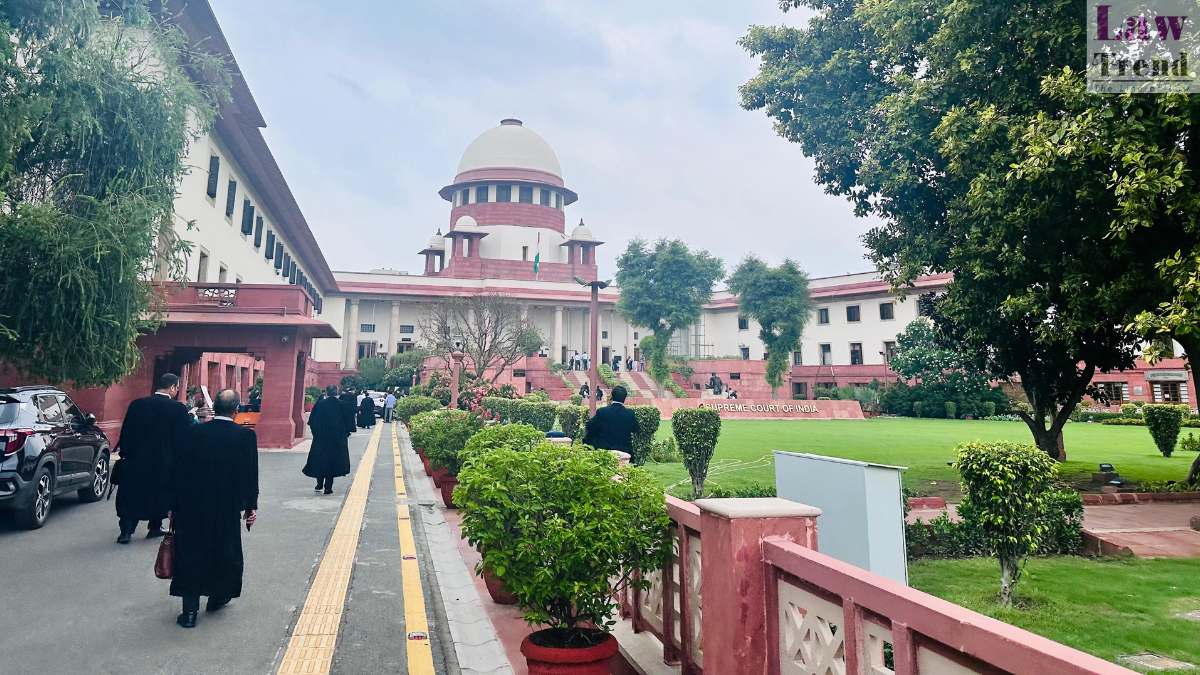
The Supreme Court of India has requested responses from the Union government and other relevant authorities regarding a public interest petition that calls for comprehensive reforms to combat narcotics trafficking, including mandatory investigation deadlines and standardized enforcement protocols across the country.
Judicial Panel Highlights Severity of Crisis
A three-judge bench comprising Chief Justice Surya Kant, Justice Joymalya Bagchi, and Justice V. Mohana described the nation’s drug problem as exceptionally serious during Monday’s hearing. The panel emphasized that addressing the issue effectively will require synchronized action and expert-driven solutions among enforcement bodies.
Advocate Ashwini Kumar Upadhyay, who submitted the petition through advocate Ashwani Kumar Dubey, informed the court that a related matter remains pending before the apex judicial body. During proceedings, the petitioner pointed to international models, including measures implemented in Singapore, as examples of stringent anti-trafficking strategies.
Demand for Fixed Timelines and Digital Records
The petition asks the court to issue directives establishing fixed timeframes for Forensic Science Laboratories to submit analysis reports in cases registered under the Narcotic Drugs and Psychotropic Substances (NDPS) Act. To prevent procedural errors, the plea urges the creation of standard operating procedures governing the search, seizure, and sampling of narcotics, particularly in cases involving small and intermediate quantities.
To streamline judicial proceedings, the petitioner has requested directions for time-bound investigations, fast-track trials, and the establishment of dedicated special courts. The plea further demands that all search, seizure, and sampling procedures be mandatorily recorded on video and documented digitally.
Targeting Financial Assets and Organized Syndicates
To dismantle syndicate networks, the petition calls for strict financial measures, including the expedited assessment and confiscation of assets belonging to drug traffickers, financiers, and their immediate family members. The filing specifies that property seizures should be executed under the NDPS Act, the Prevention of Money Laundering Act, the Benami Property Act, and the Black Money Act.
In addition, the plea proposes several systemic updates:
- Creation of a specialized expert committee to identify and regulate emerging psychoactive substances.
- Formulation of a graded sentencing framework that distinguishes high-level traffickers and financiers from individual drug users and persons with addiction.
- A legal declaration requiring prison sentences awarded in NDPS convictions to run consecutively rather than concurrently.
- Directives instructing the Law Commission of India to prepare a comprehensive report on anti-narcotics legal framework reform.
- Establishment of dedicated government-backed rehabilitation and wellness facilities nationwide.
Rising Case Numbers and Structural Gaps
Highlighting the scale of the crisis, the petition noted a 53 percent surge in drug-related cases during 2025, alongside total seizures reaching 1,240 tonnes of illegal substances. The plea cited severe social impacts in Punjab and other regions, warning that addiction continues to harm public health, destabilize families, and disrupt civil order.
According to the filing, current anti-narcotics operations are hindered by inconsistent investigative standards, delayed forensic reporting, and fragmented agency coordination. These structural deficiencies, the petition argues, frequently lead to prolonged trial delays and avoidable acquittals of key offenders.




