

Order XVIII Rule 17 CPC Cannot Be Used To Fill Gaps In Evidence Or Permit Cross-Examination: Supreme Court
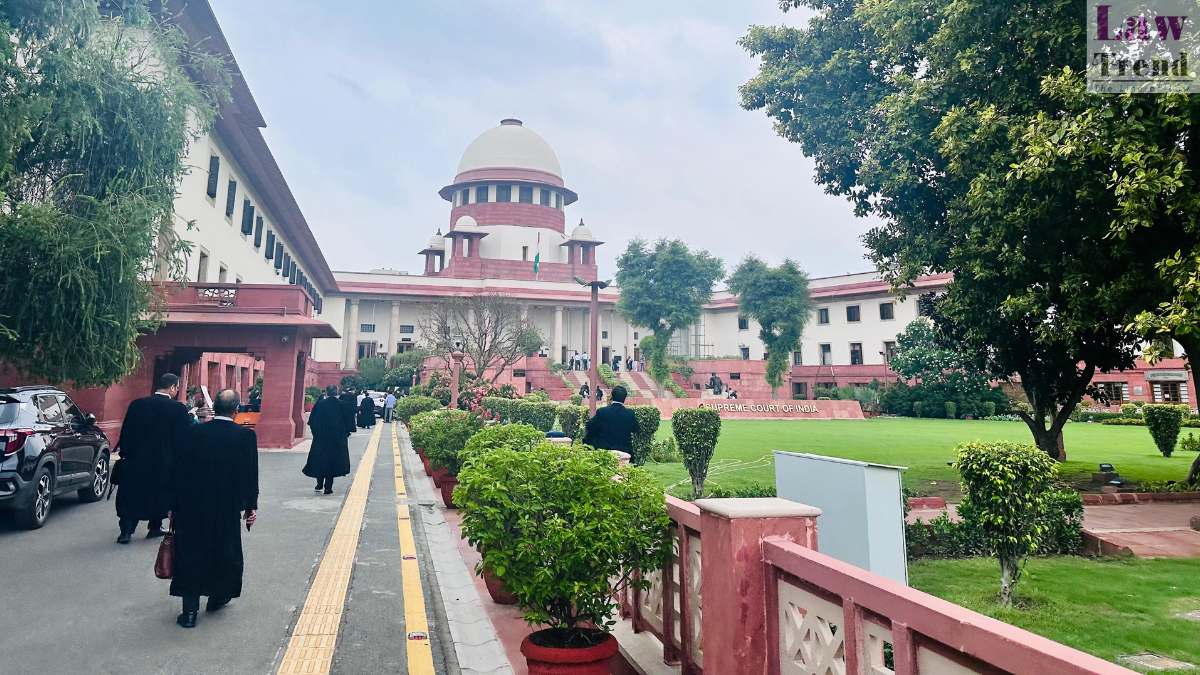

A Supreme Court bench comprising Justice S.V.N. Bhatti and Justice N.V. Anjaria held that Order XVIII Rule 17 of the Code of Civil Procedure, 1908 (CPC) is a discretionary power vested strictly in the court to clarify doubts in evidence and cannot be invoked by litigants to fill lacunae, introduce omitted evidence, or cross-examine recalled witnesses. Setting aside a judgment of the High Court for the State of Telangana, the Supreme Court allowed appeals filed by Defendant No. 1, ruling that the theory of “no prejudice” cannot justify reopening evidence at the fag end of a trial.

Background of the Case

The dispute traces back to Original Suit No. 489 of 2010 (renumbered as Original Suit No. 1302 of 2022), instituted by Bandaru Sakku Bai and others (plaintiffs) before the Additional Senior Civil Judge, Medchal-Malkajgiri District. The plaintiffs sought a declaration of absolute ownership over suit properties in Schedules A, B, and C in Survey Nos. 433 to 438 and 448 to 452 at Ghatkesar village and Mandal, R.R. District. They also prayed for declaring two registered sale deeds dated May 21, 1987, and November 31, 1987—executed by Defendant Nos. 2 and 3 in favour of K. Bharathamma (Defendant No. 1)—as null and void, along with a perpetual injunction.

Defendant No. 1 contended that she was a bona fide purchaser who bought Plot Nos. 7 and 8 via two registered sale deeds in 1987 and remained in continuous possession for over 23 years. She had previously instituted Original Suit No. 348 of 1988 against the plaintiffs, securing a decree of perpetual injunction on November 21, 1990. Following permission from the Gram Panchayat, she constructed a compound wall, two rooms, and a bathroom. In Writ Petition No. 23459 of 2001, the High Court directed police authorities to enforce the injunction decree in her favour.

During the suit proceedings in 2017, Defendant No. 1 filed Interim Application (I.A.) No. 5 of 2017 seeking the appointment of an Advocate Commissioner to inspect the site. However, the plaintiffs filed a counter-affidavit admitting that the houses had collapsed during heavy rains in 2016 and no structure existed on the suit property. Accepting this admission, the Trial Court closed I.A. No. 5 of 2017 on February 16, 2018.

Reopening Evidence at the Stage of Final Arguments

The suit proceeded to trial, where recording of evidence was completed, with witnesses PW-1 to PW-4 examined and Exhibits A1 to A35 marked on behalf of the plaintiffs. When the trial reached the stage of final arguments, and arguments on behalf of Defendant No. 1 were concluded, the plaintiffs filed three interim applications:

  • I.A. No. 716 of 2022 under Order XVIII Rule 17 CPC to recall PW-1;
  • I.A. No. 717 of 2022 under Section 151 CPC to reopen plaintiffs’ evidence; and
  • I.A. No. 718 of 2022 under Order VII Rule 14 CPC to produce additional documents relating to house numbers.
READ ALSO  Vicarious Liability Not Automatically Attributable to Directors Without Specific Allegations: Supreme Court Stays Criminal Proceedings

The plaintiffs argued that Defendant No. 1 had raised new pleas during arguments regarding house numbers and that municipality/panchayat documents needed to be introduced as per legal advice.

The Trial Court allowed all three applications on December 8, 2022, observing that though filed at the fag end of the suit, no prejudice would be caused to the defendant. Defendant No. 1 challenged these orders before the High Court for the State of Telangana.

On September 15, 2023, the High Court disposed of Civil Revision Petition Nos. 458, 496, and 621 of 2023 by modifying the Trial Court’s orders. The High Court directed the Trial Court to recall PW-1, reopen evidence, and mark documents within 10 days, while directing Defendant No. 1 to complete cross-examination of PW-1 within one week thereafter, imposing costs of Rs. 20,000 on the plaintiffs.

Arguments Before the Supreme Court

Defendant No. 1 appealed to the Supreme Court, arguing that the High Court erred in exercising powers under Order XVIII Rule 17 CPC to allow a party to fill up lacunae in evidence after the conclusion of arguments. It was submitted that the applications were filed merely as delaying tactics and that the CPC does not permit cross-examination of recalled witnesses under Order XVIII Rule 17.

The plaintiffs/respondents maintained that reopening evidence was necessary to produce relevant municipal documents and that doing so caused no prejudice to the opposing party.

Analysis of the Court and Precedents

Analyzing the statutory framework, the Supreme Court explained that Order XVIII Rule 17 CPC is a power-cum-discretion vested exclusively in the court to clarify any doubts arising during examination. It is not intended to be a tool for litigants to refine or alter evidence after closing their case.

The Court reviewed several key precedents explicitly:

  1. Vadiraj Naggappa Vernekar v. Sharadchandra Prabhakar Gogate (2009): The Court reiterated that Order XVIII Rule 17 CPC is meant to clarify doubts and cannot be used to fill up omissions: “The said provisions are not intended to be used to fill up omissions in the evidence of a witness who has already been examined.” The Court added: “The power under the provisions of Order 18 Rule 17 CPC is to be sparingly exercised and in appropriate cases and not as a general rule merely on the ground that his recall and re-examination would not cause any prejudice to the parties. That is not the scheme or intention of Order 18 Rule 17 CPC.”
  2. K.K. Velusamy v. N. Palanisamy (2011): Following the deletion of Rule 17A of Order XVIII CPC with effect from July 1, 2002, inherent powers under Section 151 CPC can be used for procedural aspects, but not in a routine manner to defeat expedited trials.
  3. Bagai Construction v. Gupta Building Material Store (2013): The Court confirmed that recalling a witness for further examination-in-chief or adducing additional evidence is impermissible under Rule 17, as such powers existed only under the deleted Rule 17A.
  4. Shubhkaran Singh v. Abhayraj Singh (2025): Read alongside Section 165 of the Evidence Act, 1872, the power to recall and re-examine a witness belongs exclusively to the trial judge.
  5. Gayathri v. M. Girish (2016): Applications to reopen evidence and recall witnesses must be entertained only under compelling facts to avoid procrastination of litigation.
  6. Ram Rati v. Mange Ram (2016): Re-emphasized that recall cannot be permitted for left-out points: “The settled legal position under Order 18 Rule 17 read with Section 151 CPC, being thus very clear, the impugned orders passed by the trial court as affirmed by the High Court to recall a witness at the instance of the respondent ‘for further elaboration on the left out points’, is wholly impermissible in law.”
  7. Balkrishna Shivappa Shetty v. Mahesh Nenshi Bhakta (AIR 2003 Bom 293): Addressing the High Court’s direction permitting cross-examination of PW-1, the Supreme Court endorsed the Bombay High Court’s ruling: “…The said provision of law apparently does not deal with the subject of allowing the parties to cross-examine the witness after such witness being recalled in exercise of powers thereunder. In other words, the provisions contained in Order 18, Rule 17 of the Code do not empower the Court to recall the witness for the purpose of cross-examination by either of the parties though it does permit recall of witnesses for the purpose of examination by the Court itself…”

The bench observed that the plaintiffs had already admitted in 2018 that no structures existed on the suit property due to heavy rains in 2016. Therefore, reopening evidence regarding house numbers was a futile exercise and a delaying tactic. Furthermore, the bench held that the lack of prejudice to the other side cannot serve as a valid legal ground to invoke Order XVIII Rule 17 CPC; independent justification must exist.

READ ALSO  SC Clarifies Bail Principles Under Article 21 and Section 436A CrPC; Explains Reverse Burden in Criminal Trials

Final Decision

The Supreme Court held that the directions of the High Court and Trial Court suffered from legal infirmities and fell outside the scope of Order XVIII Rule 17 CPC.

Accordingly, the Supreme Court set aside the common order dated September 15, 2023, passed by the High Court for the State of Telangana in Civil Revision Petition Nos. 458, 496, and 621 of 2023, and allowed the appeals filed by K. Bharathamma.

READ ALSO  Disciplinary Inquiry Must Follow Procedure and Record Evidence, Not a 'Question-Answer' Session: Allahabad HC Quashes Terminations

Case Details

Case Title: K. Bharathamma v. Bandaru Sakku Bai and Others

Case No.: Civil Appeal Nos. of 2026 (Arising out of SLP (C) Nos. 2744-2746 of 2024)

Bench: Justice S.V.N. Bhatti, Justice N.V. Anjaria

Date: August 04, 2026

Law Trend
Law Trendhttps://lawtrend.in/
Legal News Website Providing Latest Judgments of Supreme Court and High Court

Related Articles

Latest Articles

