

Stamp Duty On Mining Lease Agreements To Be Calculated Based On Anticipated Royalty: Supreme Court
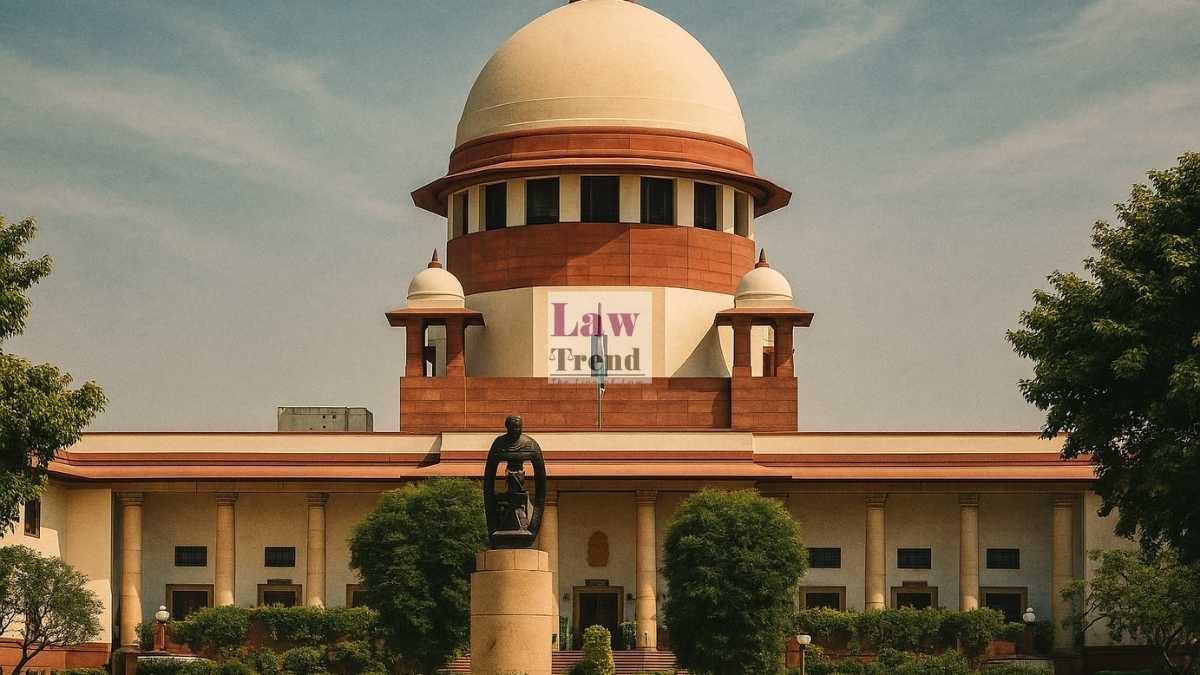
In a significant judgment addressing the computation of stamp duty on mining leases, the Supreme Court of India, comprising Justice Sanjay Karol and Justice Augustine George Masih, held that stamp duty on a mining lease agreement executed in statutory Form K is to be calculated on the basis of anticipated royalty rather than dead rent alone. Dismissing an appeal filed by M/S Birla Corporation Limited against the State of Madhya Pradesh, the Court held that where the value of the subject matter of an instrument cannot be determined at the time of execution, the statutory framework permits the calculation of stamp duty using estimated or anticipated royalty to ensure the State is not deprived of its legitimate revenue.

Background of the Case

The dispute arose after M/S Birla Corporation Limited applied for a fresh lease to mine limestone across an area of 56.27 hectares at village Birhauli, Tehsil Raghuraj Nagar, District Satna, Madhya Pradesh. Following the grant of the lease, an agreement was executed between the parties. However, by a letter dated July 2, 2004, the District Collector, Satna, directed the appellant to pay a stamp duty of Rs 4,32,00,000 calculated on the basis of anticipated royalty.

Aggrieved by the demand, the appellant filed Writ Petition No. 2640 of 2004 before the High Court of Madhya Pradesh, Principal Bench at Jabalpur, challenging the demand notice as well as the vires of a circular dated March 15, 1993 issued by the Under Secretary, Mineral Resource Department, Government of Madhya Pradesh. A Division Bench of the High Court dismissed the writ petition, relying on a coordinate Bench decision. The High Court held that Section 26 of the Indian Stamp Act, 1899 deals with stamp duty on instruments of indeterminate value, and its proviso specifically applies to mining leases as an independent provision, making it clear that stamp duty is to be charged on the basis of royalty. Dissatisfied with the dismissal, the appellant approached the Supreme Court.

Arguments of the Parties

The appellant argued that Section 26 of the Indian Stamp Act, 1899 has no application to the case and that Article 33(a) of Schedule 1A (as amended by the Indian Stamp (Madhya Pradesh Amendment) Act, 2002) is the governing provision. It contended that the State’s circular dated March 15, 1993—which provided that stamp duty for fresh leases be based on anticipated average royalty from either application figures or the mining plan, whichever is higher—was an executive exercise lacking legal authority. The appellant maintained that stamp duty ought to be calculated on the basis of dead rent, being the only ascertainable sum under Section 9A of the Mines and Minerals (Development and Regulation) Act, 1957 (MMDR Act), read with the Third Schedule, Rule 27(1)(c) of the Mineral Concession Rules, 1960, and Part V of the lease deed in Form K. It further contended that the proviso to Section 26 of the Stamp Act was contrary to the main section itself.

On the other hand, the State of Madhya Pradesh submitted that Section 26 of the Stamp Act provides a comprehensive mechanism for instruments whose value cannot be determined at execution, with its proviso specifically dealing with mining leases. The State asserted that there is complete harmony between the MMDR Act and the Stamp Act. It argued that dead rent under Section 9A of the MMDR Act is merely a minimum guaranteed sum, whereas royalty under Section 9 reflects the actual economic value derived from output. The State contended that the statutory principle of applying “whichever is higher” exists to safeguard public revenue against loss caused by the difficulty of quantifying actual royalty at the time of lease execution.

READ ALSO  Commercial Courts Subordinate To Rank Of Principal Civil Judge In District Can Hear Applications Or Appeals Under Arbitration Act 1996: SC

Court’s Analysis and Observations

To determine whether dead rent or anticipated royalty forms the basis of stamp duty, the Supreme Court examined the legal distinction between the two concepts. Citing dictionary definitions and the coordinate Bench decision in D.K. Trivedi & Sons v. State of Gujarat (1986 Supp SCC 20), the Court noted that dead rent is a fixed return calculated on the area leased irrespective of whether the mine is worked, whereas royalty varies proportionately with the quantity of minerals extracted.

The Court referred to the 9-judge Constitution Bench ruling in Mineral Area Development Authority v. SAIL (2024 10 SCC 1) regarding the mathematical formulas for calculating royalty on a per-tonnage and ad valorem basis, as well as H.R.S. Murthy v. Collector of Chittoor (AIR 1965 SC 177) on the nature of royalty payments.

READ ALSO  सुप्रीम कोर्ट ने ओडिशा से स्टेंस मर्डर केस में दोषी की माफी याचिका की समीक्षा करने का निर्देश दिया

Addressing the fiscal nature of stamp legislation, the Court referred to District Registrar and Collector v. Canara Bank (2005 1 SCC 496), reiterating:

“The Stamp Act is a piece of fiscal legislation. Remedial statutes and statutes which have come to be enacted on demand of the permanent public policy generally receive a liberal interpretation. However, fiscal statutes cannot be classed as such, operating as they do to impose burdens upon the public and are, therefore, construed strictly. A few principles are well settled while interpreting a fiscal law. There is no scope for equity or judiciousness if the letter of law is clear and unambiguous. The benefit of any ambiguity or conflict in different provisions of statute shall go to the subject.”

The Court also referred to decisions in Hameed Joharan v. Abdul Salam, In re Interplay Between Arbitration Agreements under Arbitration Act, 1996 & Stamp Act, 1899, Seetharama Shetty v. Monappa Shetty, and Dowlatram Harji v. Vitho Radhoji.

On the applicability of Section 26 of the Stamp Act, the Supreme Court rejected the appellant’s argument that the proviso was inconsistent with the main section, observing:

“Since, with respect to mining, actual value can only be determined once mining operations commence, it is undisputed that on the date of the execution of the agreement, the value is indeed indeterminate. This appears by way of a plain reading and general understanding. It is difficult to conceive otherwise.”

The Court further examined Form K prescribed under Rule 31 of the Mineral Concession Rules, 1960. It noted that Part IX Clause 9 of Form K explicitly states that for the purpose of stamp duty, anticipated royalty from the demised land is the specified figure. Rejecting the appellant’s reliance on Article 33 of Schedule 1A of the MP Stamp Act, the Court held:

READ ALSO  Setting Aside Administrative Action Does Not Automatically Nullify Criminal Proceedings: Supreme Court

“The parties have consciously signed the Agreement as contained in Form K, which, at the cost of repetition, may be stated, is a statutory form which clearly mentions that for the purposes of calculation of Stamp Duty, anticipated royalty is the yardstick to be used.”

Summing up the statutory scheme, the Supreme Court observed:

“The above makes abundantly clear that the amount which is higher is to be paid and for the purposes of statutory rules, the method of calculation of stamp duty is through anticipated royalty only. A perusal of the record of this case reveals that in the Form-K lease entered into between the parties, this clause does find a place. In our considered view, when this is the case there remains no manner of doubt as to the method by which stamp duty is to be computed.”

Decision

The Supreme Court dismissed the appeal filed by M/S Birla Corporation Limited and ruled that all necessary consequences will follow. The Court made no order as to costs and disposed of all pending applications.

Case Details:

  • Case Title: M/S Birla Corporation Limited v. The State of Madhya Pradesh & Ors.
  • Case No.: Civil Appeal No. 5313 of 2026 (Arising out of SLP (C.) No. 14468 of 2022)
  • Bench: Justice Sanjay Karol, Justice Augustine George Masih
  • Date: July 23, 2026

Law Trend
Law Trendhttps://lawtrend.in/
Legal News Website Providing Latest Judgments of Supreme Court and High Court

Related Articles

Latest Articles
