

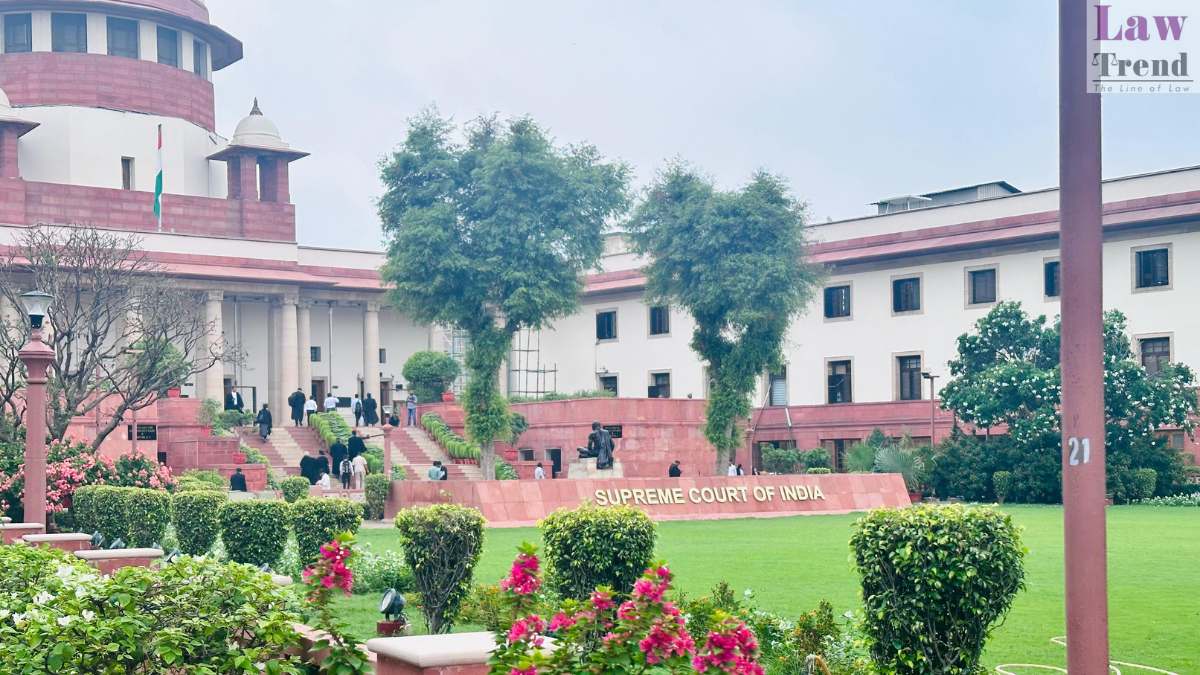
The Supreme Court of India on Monday upheld a Delhi High Court decision to cancel the central government’s outsourcing tenders for consular, passport, and visa services at four overseas missions, while granting the government a three-month window to establish temporary arrangements to prevent service disruptions.
The ruling affects Indian embassies and high commissions in Abu Dhabi, Kuwait, Singapore, and Canberra. A three-judge bench, led by Chief Justice Surya Kant and including Justices Joymalya Bagchi and V. Mohana, dismissed the union government’s appeals against the high court’s order but modified it slightly to allow interim measures for day-to-day operations.
Interim Measures Permitted
To avoid any immediate interruption to public services, the apex court ruled that the government can temporarily permit existing service providers to continue operations until a new Request for Proposal is issued and final contracts are awarded.
Alternatively, the Centre can temporarily hand over the work to the lowest bidders whose selections were canceled, though this arrangement will be at the government’s own risk and subject to the final outcome of the new bidding process. The court also allowed the government to create any other appropriate interim mechanism to ensure continuity of services.
High Court Finding Of Arbitrary Bidding
The legal dispute follows a July 15 decision by the Delhi High Court, which struck down the original tendering process after finding the technical evaluation of bidders to be arbitrary, opaque, and in violation of the principles of fairness and transparency. The high court also determined that the government had altered the tender terms after the bidding process had started, creating an unworkable evaluation structure.
During the Supreme Court hearing, Justice Bagchi emphasized that established legal principles prevent the government from modifying tender criteria once a procurement process has commenced. Chief Justice Kant noted that the government had brought the adverse high court ruling upon itself by failing to provide clear reasons for its bidder evaluations.
Embassy Staff Overburdened
Solicitor General Tushar Mehta, representing the central government, argued that the tender cancellation had left embassies severely understaffed and forced to divert diplomats to manage non-core consular duties. He stated that missions were currently struggling to handle even basic emergency requests, such as passport renewals and visa issuances, due to a severe shortage of manpower.
Addressing the lack of transparent evaluation records, Mehta countered that the technical evaluation committees had documented their reasons but withheld them because sharing the details in court would have exposed the proprietary information of successful bidders to third-party competitors.
Mehta also suggested that the legal challenge was a sponsored attempt by outgoing service providers to prolong their contracts, alleging that outgoing operators have repeatedly initiated litigation at the end of their tenures to block transition processes since 2011. The government, Mehta said, had decided to break this pattern by requiring all operators to undergo a fresh, open bidding process.
The Supreme Court ultimately declined Mehta’s request to refer the matter back to the high court for a review of the evaluation records, concluding that the government must instead focus on executing a new tendering process within the designated three-month period.




