

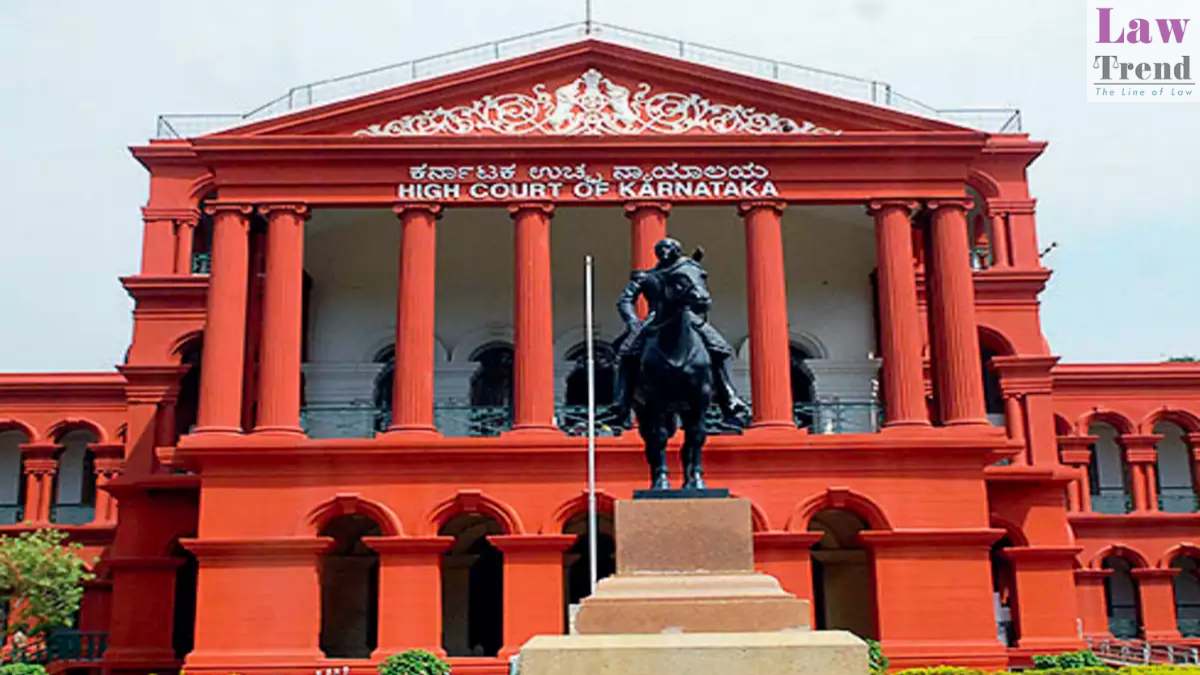
The Karnataka High Court has significantly reduced the compensation payable to the family of a motorcyclist who died after crashing into an electric pole while heavily intoxicated, ruling that a wrongdoer cannot claim standard third-party insurance damages.
In a decision delivered on July 16, Justice Geetha K. B. capped the maximum payout at Rs 1 lakh, modifying an earlier tribunal award. The court established that when a driver is solely responsible for an accident, any insurance liability is strictly limited to the vehicle’s Compulsory Personal Accident coverage, which protects the owner-cum-driver.
The ruling partially allowed an appeal filed by The New India Assurance Company Limited. The insurer challenged an August 28, 2017, directive from the Motor Accidents Claims Tribunal, which had accepted a petition from Shivanand D. Harikantra and others, awarding them Rs 3,44,364 for the death of Srinivas.
Details of the Fatal Crash
According to the insurer’s records, Srinivas was riding a motorcycle with a pillion passenger, Sunil, on February 5, 2015, near the Devegowda Petrol Bunk in Kadirenahalli, Banashankari Second Stage, Bengaluru. Srinivas lost control of the vehicle and crashed directly into an electric pole on the footpath. He sustained severe injuries and died at the scene.
During the appeal, advocate Preeti Shashank, representing the insurance company, presented a forensic report showing that Srinivas had a blood alcohol content of 102.64 mg per 100 ml of blood. Under Section 185 of the Motor Vehicles Act, 1988, the legal limit for driving is set at 30 mg of alcohol per 100 ml of blood, with any higher concentration being a punishable offense.
Strict Limits on Liability
In the judgment, the High Court noted that while negligence does not need to be proven when examining the use of a vehicle under no-fault liability, a victim who is also the wrongdoer is not entitled to standard compensation without an explicit contractual agreement. Justice Geetha stated that because the accident occurred entirely due to the deceased rider, he was the tortfeasor and his family could not claim standard damages.
The court relied on the Supreme Court precedent set in Ramkhiladi and Another v. United India Insurance Company and Another (2020), which ruled that a wrongdoer cannot benefit from third-party liability claims and is bound by the specific limits of the insurance contract. Although Srinivas did not own the motorcycle, the bench observed that he had borrowed it with permission, meaning he stepped into the shoes of the owner. Consequently, the court declared that the claimants are entitled to no more than Rs 1 lakh from the insurer.




