

Injury Sustained From Fall Into Canal Attracts Section 304 Part II IPC; Supreme Court Reduces Convict’s Sentence to Period Already Undergone
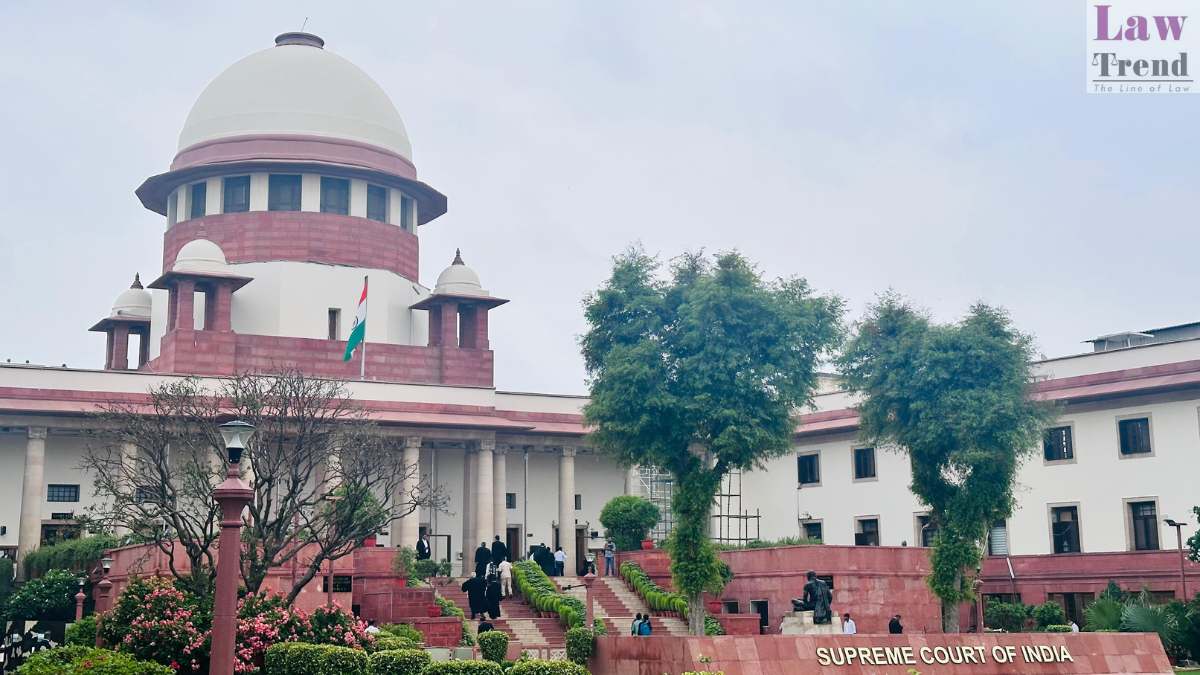

The Supreme Court of India, comprising a bench of Justice Ujjal Bhuyan and Justice Arun Palli, has partly allowed a criminal appeal by altering the sentence of an appellant convicted under Section 304 of the Indian Penal Code (IPC). The court determined that the injuries leading to the victim’s death were caused by an accidental fall into a dry canal during a scuffle, making Part II of Section 304 IPC applicable rather than Part I. Consequently, the court maintained the conviction but reduced the sentence of the sole surviving appellant, Mathu alias Jagdish, from five years of rigorous imprisonment to the period of over one and a half years already undergone.

Background of the Case

The case originates from an incident that occurred on February 12, 1997. Approximately 15 days prior to the incident, the deceased, Padam Singh Shahi, had sold a wristwatch to one of the accused, Manua alias Puran, for Rs. 500.00. Manua did not like the watch and went to Padam Singh’s house to ask him to take it back. Following this, Padam Singh went to Manua’s residence, where the issue escalated into altercations and a scuffle.

During the confrontation, two other individuals, Ramu and Mathu alias Jagdish, joined Manua and assaulted Padam Singh as he stood on the edge of a dry canal. The three accused persons pushed Padam Singh into the empty canal. It was further alleged by the prosecution that the appellant, Mathu alias Jagdish, hit Padam Singh on the head with a heavy stone, causing him to fall into the dry canal and sustain serious injuries. Padam Singh was rushed to Doon Hospital by his father, Roop Singh Shahi, and his brother-in-law, Ramesh Chand Kshetri, where he succumbed to his injuries.

Trial and Prior Appellate Proceedings

The State prosecuted the three accused alongside a fourth individual, Kaley alias Kaloo, under Section 304 read with Section 34 of the IPC in Sessions Trial No. 86/1997 before the Sessions Court of Dehradun. By an order dated September 23, 2002, the Sessions Court acquitted Kaley alias Kaloo but convicted Manua alias Puran, Ramu, and Mathu alias Jagdish under Section 304/34 IPC. They were sentenced to five years of rigorous imprisonment and a fine of Rs. 2,000.00 each, with a default stipulation.

The three convicted individuals preferred an appeal before the High Court of Uttarakhand at Nainital. On July 25, 2012, the High Court dismissed their appeal and affirmed their conviction and sentences. Subsequently, the appellants filed a Special Leave Petition before the Supreme Court. The court granted leave on December 10, 2012, and released them on bail. During the pendency of the appeal, the first appellant (Manua alias Puran) and the second appellant (Ramu) passed away, resulting in the abatement of the appeal against them. The appeal proceeded solely with respect to the third appellant, Mathu alias Jagdish.

READ ALSO  जस्टिस एमआर शाह और SCBA अध्यक्ष दुष्यंत दवे के बीच सुप्रीम कोर्ट में इस बात पर हुई कहा सुनी

Arguments and Witness Testimonies

The prosecution relied primarily on the eyewitness accounts of the deceased’s father, Roop Singh Shahi (PW-2), and his brother-in-law, Ramesh Chand Kshetri (PW-3). PW-2 stated that he saw the accused persons jointly pushing his son into the dry canal, after which Kaley and Mathu threw stones that struck Padam Singh. In his cross-examination, however, PW-2 stated that the stone thrown by Kaley hit the deceased’s head, whereas the stone thrown by Mathu hit another location. PW-3 supported this narrative but admitted in cross-examination that he did not actually see which stones hit Padam Singh while rushing to the scene.

A neighbour, Vijay Singh (PW-1), was declared hostile by the prosecution. Although he initially testified that Kaley had pushed the deceased into the canal and thrown a stone hitting his head, he conceded during cross-examination that he was unsure whether the stone had actually hit him.

READ ALSO  Order VII Rule 10 CPC | Where Question of Jurisdiction is Question of Fact or Mixed Question of Fact and Law, the Suit Cannot be Dismissed at the Threshold: JKL HC

The post-mortem report (Exhibit A-4) detailed three lacerated wounds on the deceased, including a compound comminuted fracture on the front and middle of the skull, forehead, and face, as well as lacerations on the outer face and occipital region of the skull.

The Court’s Analysis

The Supreme Court closely examined the nature of the injuries and the feasibility of the prosecution’s allegations. The bench pointed out that the physical evidence did not support the claim that the injuries were caused by stones thrown by the appellant. While the Investigating Officer (PW-9) had seized a stone from the crime scene, no forensic report was ever exhibited to match the blood stains on it to the deceased.

Analyzing the post-mortem findings, the court observed that the three severe injuries could have been suffered by the deceased only due to his abrupt fall into the dry canal, which featured a rock bed. Evaluating this evidence, the court observed:

“Therefore, the accusation that the present appellant had thrown stones at the deceased which had resulted in grievous injuries to the deceased causing his death is, in our view, not a plausible scenario.”

The court further evaluated the statutory provisions of Section 304 IPC, noting that the provision is divided into two parts. Part I applies when an act causing death is committed with the intention of causing death or bodily injury likely to cause death. Part II is attracted when the act is committed with the knowledge that it is likely to cause death, but without any intention to cause death or such bodily injury.

Addressing the ambiguity in the previous rulings, the Supreme Court held:

READ ALSO  बिहार जाति सर्वेक्षण: सुप्रीम कोर्ट ने पटना हाई कोर्ट के आदेश को चुनौती देने वाली याचिका पर सुनवाई 3 अक्टूबर के लिए टाल दी

“Considering the evidence on record, though the Trial Court as well as the High Court has not specified as to which part of Section 304 IPC is attracted, nonetheless we are of the view that it is part II of Section 304 IPC which is applicable in the facts of this case.”

Decision of the Court

The Supreme Court took into account the significant passage of time since the incident, which occurred in February 1997. The appellant was 33 years old at the time of the offense and has since crossed the age of 60. The court also observed that the genesis of the crime was a minor altercation over a watch transaction that escalated into a physical scuffle.

Stating that the appellant has already undergone imprisonment for more than one and a half years, the court held:

“At this distant point of time, we are of the view that it would meet the ends of justice if we alter the sentence of imprisonment from RI for five years to the period already undergone while maintaining the conviction.”

The Supreme Court allowed the criminal appeal to this extent. Since the appellant was already on bail, his bail bond was ordered to be discharged.

Case Title: Mathu alias Jagdish Versus State of Uttarakhand
Case No.: Criminal Appeal No. 2024 of 2012
Bench: Justice Ujjal Bhuyan, Justice Arun Palli
Date: June 25, 2026

Law Trend
Law Trendhttps://lawtrend.in/
Legal News Website Providing Latest Judgments of Supreme Court and High Court

Related Articles

Latest Articles

