

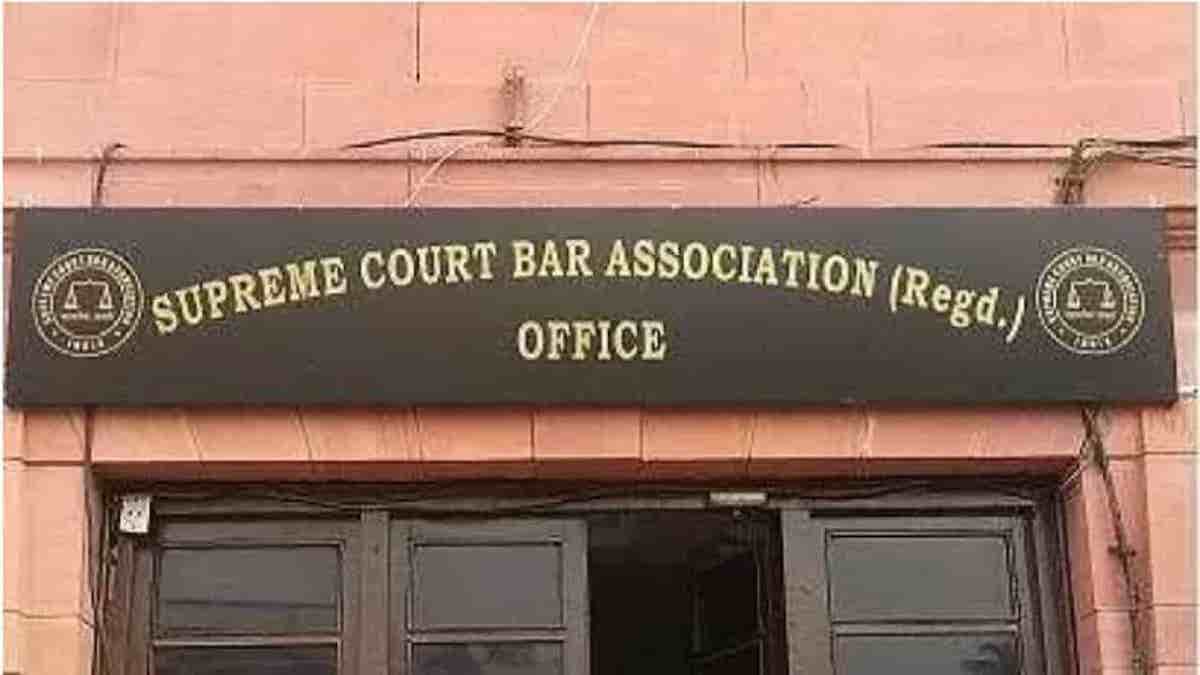
In a historic move to modernize and diversify one of the country’s most influential legal bodies, the Supreme Court of India on Friday ordered a sweeping overhaul of the Supreme Court Bar Association’s (SCBA) governance and electoral structure.
In a landmark ruling, a Bench of Chief Justice of India (CJI) Surya Kant and Justice KV Viswanathan extended the terms of elected executive committee office-bearers from one to two years, introduced landmark reservations for women and differently-abled lawyers, and established rigorous new eligibility standards for voters and candidates alike.
To ensure a smooth transition to the new framework, the Court has deferred the upcoming SCBA elections by one month, rescheduling them for August. The landmark extension of term limits will officially take effect in 2027.
Expanding Representation: Historic Reservations
In an unprecedented step to foster diversity in bar leadership, the Supreme Court ordered that key leadership posts in the association—excluding the office of the President—may now be reserved for women advocates and advocates with disabilities.
This structural shift is backed by targeted voter eligibility rules designed to empower these underrepresented groups:
- Women Advocates: Eligible to vote if they have recorded at least 50 appearances in the Supreme Court during the preceding two years.
- Advocates with Disabilities: Qualified to vote with a minimum of five appearances in the same two-year period.
Redefining “Active Practice”: Strict New Voter Norms
A major pillar of the Court’s reform package is the complete overhaul of voter eligibility, putting an end to reliance on proximity card data as the sole metric of practice.
The Bench ruled that proximity cards or representation on a Supreme Court panel cannot independently establish voter eligibility. Instead, the primary proof of active practice will be the Record of Proceedings (RoP) and registry reports, with proximity card data serving only as corroborative evidence in the event of a dispute.
To qualify to vote under the new system, advocates must meet the following criteria:
1. Appearance Ratios & Digital Logging
At least 75% of an advocate’s qualifying appearances must be physical, with a maximum cap of 25% allowed virtually. To support this, the Supreme Court’s digital portal will be modified to enable the distinct, official recording of virtual appearances.
2. Advocates-on-Record (AORs)
- General: Must average 20 filings per year over the preceding three years.
- AORs with Disabilities: Must average five filings per year over the same period.
3. Mediation Panelists
Non-AOR advocates who have served on the Supreme Court Mediation Centre panel for at least two years will qualify if they have handled at least 20 mediation cases. For mediators with disabilities, this threshold is reduced to five cases.
4. Veterans, Senior Advocates, and Government Counsel
- Veterans: Members with more than 25 years of SCBA membership are eligible, provided they voted at least once in the preceding five years.
- Senior Advocates: Senior Counsel residing across the National Capital Region (including Delhi, Gurugram, Noida, and Ghaziabad) are eligible under the revised standards.
- Government Counsel: Exempted from any separate three-year minimum appearance requirement.
The Court explicitly clarified that holding a Supreme Court chamber allotment, or being on a waiting list for one, will not be considered an eligibility criterion.
High Bars for Candidates
The Supreme Court has also raised the bar for those seeking to lead the SCBA.
- To stand for any elected post, a candidate must have at least five years of permanent SCBA membership.
- To contest for key executive positions—including President, Vice-President, Secretary, and executive committee roles—candidates must demonstrate a deep history of practice, requiring at least 10 years of regular appearances in the Supreme Court within the preceding 10 years.
The Road to Reform: Resolving a Decades-Old Debate
Friday’s sweeping directives represent the culmination of a long-standing struggle to reform the SCBA’s electorate, aimed at ensuring that only regular, active practitioners shape the association’s leadership.
The roots of this legal battle go back to a 2012 Supreme Court judgment which upheld an amendment to Rule 18 of the SCBA bye-laws. That decision established the core principle of “one bar, one vote” to prevent non-practicing members from tilting election outcomes.
The issue flared up again in 2023 when the SCBA’s Special General Body Meeting rejected eight key reform resolutions regarding membership, fees, and terms. Recognizing that the association’s rules had remained unchanged for decades, the Bench consisting of Justice (now CJI) Surya Kant and Justice KV Viswanathan actively intervened.
In February 2025, the Court appointed a high-level consultative committee led by former Supreme Court judge L Nageswara Rao. The committee evaluated roughly 170 suggestions from the legal community, including inputs from legal luminaries such as KK Venugopal, Ranjit Kumar, and Kapil Sibal.
Amid ongoing scrutiny and allegations of irregularities during the 2025 SCBA elections, the Supreme Court’s new directives serve as a comprehensive blueprint to secure the integrity, diversity, and professionalism of the Bar’s leadership for years to come.




